Argentine records and honest copy descriptions

Native Ads Argentina: Match Vinyl Condition to the Copy for Sale

Use native ads Argentina to introduce records whose edition, condition and availability your shop can explain clearly. A cover photograph attracts attention; the buyer still needs to know which copy is offered, what its record and sleeve are like, and how it can reach their address. We help you control the media purchase through supported FroggyAds settings. Build the invitation around stock you can fulfil, then assess paid reservations and dispatched copies separately.

Self-serve control ·750+ SSP integrations ·20B+ daily impressions
native ads argentina planning visual
Direct answer

What should an Argentine vinyl campaign help the buyer decide?

Whether the particular record offered is worth inspecting and purchasing under your stated terms. A collector may recognise the album but still need the release details, media condition, sleeve photographs and delivery arrangement. Our native route can introduce that decision with an image and a short explanation. The shop supplies the actual copy description and resolves questions before promising a sale.

01 • Delivery mechanics

How does a native record invitation create a useful visit?

A sponsored image and headline appear within a feed or recommendation area and lead to your record listing. Publisher styling affects the presentation, so keep clear ad disclosure and review the available placement context. The destination should continue the same album or accurately described collection. A visit is the start of a product assessment; it does not reserve a scarce copy or establish payment.

Photograph the actual item when the invitation concerns a particular used copy. An attractive stock image can conceal a split sleeve, missing insert or different pressing. If the image represents a collection rather than one sale item, say so and let visitors inspect the available stock. Keep permission to use the supplied photograph separate from ownership of the physical record.

Decide when a record becomes unavailable to another customer. Your shop might reserve a copy after a supported payment or another clearly explained commitment. Record that actual rule and update the listing when it changes. A sold copy should not continue to anchor an invitation implying immediate availability; a collection destination needs an honest alternative rather than a silent substitution.

02 • Campaign brief

What belongs in a condition-led Argentine native brief?

Name the records or collection, intended customer action, shop language, serviceable destinations and person who answers condition questions. Identify the listing details that can change a purchase: release, catalogue reference, record condition, sleeve condition and inclusions. State how stock is reserved and when the owner will check availability again. This gives the media buyer a real offer to introduce.

03 • Market context

How should Argentina targeting relate to the delivery address?

Choose Argentina only where the shop has prepared an appropriate customer route and can assess delivery eligibility. Country targeting does not validate an address or select a courier service. Ask for the information your actual fulfilment process needs, explain any collection alternative and keep delivery cost separate from the item's amount. A national audience does not make every parcel route suitable.

04 • Audience eligibility

Which vinyl customers and requests can the shop serve?

Describe the collection you actually hold and the questions your staff can answer. A buyer seeking an original pressing should not be led to a reissue without explanation; someone asking about playback needs a supported response about that copy. Prepare Spanish messages for the audience you intend to serve and have competent staff review the wording. Do not infer language preference from geography alone.

Sell the copy you can describe and supply

Why choose FroggyAds for an Argentine record invitation?

Bring us a clear collection or item proposition and a destination ready for the buyer's inspection. Our self-serve targeting, budget and source controls help you manage the visits while your shop handles stock and customer questions. Confirm current native requirements and campaign approval. The published USD 50 minimum deposit funds your account; it is separate from the allowance you authorise and the cost of acquiring a record order.

Create My Free Account
Illustration of audience targeting controls for a native ads argentina test
05 • Inventory and format fit

What should the native image reveal about the record?

Show a useful reason to inspect the listing: the actual cover, an included insert or a collection theme you can substantiate. Structured creative assets should meet the current purchase requirements. A small image cannot establish playback condition or authenticate a pressing. Keep those details available at the destination and avoid a headline that converts an attractive photograph into an unsupported rarity claim.

Inspect the presentation available for the native purchase before launch. Cropping may remove the part of a cover that distinguishes the offered edition, while shortened text may hide that the listing is used stock. Retain the supplied creative and listing versions so a customer's misunderstanding can be compared with the message. This is a preparation task, with no screen or device pass claimed here.

Write a condition explanation a buyer can act on. Describe an observed mark, sleeve defect or missing component without hiding it behind promotional adjectives. If playback was checked, state the actual scope; a visual inspection should not imply a complete listening test. The shop should be able to answer the same question consistently in the invitation, listing and customer reply.

06 • Creative system

How can two record concepts earn different buying roles?

Compare a collection-discovery concept with an item-detail concept. The first can introduce a genuine selection of records; the second helps a collector inspect one specific copy. Keep their destinations and stock promises appropriate to those roles. A broad collection visit and a paid reservation for a scarce item answer different questions, so avoid assigning both the same success count simply because each generated clicks.

Ask the person preparing the Spanish copy to examine the actual listing and image together. Record and sleeve condition must not collapse into one flattering description. Any stated amount needs its currency and the delivery treatment your shop really applies. Review a shortened headline against those material facts, then resolve omissions that would change the customer's understanding before the invitation is supplied.

Use the concept comparison to improve a real purchase decision. If collection visitors repeatedly ask which editions are included, make the selection clearer. If an item invitation attracts questions about a sleeve defect already photographed, improve the explanation rather than hiding the photograph. FroggyAds source and creative observations can guide another affordable purchase, while the shop's replies establish what customers needed.

07 • Destination continuity

What should the listing show before a customer reserves a copy?

Identify the specific release as far as your evidence supports it, describe the record and sleeve separately, and list the components included. Show current availability and explain the reservation arrangement, payment route and delivery charge. If pressing identification remains uncertain, make the uncertainty visible. A clear listing lets the buyer decide whether to ask a question or commit without relying on an attractive cover alone.

08 • Attribution chain

How can stock and order references support attribution?

Connect campaign information with the listing or order reference only where your process genuinely supports the link. Keep the copy identifier, reservation and later dispatch distinguishable. Two messages about the same record are not two sales; a changed delivery address belongs to the same order when the actual records establish that relationship. Leave unmatched visits or orders unknown rather than inventing an attribution chain.

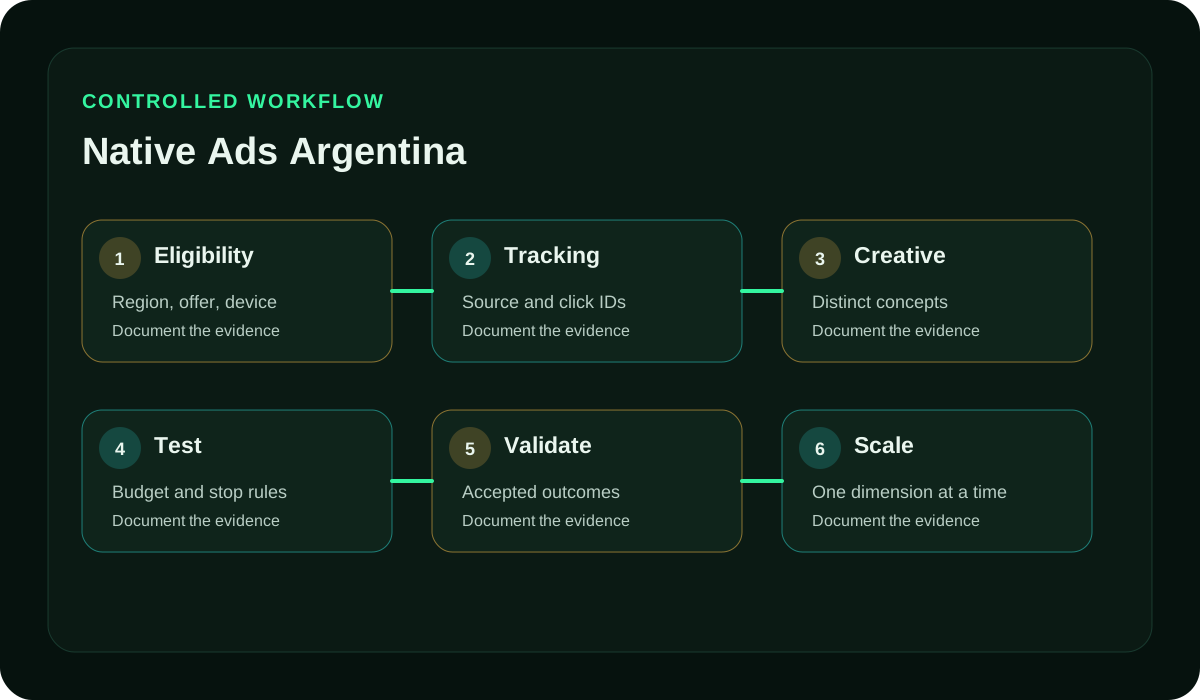
native ads argentina controlled workflow visual

Present the details a collector needs

When is native useful for a used-record collection?

Choose our native route when a picture and concise explanation can help the intended collector recognise a relevant record and inspect the details. The offer needs enough substance to reward that visit. Compare another format by how it introduces the same stock and customer action. Confirm current supply and supported settings without assuming that a format name guarantees collectors, available copies or sales.

Create My Free Account
Illustration comparing advertising formats for native ads argentina execution
09 • Test budget

How much media should a stock-limited campaign authorise?

Set an allowance your shop can fund while orders and stock commitments are checked. A single-copy listing may become unsuitable before a campaign has spent its full allowance, so assign someone to respond when availability changes. Confirm the limits and stopping control actually available. Include photography, condition assessment, packing and customer assistance separately when judging the wider commercial cost.

10 • Cost model

Which cost belongs beside a paid reservation or dispatch?

Divide the stated campaign expense by the named stage and keep the review date visible. A paid reservation means the shop has the commitment described by its own rule; dispatch needs a later fulfilment record. Neither count alone establishes a retained purchase or margin. Use the same order group for both calculations and show unresolved orders rather than adding successive stages together.

11 • Quality review

What can explain record orders that stop before dispatch?

Check the actual item and customer correspondence. An unavailable copy, an unresolved condition question and an address needing clarification need different responses. Preserve the supported explanation and leave other cases open. A delay in the shop's stock check should not automatically become a conclusion about traffic quality. Resolve the underlying listing or fulfilment problem before inviting more buyers to that copy.

12 • Source decisions

Which buying action follows a sold or disputed listing?

Restrict the affected invitation using the controls your purchase supports, then correct the actual stock or condition statement. A collection route can continue only if its advertised selection remains truthful. Retain the earlier description and the reason for the change so the next buyer receives a coherent offer. Investigate source concerns separately when the available records support a media issue.

13 • Controlled experiments

How should a collection and a single-copy test be compared?

Identify what each invitation asks the customer to do before comparing its results. Collection discovery may prepare several later choices; a single-copy listing invites a narrower stock commitment. Record the actual destination and creative supplied, the shop's reservation rule and the later order status. Use those distinctions to choose another purchase rather than treating different retail tasks as interchangeable traffic.

Keep the record description useful after the click

What should happen before another Argentine allocation?

Check that the promoted stock is still available and that staff can answer the questions the invitation raises. Review paid reservations, dispatch status and unresolved condition enquiries together. We recommend another manageable FroggyAds allocation when that evidence supports the actual offer. Update a sold-item message first, and keep any collection replacement explicit enough for the next visitor to understand.

Create My Free Account
Illustration of a campaign launch checklist for native ads argentina
14 • Funnel measurement

How can a record move through review without being counted twice?

Give the physical copy or order a reference your shop can use consistently. Record the reservation, any later cancellation and the dispatch under their real definitions. A request to replace packaging or change an address is usually an update to investigate, not proof of a second customer. Reconcile the available records before comparing campaign expense with the number of copies actually supplied.

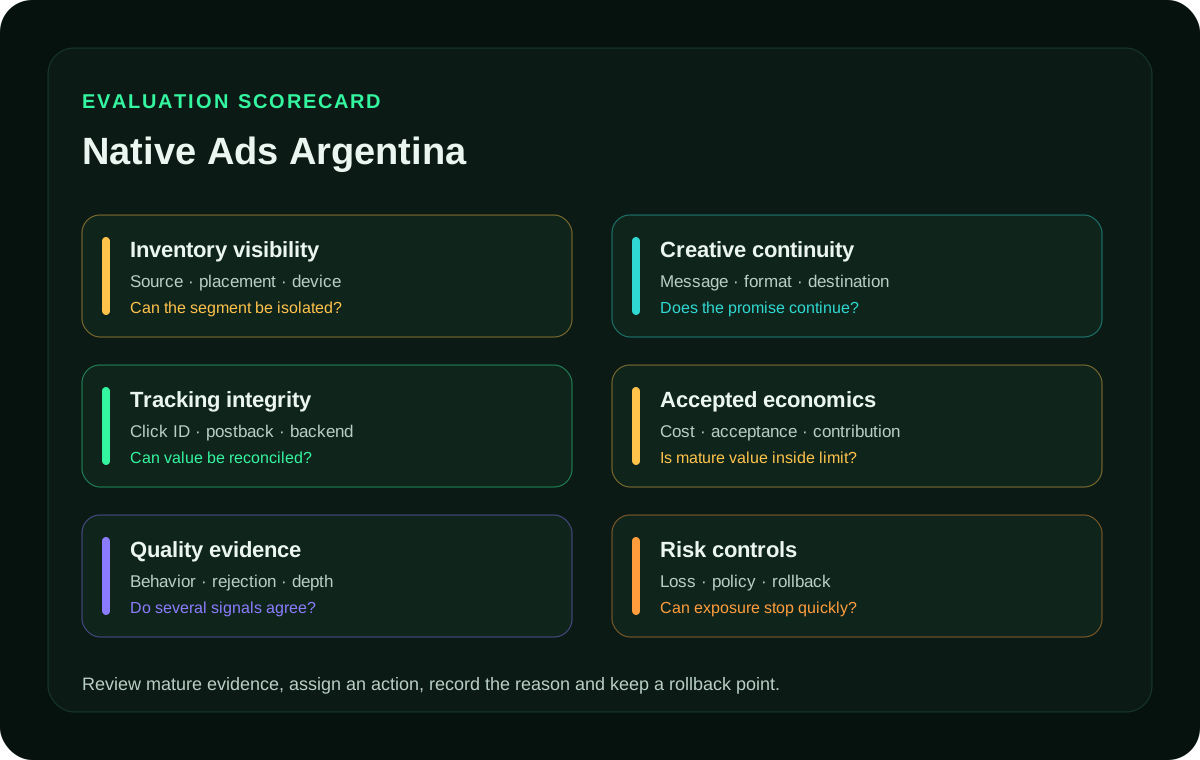
native ads argentina evaluation scorecard visual
15 • Stop rules

Which condition promises require a pause?

Stop an invitation that describes an unverified pressing as authenticated, presents a used copy as new, or conceals a known defect material to the purchase. Ask the responsible shop owner to correct the statement and review affected customer communications. A media setting cannot repair an inaccurate description. Keep the correction tied to the actual item rather than applying a speculative judgement to every source.

16 • Scaling

When can a record collection support more native buying?

Consider another allocation after the shop can show which available records the current invitation introduced and how the resulting orders progressed. Confirm that remaining stock still supports the selection shown. Increasing visits to a thin or sold-out collection may add questions the shop cannot fulfil. Our supported budget and source controls help you make the next purchase match the collection you can actually offer.

17 • Scenario planning

Which stock scenarios should an Argentine buyer prepare?

Plan the response to an advertised copy selling, a grading question requiring inspection and a delivery request outside the arrangement offered. Name the person who can update the listing and restrict buying. Keep a genuine collection alternative ready if that is part of the campaign. Do not turn an unavailable item into artificial scarcity or promise a substitute before the buyer has agreed.

18 • Operator log

What belongs in the shop's next buying decision?

State which records remain available, what customers misunderstood and which paid reservations still await dispatch. Link any media change to the source or creative information actually observed. The useful decision may be a better sleeve photograph, a corrected pressing description or a smaller invitation to a narrower collection. Retain the earlier listing so the effect of the repair can be assessed honestly.

Decision controls

A vinyl invitation review the shop can use

Product detailCustomer questionPractical response
ReleaseDoes the advertised edition match the copy held?Check the supported release and catalogue details.
RecordWhat wear or playback observations support its condition?Describe the actual inspection without implying more.
SleeveAre splits, marks and missing inserts explained?Show relevant photographs and state inclusions.
AvailabilityWhen does this copy become reserved or sold?Update the invitation under the real stock rule.
DeliveryCan the actual address use the arrangement offered?Confirm the complete address and quoted treatment.
OrderIs this one paid reservation, later dispatched?Update the same order rather than adding stages.
Planning scenarios

Three details that make a record invitation usable

Record and sleeve

Distinguish the record from its sleeve

Discogs' grading guidance uses the Goldmine standard and discusses the physical record and its cover or sleeve separately. That distinction is useful for a shop preparing a native invitation: an appealing cover is not a statement about the surface or playback of the record inside. Describe what you actually inspected and avoid treating a condition label as proof of authenticity, an investment value or a guaranteed listening experience.

Complete CPA

Prepare the complete Argentine delivery address

Correo Argentino describes the CPA as an eight-character alphanumeric code and asks senders to use its complete letters and numbers. Its search page separates province, locality, street and street number. For your record campaign, prepare the address route your fulfilment process actually uses and resolve missing information before promising dispatch. A complete CPA is useful address detail; it does not certify courier eligibility or a delivery date.

One-copy stock

Explain a one-copy stock change

Suppose a hypothetical shop promotes one used LP and a customer reserves that copy under the shop's stated rule. The owner needs to stop implying that the same copy remains freely available. Another listing may be a different pressing or condition, even when the cover looks similar. Make the alternative explicit and let the customer decide; no actual record, seller result or stock event is claimed in this illustration.

Frequently asked questions

Questions about Argentine native record campaigns

What should the Argentine record offer establish first?

Identify the actual record or collection, the language the shop supports and the stock commitment being requested. Customers need a usable description of condition and delivery treatment. With FroggyAds, you can purchase visits to that prepared offer using available native controls; the shop's item and order records establish whether a particular copy can be sold.

Can a cover photograph establish vinyl condition?

A cover image can introduce the album or show part of the sleeve, but it cannot establish every feature of the record inside. Describe observed record wear and sleeve defects separately. If playback was not checked, avoid implying a complete listening test. Use the listing and customer reply to answer the specific uncertainty the photograph leaves.

What source information helps investigate a record complaint?

Start with the creative and listing versions, the customer's reported route and any campaign source information the shop can actually match. A copy or order reference can identify the disputed product, but it does not supply a complete publisher exposure history. Ask the buying contact for additional placement detail when that is needed to investigate the invitation.

How should Spanish wording handle an uncertain pressing?

Explain the release details your evidence supports and state any unresolved identification plainly. Have a competent reviewer check the actual Spanish invitation, listing and reply. Avoid rarity or authenticity language that goes beyond the shop's inspection. The intended customer should be able to understand the offered copy without mistaking a promotional description for independent certification.

What must the record listing and reservation confirmation agree on?

Keep the copy, condition description, included components and agreed delivery treatment consistent. If a customer reserves one pressing, the acknowledgement should not silently identify another. Resolve a material contradiction before relying on that order as an accepted result. The shop needs its own record of the final arrangement; campaign reporting does not create it automatically.

How should a small vinyl collection control its media allowance?

Authorise expense against stock the shop can still offer and the time needed to answer condition questions. Confirm the campaign limits and stopping control available for the purchase. An allowance should remain affordable if some reserved copies are not dispatched. The published account deposit is funding, while the authorised allowance and realised order cost are different amounts.

Which results help assess an Argentine record invitation?

Review which advertised copies produced meaningful questions, paid reservations and later dispatches under the shop's actual definitions. An unsupplied pressing or an unclear sleeve defect can explain an order problem that clicks alone conceal. Keep supported reasons and unresolved cases visible so the next invitation improves the purchase decision rather than merely increasing activity.

How should repeated enquiries about the same LP be handled?

Check the copy and order references before counting another request as a second buyer. One person may ask about the sleeve and then the pressing, or update delivery details after reserving. Use the available correspondence to establish the relationship. An unusual sequence needs investigation; it is not enough by itself to label activity fraudulent or claim another sale.

Can record revenue be compared directly with USD media expense?

Keep the actual currency of each amount visible. A sale stated in another currency needs a justified conversion before it can be combined with USD expense. Packing, postage, item cost, condition review and customer assistance also matter. The illustrative reservation and dispatch costs below concern media only and do not establish revenue return or profit.

When should the shop invite more Argentine collectors?

Buy another manageable group of visits when the collection remains accurate, available stock supports the message and order progress can be reviewed. Identify which copy or collection the next invitation concerns. Use our supported controls to keep the purchase affordable, while the shop retains responsibility for stock, condition descriptions and the customer arrangement.

Related regional resources

Compare related Argentine traffic routes

Use the related format guides to assess how another invitation introduces your available records. Keep the copy description and reservation arrangement clear when changing the traffic route.

Measure accepted campaign value

Start with a record invitation you can fulfil

Choose FroggyAds for a native purchase that makes the record easier to assess. Prepare the actual photographs and condition description, explain how a copy becomes reserved and confirm the delivery route your shop can support. We give you supported media controls for that invitation. Use paid reservations and later dispatches to decide how much of the available collection deserves another purchase.

Search intent and buyer decision

Argentine vinyl campaigns: copy, condition and fulfilment

This guide concerns the journey from a native record invitation to an identifiable copy the shop can supply. It complements our broader native advertising guide by focusing on a condition-sensitive product and an Argentine delivery address. Confirm the current buying requirements before launch; this page does not promise a particular collector audience, pressing value or courier service.

Ad attribution should identify the invitation supplied where your process supports it. Creative assets show the offered record honestly; content fit means the listing continues that copy or collection. Publisher layout may crop the image or shorten its explanation. Review those effects without assuming the media format can grade stock, reserve an LP or confirm delivery.

Shop stageDecisionKeep
Copy inspectedDescribe record and sleeve separately.Actual photographs and inspection scope.
Copy reservedApply the shop's commitment rule.One item reference and supported payment.
Copy dispatchedConfirm the actual parcel handoff.Order status and remaining unresolved copies.

Hypothetical calculation: a fictional Argentine-targeted used-record campaign spends USD 210 on media. Seven orders meet the shop's paid-reservation rule, giving USD 210 / 7 = USD 30 per paid reservation. Five have been dispatched at review, giving USD 210 / 5 = USD 42 per dispatched order. Two remain reserved and await dispatch. These stages describe the same order group. The figures are illustrative, not actual FroggyAds prices, Argentine benchmarks or a record seller's results. Item cost, packing, postage, condition assessment and assistance are excluded; reservation or dispatch alone does not establish retained revenue or profit.

Start your next condition-led record campaign with FroggyAds. Use our supported controls to introduce stock your shop can describe, reserve and supply, then assess the actual orders before buying more visits. Create your free FroggyAds account.

Direct answer

Which record can the next customer actually buy?

Begin with a truthful copy description and a delivery arrangement the shop can assess. Native traffic can bring that offer to a prospective collector; the record's identity, condition and availability determine what your business can supply. Keep those product facts current as you review another FroggyAds purchase.