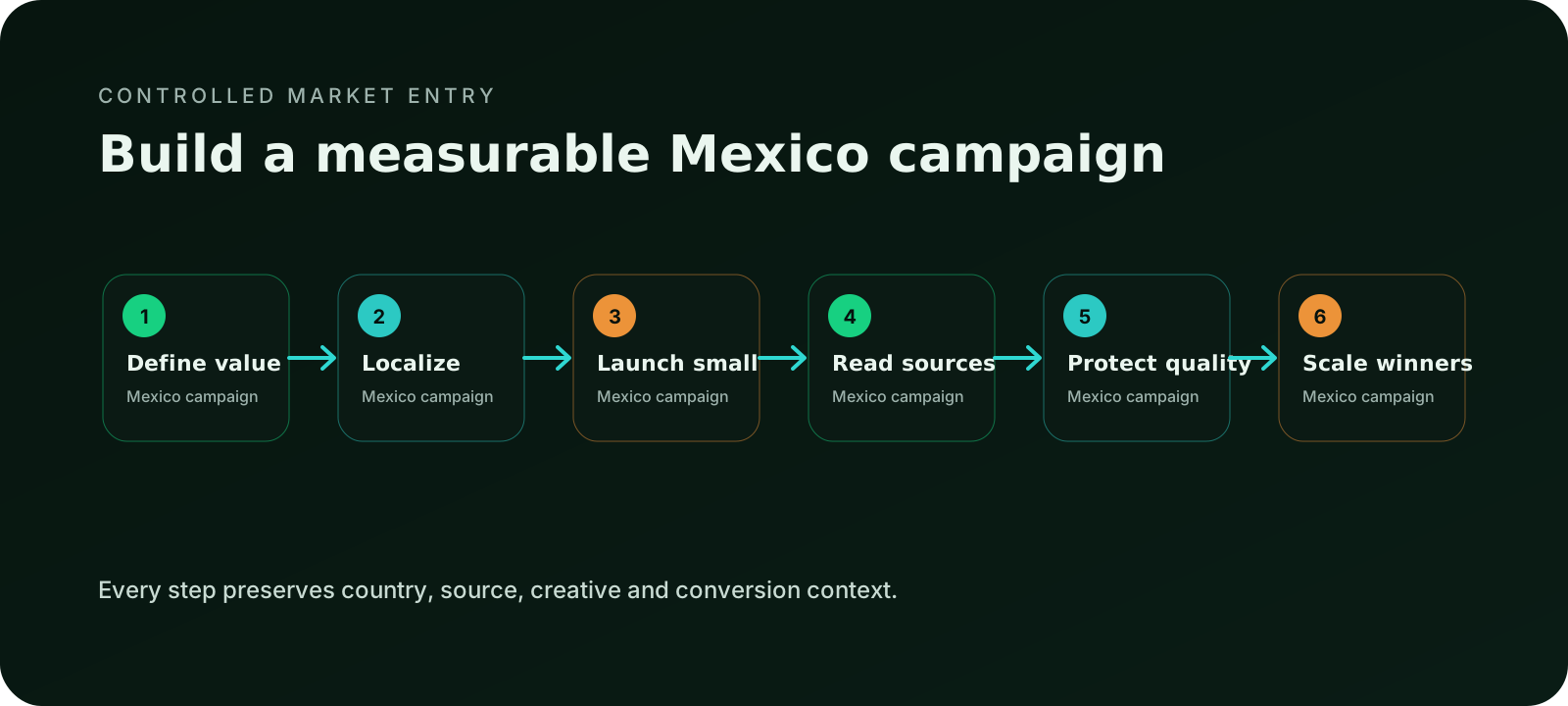
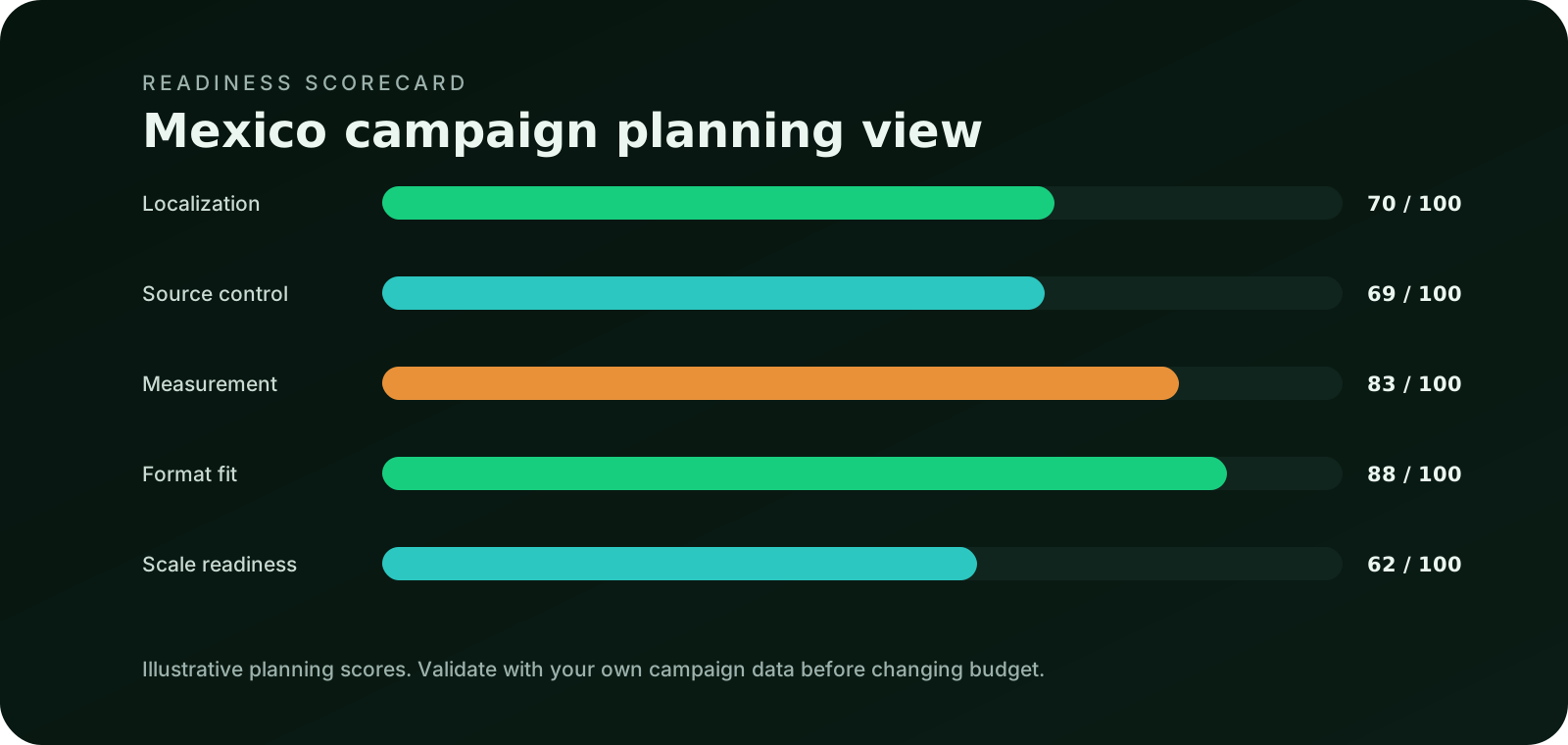
Application, governance and handoff notes
Begin a Mexico network test with a service map rather than a country switch. Mark places the advertiser can fulfil, places requiring different price or delivery terms and places that must be excluded. Attach the approved Spanish destination and response route to that map. The network country field is one control, while the business system remains the final record of whether an accepted customer location was actually serviceable.
Keep language review independent from geographic selection. A Mexico campaign may require Spanish, but product names, regulated wording, address conventions, currency presentation and support availability still need review for the exact offer. Preserve the source copy and approved translation together. If the destination changes after review, return the claim and translated variant to the named approver instead of assuming the old approval follows it.
For example, a software provider offers a Spanish onboarding session during defined support hours. The advertisement names the service, eligibility and next step; the destination displays the same terms and reports availability in the operating time zone. The business record rejects duplicate trials and unsupported account types. The campaign is evaluated on eligible activated accounts after the review period, not on Mexico-tagged clicks alone.
Create a placement case file for each material source or source group. Retain the format, device, date range, reporting zone, creative version, destination hash, spend, delivered events, accepted outcomes and complaint or security observations. A source with low media cost is not automatically useful. Its next increment must continue to produce traceable, serviceable outcomes without unacceptable user-experience or quality signals.
Currency records need one explicit rule. Store the billing currency, business acceptance currency, conversion source and conversion timestamp when values differ. Do not rewrite historical MXN decisions with a later rate. A reviewer should be able to reproduce the cost comparison that existed when the budget decision was approved and see how exchange movement affected later reporting.
Close the test with a Mexico-specific decision: retain a bounded source set, revise language or serviceability, repair destination behavior, quarantine questionable delivery, or stop. List the observations that support the decision and the evidence still missing. An inconclusive result remains valid when delivery, tracking or outcome maturity cannot support a stronger claim.
Device segmentation needs an experience check, not only a report column. Open the approved destination on representative mobile and desktop environments, confirm language, load behavior, consent state, form or checkout operation and the accepted-event handoff. If one device class fails the path, isolate it while repair is verified rather than blending its loss into country-wide performance.
Budget authority should identify who may start, pause, increase or terminate delivery and the maximum change each role can make. Tie every adjustment to the source set, creative version and matured outcome window reviewed at that moment. This prevents an automatic optimisation or informal request from expanding Mexico spend beyond the downside the advertiser approved.
Complaint handling belongs in the campaign design. Give support a route to locate the creative, placement evidence, destination version and consent or transaction record without exposing unrelated personal data. Define which reports trigger immediate quarantine and who evaluates a publisher, language or misleading-claim issue before delivery can resume.
At handoff, another authorised operator should reproduce the Mexico scope from the stored files: country and exclusions, language approval, zones, format, source controls, destination hash, event mapping, budget, accepted outcomes and unresolved incidents. Revoke departed access only after the replacement confirms retrieval and scheduled activity has been reviewed.
Use a maturity calendar for backend outcomes. Some accepted events can be reviewed after validation, while purchases may need time for cancellation, refund or fraud checks. Mark the earliest defensible decision date for each campaign cohort and keep late reversals attached to their original source. A network should not appear stronger merely because reporting stopped before losses matured.
Preserve an explicit no-promotion condition whenever evidence is incomplete. If placement identity, destination readback, conversion mapping or production capacity cannot be confirmed, the safe decision is to hold the current cap or stop. Record the missing item and its owner so the campaign does not drift into a larger test through repeated small changes.