
Is In-Page Push Traffic Profitable? Economics, Testing and Scale
Evaluate whether in-page push traffic can be profitable using break-even math, source-level tests, mature outcomes, quality controls and disciplined scaling.
| Section | Distinct excerpt from this page |
|---|---|
| Separate inventory conditions | Separate inventory conditions for this profitability test by documenting the hypothesis, keeping publisher, placement, source id, device, geo, creative and page context available and recording how the step changes viewable opportunities, clicks, qualified sessions, accepted outcomes and margin. |
| Is In-Page Push Traffic Profitable FAQ | Compare the mature result with mature value per viewable in-page push placement, not only with clicks or raw conversions. |
Reference for Is In-Page Push Traffic Profitable? Economics, Testing and Scale: Google Ads bidding basics Official overview of bidding approaches and campaign objectives..
What a profitability assessment should accomplish
Use "Is in page push traffic profitable" as a starting point for a controlled campaign decision, not as a promise of a particular outcome. FroggyAds gives advertisers direct self-serve access and granular targeting controls so audience fit, cost, traffic quality and accepted outcomes can be evaluated before scale. Is In-Page Push Traffic Profitable? Economics, Testing and Scale is not a request for more traffic at any price. It is a decision system for matching the offer, audience state, inventory, creative and landing experience to a measurable business outcome. The job on this page is to evaluate the profitability of in-page push traffic with break-even economics, source-level tests and mature accepted outcomes. That job remains measurable only when the team declares the billable event, the conversion definition, the maturity window and the source-level breakdown before the first meaningful spend.
Start with unit economics. Write the accepted value of the outcome, subtract non-media costs and reserve room for uncertainty, reversals and optimization. The resulting break-even range becomes a guardrail for this profitability test. Use mature value per viewable in-page push placement as the headline decision metric, then read it beside viewable opportunities, clicks, qualified sessions, accepted outcomes and margin. This prevents a cheap click, high CTR or early conversion from being mistaken for durable profit.
The central risk is copying classic Push tactics without accounting for page context, placement visibility and publisher quality. A controlled structure prevents that failure by separating campaign discovery from scaling, keeping publisher, placement, source id, device, geo, creative and page context visible and recording every material change. When the campaign team can explain why a result moved, the next budget decision becomes a testable action rather than a reaction to a dashboard average. For this profitability test, use this principle to support the page's specific objective: evaluate the profitability of in-page push traffic with break-even economics, source-level tests and mature accepted outcomes.
Six controls behind in-page push traffic economics
For In-Page Push Traffic Profitability, connect delivery, source visibility, landing behavior, conversion tracking and accepted value to separate operating guardrails.
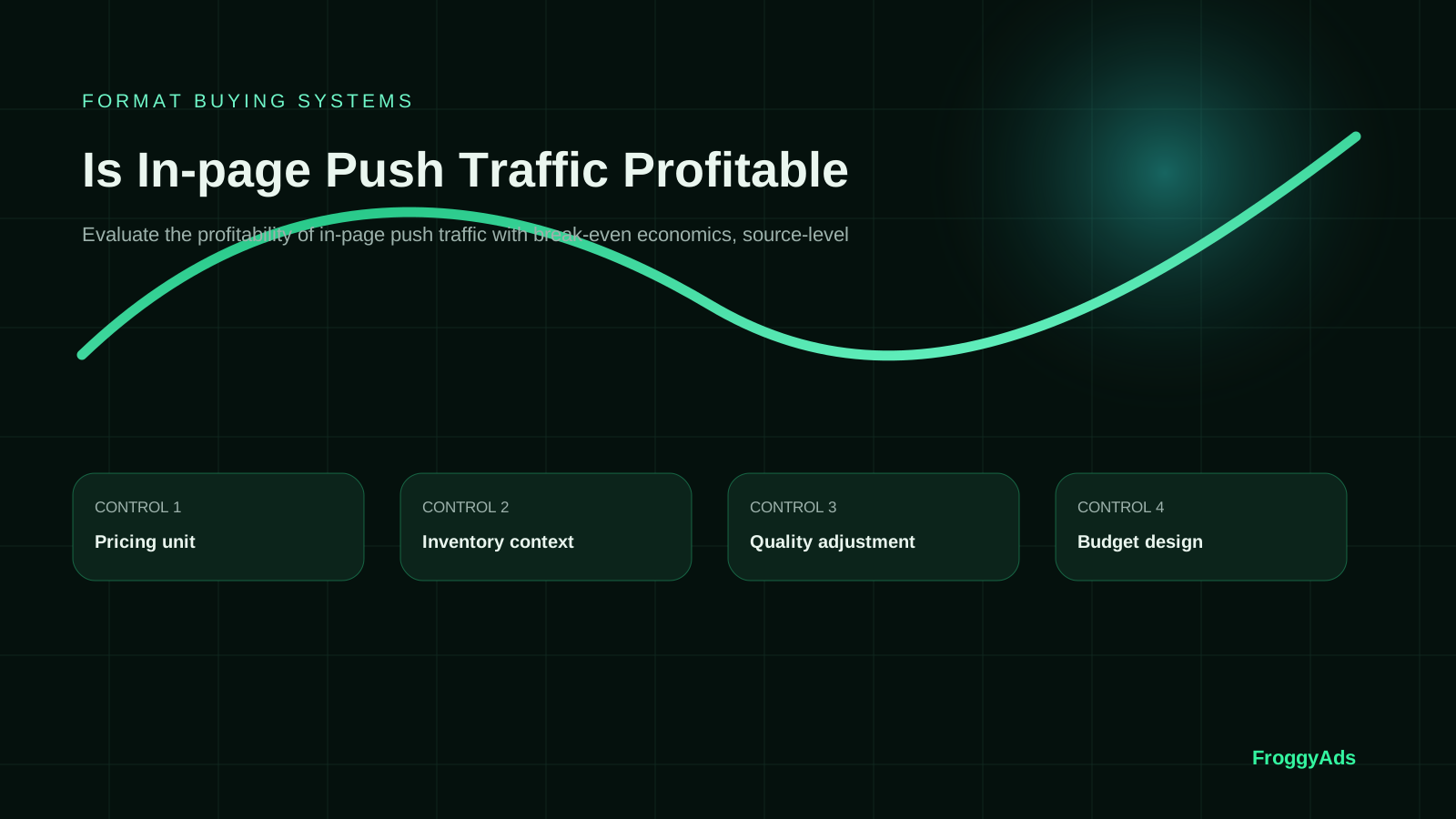
Pricing unit
Define whether the price applies to impressions, clicks, visits or accepted outcomes. For this profitability test, connect this control to mature value per viewable in-page push placement and keep publisher, placement, source id, device, geo, creative and page context visible.
Inventory context
Separate GEO, format, source, placement, device and audience conditions. For this profitability test, connect this control to mature value per viewable in-page push placement and keep publisher, placement, source id, device, geo, creative and page context visible.
Quality adjustment
Account for viewability, page loads, engagement, acceptance and reversals. For this profitability test, connect this control to mature value per viewable in-page push placement and keep publisher, placement, source id, device, geo, creative and page context visible.
Budget design
Set test size, pacing, checkpoints and a maximum acceptable loss. For this profitability test, connect this control to mature value per viewable in-page push placement and keep publisher, placement, source id, device, geo, creative and page context visible.
Maturity window
Wait for attribution delays and downstream validation before judging cost. For this profitability test, connect this control to mature value per viewable in-page push placement and keep publisher, placement, source id, device, geo, creative and page context visible.
Decision rule
Compare mature value with the break-even range, not a generic benchmark. For this profitability test, connect this control to mature value per viewable in-page push placement and keep publisher, placement, source id, device, geo, creative and page context visible.
Connect the guide to live testing
Connect Is In-Page Push Traffic Profitable? Economics, Testing and to a controlled audience test
Use the choices established in “Six controls behind in-page push traffic economics” to define one audience, budget and source set in FroggyAds. Keep the surrounding offer and measurement rule stable so the test adds evidence to is in-page push traffic profitable? economics, testing and instead of mixing several changes at once.
Create My Free Account
A seven-step profitability workflow
For In-Page Push Traffic Profitability, use a bounded first-budget sequence to test placement, creative, landing path and source-level conversion quality before increasing spend on the format.
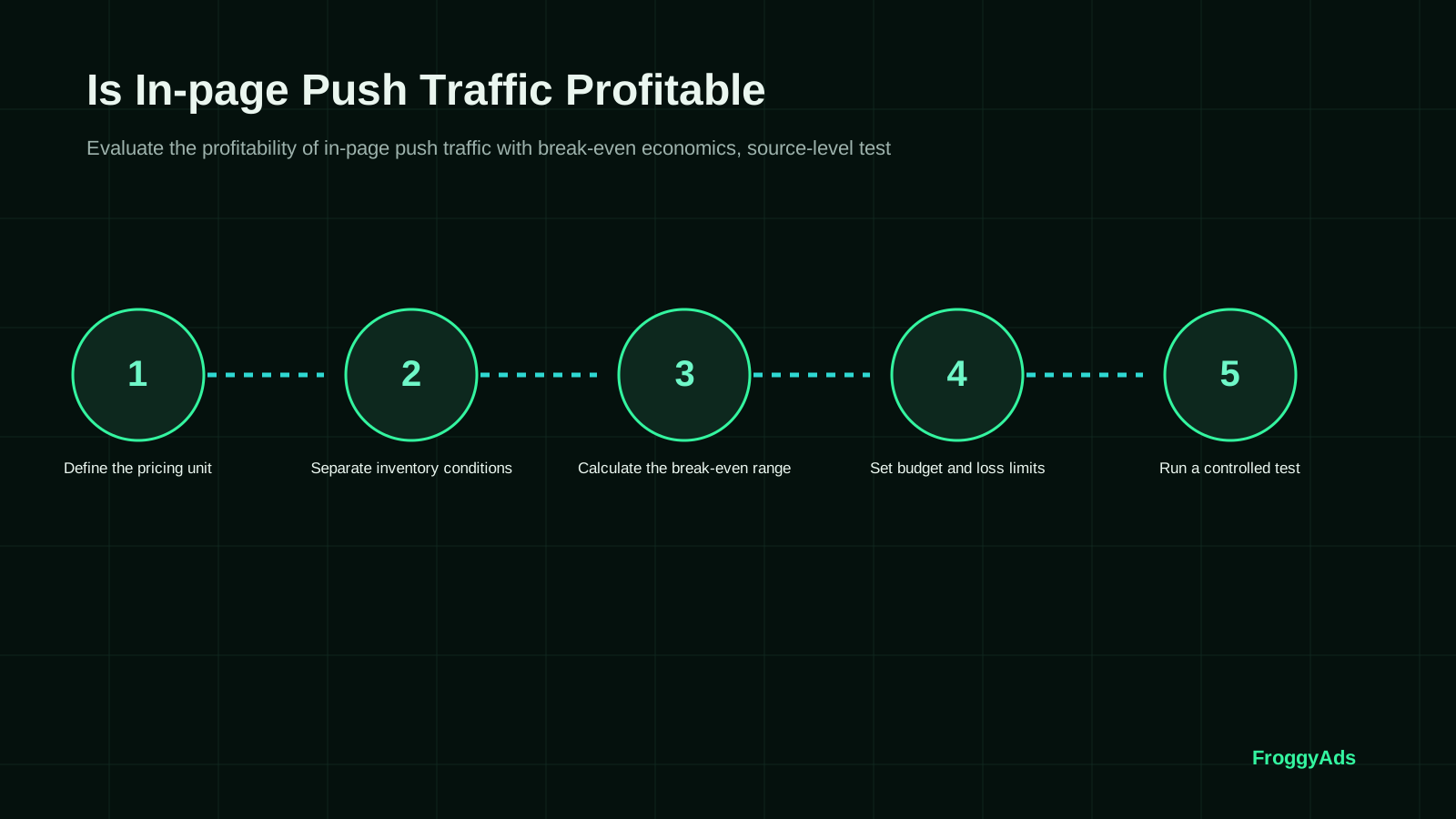
Define the pricing unit
Define the pricing unit for this profitability test by documenting the hypothesis, keeping publisher, placement, source id, device, geo, creative and page context available and recording how the step changes viewable opportunities, clicks, qualified sessions, accepted outcomes and margin. Do not move to the next step until tracking and the current decision rule are clear.
Separate inventory conditions
Separate inventory conditions for this profitability test by documenting the hypothesis, keeping publisher, placement, source id, device, geo, creative and page context available and recording how the step changes viewable opportunities, clicks, qualified sessions, accepted outcomes and margin. Do not move to the next step until tracking and the current decision rule are clear.
Calculate the break-even range
Calculate the break-even range for this profitability test by documenting the hypothesis, keeping publisher, placement, source id, device, geo, creative and page context available and recording how the step changes viewable opportunities, clicks, qualified sessions, accepted outcomes and margin. Do not move to the next step until tracking and the current decision rule are clear.
Set budget and loss limits
Set budget and loss limits for this profitability test by documenting the hypothesis, keeping publisher, placement, source id, device, geo, creative and page context available and recording how the step changes viewable opportunities, clicks, qualified sessions, accepted outcomes and margin. Do not move to the next step until tracking and the current decision rule are clear.
Run a controlled test
Run a controlled test for this profitability test by documenting the hypothesis, keeping publisher, placement, source id, device, geo, creative and page context available and recording how the step changes viewable opportunities, clicks, qualified sessions, accepted outcomes and margin. Do not move to the next step until tracking and the current decision rule are clear.
Wait for mature outcomes
Wait for mature outcomes for this profitability test by documenting the hypothesis, keeping publisher, placement, source id, device, geo, creative and page context available and recording how the step changes viewable opportunities, clicks, qualified sessions, accepted outcomes and margin. Do not move to the next step until tracking and the current decision rule are clear.
Revise bid or channel
Revise bid or channel for this profitability test by documenting the hypothesis, keeping publisher, placement, source id, device, geo, creative and page context available and recording how the step changes viewable opportunities, clicks, qualified sessions, accepted outcomes and margin. Do not move to the next step until tracking and the current decision rule are clear.
Choose the execution format
Choose a paid-media format that supports Is In-Page Push Traffic Profitable? Economics, Testing and
Use the criteria around “A seven-step profitability workflow” to decide whether push, native, display or pop fits the message and destination. Set format, targeting and spend as campaign controls in FroggyAds while the is in-page push traffic profitable? economics, testing and decision remains the standard for judging the result.
Create My Free Account
Measure mature business value, not delivery alone
The headline decision metric for this profitability test is mature value per viewable in-page push placement. Define its numerator, denominator, currency, attribution rule and maturity window before comparing campaigns. Platform delivery, analytics events, network approvals and collected revenue can settle at different times. Keep recent results provisional until they have the same opportunity to mature.
Report the result by publisher, placement, source id, device, geo, creative and page context. This breakdown is not optional administration. It shows whether an apparent improvement came from a different auction, a stronger source, a more qualified audience, a creative change or a temporary traffic mix. Pair the economic metric with viewable opportunities, clicks, qualified sessions, accepted outcomes and margin so a short-term efficiency gain does not hide weaker acceptance or lower future scale. For this profitability test, use this principle to support the page's specific objective: evaluate the profitability of in-page push traffic with break-even economics, source-level tests and mature accepted outcomes.
Use a reconciliation table that connects ad spend, click IDs, landing sessions, raw conversions, approved conversions and payout or business value. Differences need reason codes such as attribution delay, invalid event, duplicate, cap, policy rejection or tracking loss. For this profitability test, the campaign is not ready to scale while the largest gaps remain unexplained. For is in-page push traffic profitable, use this principle to support the page's specific objective: evaluate the profitability of in-page push traffic with break-even economics, source-level tests and mature accepted outcomes.
| Layer | Evidence | Guardrail | Decision |
|---|---|---|---|
| Delivery | Impressions, clicks and reachable sessions | Technical validity and source visibility | Confirm eligible volume |
| Engagement | Page load, qualified visit and meaningful action | Message match and page experience | Keep or revise the path |
| Conversion | Raw and approved outcomes | Attribution and approval rules | Calculate mature acquisition cost |
| Value | Viewable opportunities, clicks, qualified sessions, accepted outcomes and margin | Mature value per viewable in-page Push placement | Stop, retest or scale |
Connect creative, landing path and accepted conversion for In-Page Push Traffic Profitability
A resilient this profitability test campaign separates traffic eligibility, auction delivery, click handling, landing-page behavior, conversion reporting and final acceptance. Each stage can fail independently. A click can be billable but never load the page, a conversion can be recorded but later rejected, and an approved action can still be unprofitable after media and operating costs. Mapping those stages prevents the team from optimizing the wrong layer. For is in-page push traffic profitable, use this principle to support the page's specific objective: evaluate the profitability of in-page push traffic with break-even economics, source-level tests and mature accepted outcomes.
Use a small number of campaign cells. Each cell should represent a meaningful hypothesis about the offer, source, GEO, device, creative angle or landing path. Give the cell a budget, bid range, loss limit, evidence threshold and maturity date. This structure makes this profitability test easier to read than one broad campaign with dozens of hidden interactions. For is in-page push traffic profitable, use this principle to support the page's specific objective: evaluate the profitability of in-page push traffic with break-even economics, source-level tests and mature accepted outcomes.
Keep discovery separate from scaling. Discovery spends a bounded amount to find new sources, placements or messages. Scaling spends more on mature cells that meet the economic rule. Mixing both jobs causes successful sources to hide exploration losses and makes it difficult to know whether the account is growing or simply consuming a past winner. For this profitability test, use this principle to support the page's specific objective: evaluate the profitability of in-page push traffic with break-even economics, source-level tests and mature accepted outcomes.
Put the guide into practice
Turn Is In-Page Push Traffic Profitable? Economics, Testing and into a bounded campaign test
With “Connect creative, landing path and accepted conversion for In-Page Push Traffic Profitability” documented, launch only the next reversible test. Set a spending limit, preserve the baseline and use source-level and audience controls so the next step depends on qualified outcomes for is in-page push traffic profitable? economics, testing and, not activity volume.
Create My Free Account
Make the user journey for In-Page Push Traffic Profitability coherent from placement to conversion
For In-Page Push Traffic Profitability, align the creative promise, actual placement, landing page and accepted conversion so format performance is not distorted by a broken user journey.
Promise
State one truthful reason to engage. For this profitability test, the promise should fit the format and avoid claims that the destination cannot verify. For Is In Page Push Traffic Profitable, apply this rule to the page-specific audience, market, format or buying decision described here.
Continuity
For In-Page Push Traffic Profitability, carry the same core promise, visual cues and next action into the landing page; abrupt message changes make source and creative quality harder to diagnose.
Speed
For In-Page Push Traffic Profitability, test page load and interaction on the devices and connection conditions being bought; lost sessions can make a viable source look unqualified.
Qualification
For In-Page Push Traffic Profitability, give the visitor enough context to understand eligibility, material terms and the final action before conversion; direct paths may need more explanation when restrictions or disclosures apply.
Proof
For In-Page Push Traffic Profitability, use verifiable product details, transparent terms and relevant evidence; avoid fabricated reviews, false urgency and unsupported performance claims.
Tracking
Preserve campaign, source, placement and creative identifiers through the complete path so this profitability test decisions remain attributable.
How to respond when the metrics disagree
When metrics for In-Page Push Traffic Profitability disagree, isolate delivery, source, creative, landing path, tracking or acceptance before changing the whole campaign.
The cheapest source has the highest loss rate
Use mature cost per accepted outcome rather than the visible bid or CPM. For this profitability test, compare the response with mature value per viewable in-page push placement, preserve the source breakdown and write the next action before changing the campaign.
A benchmark is much higher in one GEO
Separate competition, inventory, format and conversion value before changing the budget. For this profitability test, compare the response with mature value per viewable in-page push placement, preserve the source breakdown and write the next action before changing the campaign.
A small test produces unstable results
Narrow the question, improve tracking and collect enough representative outcomes before scaling. For this profitability test, compare the response with mature value per viewable in-page push placement, preserve the source breakdown and write the next action before changing the campaign.
Eight mistakes that distort profitability
Most paid traffic losses are not caused by one dramatic error. They come from small measurement, targeting and decision defects that remain active because the blended account still looks acceptable. Use the list as a pre-launch and weekly review checklist. For this profitability test, use this principle to support the page's specific objective: evaluate the profitability of in-page push traffic with break-even economics, source-level tests and mature accepted outcomes.
- 01Optimizing this profitability test from an immature conversion or payout window. Use a reason code, review date and measurable correction rather than a vague optimization note. For Is In Page Push Traffic Profitable, validate this point against In-Page Push Traffic, Push Traffic Profitable, Push Traffic and keep it separate from the Worldwide In Page Push Ads intent.
- 02Changing bid, creative, landing page and targeting together during the same this profitability test test. Use a reason code, review date and measurable correction rather than a vague optimization note. For Is In Page Push Traffic Profitable, validate this point against In-Page Push Traffic, Push Traffic Profitable, Push Traffic and keep it separate from the Worldwide In Page Push Ads intent.
- 03Using a blended campaign average for In-Page Push Traffic Profitability can hide weak sources, placements or devices. Record the affected segment, reason code, review date and measurable correction.
- 04Judging In-Page Push Traffic Profitability performance by delivery metrics without checking accepted business value can reward the wrong segment. Record the decision metric, reason code, review date and measurable correction.
- 05Increasing spend for In-Page Push Traffic Profitability before tracking, redirects and postbacks reconcile can amplify bad data. Record the mismatch, reason code, review date and correction before scaling.
- 06Allowing one winning creative or source in In-Page Push Traffic Profitability to become an untested dependency creates concentration risk. Record a diversification test, review date and fallback.
- 07Ignoring disclosure, destination quality or offer traffic restrictions in In-Page Push Traffic Profitability creates avoidable compliance and conversion risk. Record the applicable rule, owner, review date and correction.
- 08Keeping losing segments in In-Page Push Traffic Profitability active because the account-level result is still positive can hide marginal waste. Record the segment threshold, reason code and next action.
Move from instrumentation to a repeatable decision
Review In-Page Push Traffic Profitability only after enough delivery across relevant sources, devices and creatives has matured to support a format decision.
Days 1 to 3: instrument
Within Is In-Page Push Traffic Profitable? Economics, Testing and Scale, use this checkpoint when recording the next page-specific decision. Validate the destination, campaign parameters, source identifiers and conversion events for this profitability test. Record the break-even assumption and the maximum spend that can be lost while still learning something useful.
Days 4 to 10: launch narrow
Run one focused this profitability test test with a small creative set and a limited targeting scope. Watch delivery, page function and obvious source outliers, but avoid rewriting the campaign before meaningful response data arrives. For is in-page push traffic profitable, use this principle to support the page's specific objective: evaluate the profitability of in-page push traffic with break-even economics, source-level tests and mature accepted outcomes.
Days 11 to 20: reconcile
When using Is In-Page Push Traffic Profitable? Economics, Testing and Scale, apply this rule only to the conditions and decision described on this page. Compare platform events with viewable opportunities, clicks, qualified sessions, accepted outcomes and margin. Separate mature and provisional outcomes, remove segments that violate stop rules and preserve a controlled discovery budget for new sources.
Days 21 to 30: repeat or scale
Increase spend only where mature value per viewable in-page push placement remains inside the target range and the result is not dependent on one unstable cell. Document what changed and keep the previous stable setup available for rollback. For this profitability test, use this principle to support the page's specific objective: evaluate the profitability of in-page push traffic with break-even economics, source-level tests and mature accepted outcomes.
Standards and first-party evidence for In-Page Push Traffic Profitability
Use official format specifications, policy and implementation guidance for In-Page Push Traffic Profitability, then validate performance with your own source-level campaign data.
- Google Ads campaign budgetsFirst-party guidance for campaign budget controls and spend behavior.
- Google Ads bidding basicsOfficial overview of bidding approaches and campaign objectives.
- Google Ads conversion measurementFirst-party guidance for defining and measuring valuable outcomes.
- Google Ads experimentsOfficial principles for controlled campaign testing and comparison.
Is In-Page Push Traffic Profitable FAQ
Answers for In-Page Push Traffic Profitability focus on measurement, campaign control and responsible scaling.
What makes in-page push traffic commercially viable?
The format is viable when its page-embedded message reaches suitable visitors and accepted value exceeds delivery and operating costs. Results depend on source context, creative clarity and the destination, not the format name alone.
How is in-page push different from a browser notification?
It is rendered within a web page and does not by itself mean the user subscribed to operating-system or browser notifications. Creative should avoid implying a permission, personal alert or device message that does not exist.
Which layout check protects an in-page push campaign?
Inspect where the unit appears, whether it covers content or controls, how it closes and how it behaves during scroll. Test the served placement because a standalone creative preview cannot reveal the host-page interaction.
How should an in-page push headline be written?
State one supportable reason to care in language that fits the destination, then let the image and body add context rather than repeat it. Avoid false urgency or a greeting that suggests private knowledge of the viewer.
What role does the thumbnail play in this format?
It should make the advertiser or subject easier to recognize at small rendered sizes without carrying essential fine print. Check crops and contrast on the actual placements before assuming the uploaded image stays intact.
Why separate mobile and desktop in-page push results?
Screen space, placement behavior and interaction differ enough to change both accidental clicks and destination use. Read accepted outcomes by device while holding the offer and source context as stable as possible.
How can click quality be judged after the in-page unit?
Look beyond the click to usable page activity, the named destination action and backend acceptance, connected to the originating placement. A high click rate paired with immediate exits may point to presentation or source issues.
What frequency evidence matters for in-page push traffic?
Track how often the audience can encounter the same message within the host context and whether marginal accepted response declines. Adjust repetition from observed behavior rather than borrowing a limit from a different push format.
Which source details help control in-page push costs?
Retain site or app reference, placement position, device, creative and accepted result where the supplier supports them. Aggregated records call for a tighter test boundary because weak contexts cannot be removed precisely.
When is in-page push traffic ready for a larger test?
Proceed after the unit behaves responsibly, accepted value repeats and source-level quality remains understandable. Open one audience, placement or budget boundary and compare that addition with the earlier baseline.
Continue the paid traffic workflow
Use related resources for In-Page Push Traffic Profitability to connect source selection, campaign execution, pricing and measurement.
Turn the model into a controlled in-page push traffic profitability test
For Is In-Page Push Traffic Profitable? Economics, Testing and Scale, start with one accepted business outcome, transparent tracking, source-level controls and a written stop-or-scale rule. Judge the test by offer fit, creative, landing path, GEO, bid, conversion maturity and downstream acceptance.
Is In-Page Push Traffic Profitable? Economics, Testing and Scale: the decision this URL owns
For Is In-Page Push Traffic Profitable? Economics, Testing and Scale, start from the business decision rather than the headline tactic. The performance advertiser needs enough evidence to plan the market-specific test and measurement rules without blending this URL with adjacent intents.
URL boundary for Is In-Page Push Traffic Profitable? Economics, Testing and Scale: This URL owns Is In-Page Push Traffic Profitable? Economics, Testing and Scale; Worldwide In Page Push Ads is the nearest neighboring topic and should keep its separate task. Use this page only for the decision implied by Is In-Page Push Traffic Profitable? Economics, Testing and Scale.
Decision inputs for Is In-Page Push Traffic Profitable? Economics, Testing and Scale: audience targeting, source evidence, conversion tracking, accepted business value. Keep these inputs tied to accepted conversion or business-value event and the page-specific job: plan the market-specific test and measurement rules.
Connect Is In-Page Push Traffic Profitable? Economics, Testing and to a controlled audience test is the action checkpoint for Is In-Page Push Traffic Profitable? Economics, Testing and Scale. Before acting on “Which layout check protects an in-page push campaign?”, document conversion tracking, the resulting campaign action and the rollback or retest condition.
Six controls behind in-page push traffic economics is the measurement checkpoint for this URL. Resolve “How is in-page push different from a browser notification?” while retaining source evidence, accepted business value, spend and cohort age so the result can be reconciled with accepted conversion or business-value event.
What a profitability assessment should accomplish is an evidence checkpoint for Is In-Page Push Traffic Profitable? Economics, Testing and Scale. To answer “What makes in-page push traffic commercially viable?”, keep audience targeting in the same campaign record and use it to plan the market-specific test and measurement rules.
| Page checkpoint | How to use it | Evidence to retain |
|---|---|---|
| What a profitability assessment should accomplish | Use What a profitability assessment should accomplish to establish the first evidence boundary for Is In-Page Push Traffic Profitable? Economics, Testing and Scale; then record which part of campaign objective, targeting, source evidence, conversion tracking and economics it changes. | Keep audience targeting, source/campaign ID and the accepted-event definition together. |
| Six controls behind in-page push traffic economics | Use Six controls behind in-page push traffic economics as the second checkpoint and reconcile it with accepted conversion or business-value event before changing budget or source allocation. | Retain source evidence, spend, timestamp/cohort age and accepted/rejected outcomes. |
| Connect Is In-Page Push Traffic Profitable? Economics, Testing and to a controlled audience test | Use Connect Is In-Page Push Traffic Profitable? Economics, Testing and to a controlled audience test as the final checkpoint: if it does not change the evidence for accepted conversion or business-value event, keep the test narrow rather than scaling. | Document conversion tracking, the decision taken and the rollback or retest condition. |
Transparent Is In-Page Push Traffic Profitable? Economics, Testing and Scale decision example
Hypothetical example: For Is In-Page Push Traffic Profitable? Economics, Testing and Scale, a hypothetical controlled cell that spends USD 290 and records 3 accepted conversion or business-value event after the same maturity window has an accepted cost of USD 96.67 per outcome. Replace the figures, outcome and review window with your own economics; this is not a FroggyAds performance claim.
Why use FroggyAds here?
FroggyAds can execute the paid-acquisition test behind Is In-Page Push Traffic Profitable? Economics, Testing and Scale: preserve the campaign/source record, measure accepted conversion or business-value event and change allocation only after the evidence matures. Create your free FroggyAds account.
Is In-Page Push Traffic Profitable? Economics, Testing and Scale — what matters first
Is In-Page Push Traffic Profitable? Economics, Testing and Scale should be evaluated market by market: define eligible geography, keep measurement consistent, and scale only where accepted-outcome economics remain viable.