
High Quality Display Traffic
Evaluate high quality display traffic through site, app, placement, size, device and source identifiers, creative testing, tracking, source reporting, budget controls and accepted campaign economics without relying on unsupported guarantees.
What High Quality Display Traffic Means
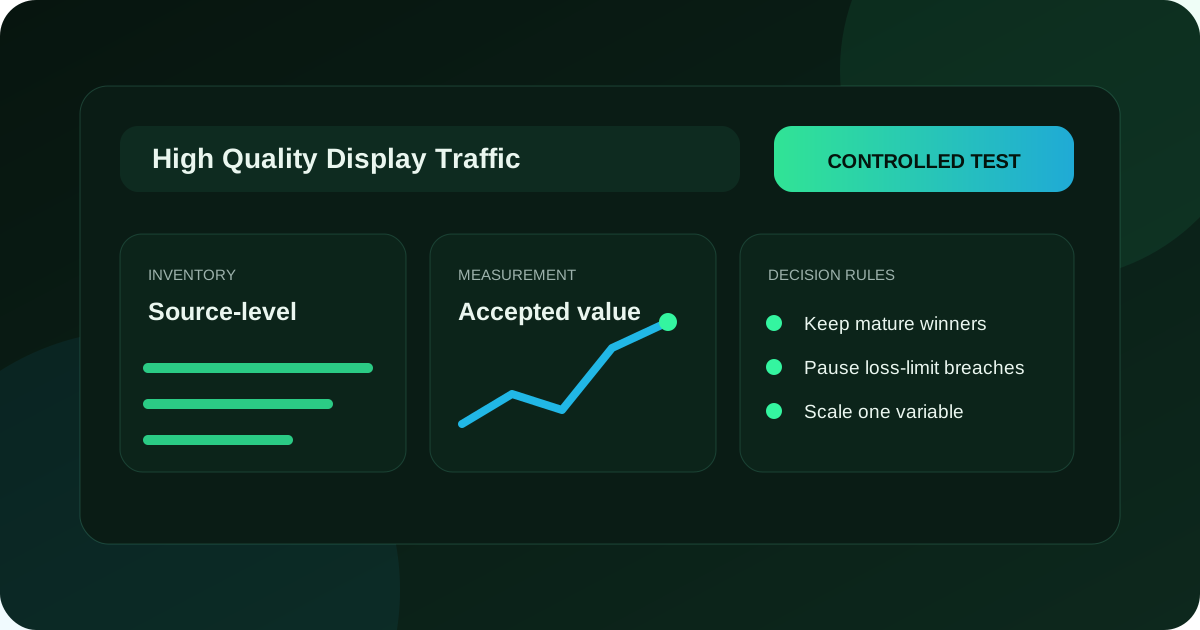
High Quality Display Traffic refers to display inventory evaluated for placement quality, engagement integrity and accepted outcomes. Buyers should verify site, app, placement, size, device and source identifiers, creative fit, source-level reporting, attribution and accepted backend economics before increasing spend. The phrase is a planning requirement, not a performance guarantee.
Understand How Display Ads Create the Opportunity to Engage
High Quality Display Traffic starts with the real delivery model. Display Ads use visible graphic units served in fixed or responsive placements across websites and apps. For high quality display traffic, document the complete chain from auction, impression, viewability opportunity, click, destination session and accepted backend outcome. Confirm when an impression is counted, how a click is identified, which placement fields remain available and how an accepted outcome returns to the reporting system. Separate rendering, placement, creative, destination and attribution problems because each requires a different correction. A large platform total is not enough when the operator cannot connect spend to a source and a validated result. The buyer should be able to explain the source, creative, destination and backend evidence behind every material change.
Turn the Phrase “High Quality Display Traffic” Into a Measurable Campaign Brief
The wording high quality display traffic should become a specific buyer requirement, not a promise. In this page the useful focus is placement quality, engagement integrity and accepted outcomes. Write the supported GEOs, devices, languages, placement types, bid model, daily loss limit, conversion window and accepted backend event before comparing supply. Define which conditions would disqualify a source even when early click metrics look attractive. This keeps broad words such as best, top, cheap, trusted, global or fast from replacing evidence. The right conclusion for high quality display traffic can change with the offer, destination, compliance needs, creative capacity and value of an accepted result. A disciplined review separates delivery volume from the business value of accepted outcomes.
Evaluate supply for High Quality Display Traffic beyond reach, impression or click-volume claims
Inventory quality for high quality display traffic depends on where, when and how the ad appears. Ask which site, app, placement, size, device and source identifiers are available and which fields can be preserved in reports or tracking parameters. Confirm whether frequency limits, whitelists, blacklists, bid adjustments and placement exclusions can be applied without rebuilding the campaign. Review the likely mix by GEO, browser, operating system, connection type and time of day. For High Quality Display Traffic, a broad reach claim matters only when the buyer can isolate segments, control exposure and compare accepted outcomes under a consistent attribution model. Record gaps before launch so missing controls are treated as known limitations rather than surprises after spend has accumulated. The campaign becomes easier to improve when every variable has an owner, a timestamp and a defined decision threshold.
Define Eligibility Before Buying Reach
List who may use the offer, where the campaign may run, which devices and languages are supported, and what action the visitor should complete. High Quality Display Traffic can support direct-response, content, app, lead-generation and awareness goals when the message and destination fit the audience context. Exclude unsupported markets before launch, and keep material conditions, age restrictions, subscription terms and regulated claims visible where required. Match targeting breadth to the amount of reliable conversion data available. Precise eligibility protects the budget and prevents an audience mistake from being misdiagnosed as weak display traffic. The practical objective is to make every major decision reproducible from evidence rather than from a label.
Connect the guide to live testing
Connect High Quality Display Traffic to a controlled audience test
Use the choices established in “Define Eligibility Before Buying Reach” to define one audience, budget and source set in FroggyAds. Keep the surrounding offer and measurement rule stable so the test adds evidence to high quality display traffic instead of mixing several changes at once.
Create My Free Account
Build Display Ads Creative for the Real Placement
For high quality display traffic, prepare static, animated or responsive banner concepts that communicate one primary message, readable brand identity and an accurate call to action. Build several genuinely different concepts rather than minor color changes. Each concept should express one benefit, problem, proof point or use case and should have a unique creative identifier. Record the source file, launch date, message angle, placement compatibility and destination version. This makes fatigue, placement mismatch and source quality easier to distinguish. Never use fabricated ratings, false urgency, fake interface elements or unsupported performance statements. Preview the assets on representative devices before launch and confirm the close, click and landing behavior is clear. The operating plan should show what will be measured, when a result is mature and which action follows each signal.
Make the Destination Continue the Ad Promise
The destination for high quality display traffic should confirm the message immediately. Use a fast, responsive page that identifies the advertiser, explains the real benefit, presents important conditions and offers one clear next step. If the campaign uses an educational article or prelander, it should add truthful context rather than hide the final offer. Measure response time, engaged sessions, form starts, accepted outcomes and rejection reasons by creative and source. Strong media can appear weak when message continuity or mobile usability breaks after the interaction. For High Quality Display Traffic, audit the destination after every major creative or targeting change because the most effective traffic mix can expose usability problems that a smaller test did not reveal. The buyer should be able to explain the source, creative, destination and backend evidence behind every material change.
Create a Reliable Impression-to-Outcome Chain
Pass unique campaign, creative, click, source and placement identifiers wherever the platform supports them. Return validated outcomes through a server-to-server postback or another reliable integration, and align time zones, attribution windows and duplicate rules across the ad platform, tracker, analytics and backend. Before meaningful spend on high quality display traffic, complete a live test and confirm the exact identifier stored in every system. The goal is not perfect agreement between tools. It is enough consistent evidence to repeat a source decision and explain material discrepancies. Document late conversions, rejected leads, refunds and repeated events so optimization does not reward volume that the business cannot accept. A disciplined review separates delivery volume from the business value of accepted outcomes.
Protect Learning With a Staged Test Budget
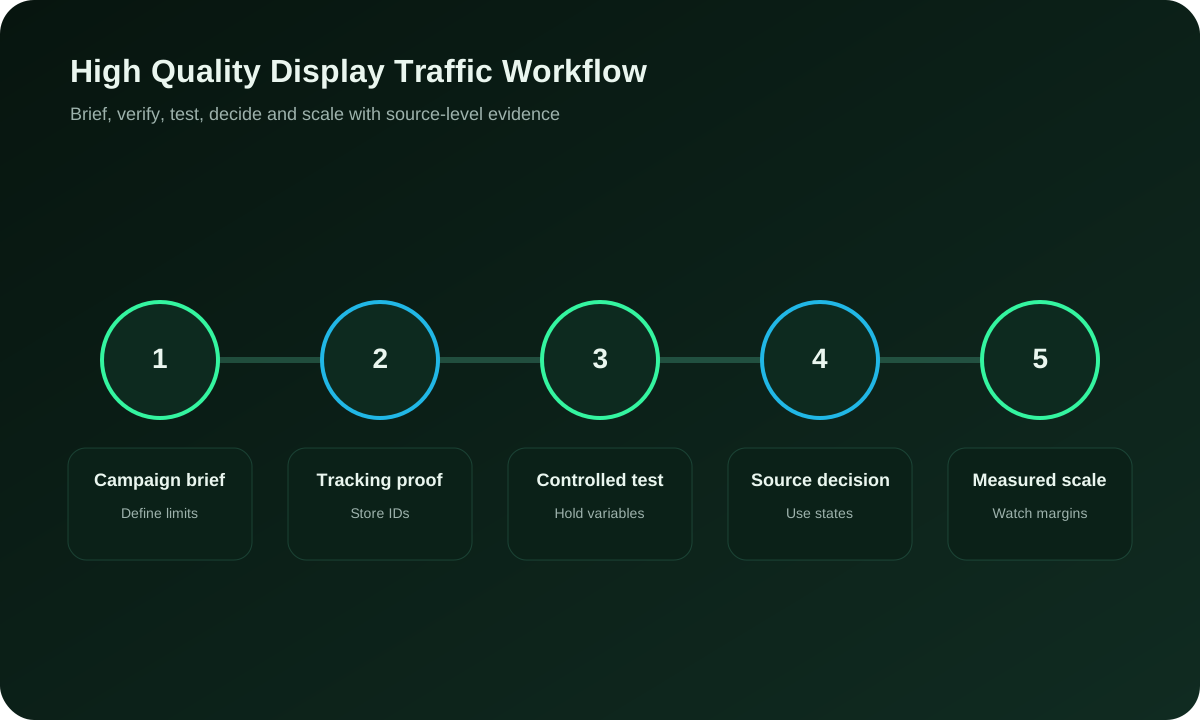
Build the high quality display traffic budget in stages. Reserve an initial discovery amount for multiple sources and creative concepts, a validation amount for the combinations that survive, and a separate scaling reserve that is released only after accepted economics remain stable. Estimate the maximum accepted acquisition cost from contribution margin, approval rate, refund risk and operating costs before choosing a bid. Avoid changing bids, targeting, creative and destination at the same time. A staged structure prevents one noisy source or early conversion from consuming the full budget. It also creates a clear loss limit and a dated review point for every campaign state. The campaign becomes easier to improve when every variable has an owner, a timestamp and a defined decision threshold.
Choose the execution format
Choose a paid-media format that supports High Quality Display Traffic
Use the criteria around “Protect Learning With a Staged Test Budget” to decide whether push, native, display or pop fits the message and destination. Set format, targeting and spend as campaign controls in FroggyAds while the high quality display traffic decision remains the standard for judging the result.
Create My Free Account
Compare auction models for High Quality Display Traffic using effective accepted-outcome cost after downstream quality is reconciled
High Quality Display Traffic may be purchased through CPM, CPC, SmartCPC or another supported auction model. Compare the auction model using effective cost per validated click, engaged visit and accepted outcome rather than the displayed rate alone. A lower CPM can be expensive when viewability, source fit or destination engagement is weak, while a higher bid can be efficient when it unlocks better inventory and stable backend value. Record the actual source mix created by each bid change. For high quality display traffic, calculate blended and source-level economics, then compare marginal performance after each increase. Never assume the cheapest or highest bid is automatically optimal. The practical objective is to make every major decision reproducible from evidence rather than from a label.
Judge High Quality Display Traffic with source, device and accepted-conversion signals
Traffic-quality review for high quality display traffic should combine source behavior, device consistency, duplicate patterns, session depth, time-to-conversion, accepted outcomes, rejection reasons and downstream value. Investigate abrupt changes in click timing, browser mix, geography, engagement or conversion delay. Use traffic-quality controls to reduce risk, but do not claim they can eliminate every invalid event. Compare platform logs, tracker records and backend evidence before making a permanent exclusion. A source with modest click-through rate can be valuable if accepted outcomes are stable, while a high-click source can be poor when the backend rejects most activity. The operating plan should show what will be measured, when a result is mature and which action follows each signal.
Use keep, watch, cap, exclude and retest states for High Quality Display Traffic
Give every material source in the high quality display traffic campaign one explicit state. Keep sources that meet maturity and accepted-economics requirements. Observe sources with incomplete data but no serious warning signs. Reduce exposure when quality is uncertain and more evidence is useful. Pause sources that cross the loss limit, violate eligibility or create repeated abnormal behavior. Retest only after the creative, destination, bid or tracking issue has been identified and documented. This decision system avoids emotional optimization and makes later audits possible. Use separate whitelists, blacklists or campaign structures when the platform supports them, and preserve the evidence behind every move. The buyer should be able to explain the source, creative, destination and backend evidence behind every material change.
Change One Major Variable at a Time
A useful high quality display traffic test begins with a written hypothesis, one primary outcome, a stable destination and enough budget for several sources to mature. Randomize creative exposure where practical, preserve source identifiers and avoid editing multiple major variables during the same comparison window. Define the minimum sample in spend, impressions, clicks or conversion opportunities before launch. Review both aggregate and segment-level results because a blended average can hide a strong source beside a weak one. Document market events, outages, policy changes and seasonal effects that may influence the period. A disciplined review separates delivery volume from the business value of accepted outcomes.
Put the guide into practice
Turn High Quality Display Traffic into a bounded campaign test
With “Change One Major Variable at a Time” documented, launch only the next reversible test. Set a spending limit, preserve the baseline and use source-level and audience controls so the next step depends on qualified outcomes for high quality display traffic, not activity volume.
Create My Free Account
Measure High Quality Display Traffic from delivery to accepted conversions
For high quality display traffic, monitor delivery, viewability opportunity, interaction rate, landing-page response, conversion rate, backend acceptance, accepted acquisition cost and downstream value. Use diagnostic metrics to locate problems, but make budget decisions from the deepest reliable event available. Compare creative and source cohorts over the same maturity window. Calculate confidence ranges or at least show the sample size beside every rate. When conversion delay is material, freeze recent data until it matures instead of pausing sources from incomplete evidence. The campaign becomes easier to improve when every variable has an owner, a timestamp and a defined decision threshold.
Set cost, quality and compliance stops before scaling High Quality Display Traffic
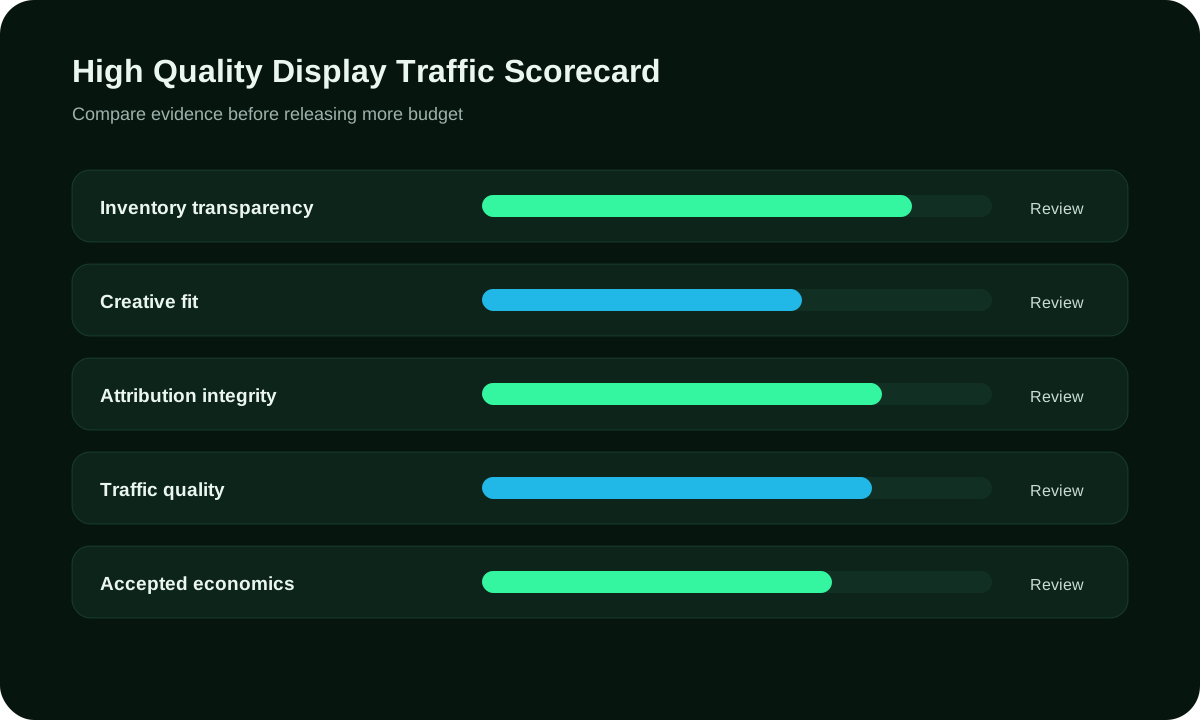
Write stop rules for high quality display traffic before the first auction. Examples include a source spending a defined multiple of the accepted acquisition target without a qualified event, a sudden increase in rejected outcomes, destination failure, policy concern, broken tracking or a material change in source mix. Separate automatic emergency stops from review-required warnings. Use a rollback point for every major bid, targeting or creative change. Stop rules protect the budget and help the team act consistently when pressure is high. They should be strict enough to limit damage but not so sensitive that normal statistical variation ends every test. The practical objective is to make every major decision reproducible from evidence rather than from a label.
Scale High Quality Display Traffic only along the dimension that has earned more exposure through mature accepted-value evidence
Scale high quality display traffic after attribution is stable, accepted acquisition cost remains inside the planned range and performance survives a measured increase. Expand one dimension at a time, such as budget, bid, source list, GEO, device or creative volume. Compare marginal results with the stable baseline rather than looking only at the blended total. Keep a control campaign or protected source set when possible. If acceptance rate, source mix or contribution deteriorates materially, roll back to the last stable configuration and reopen discovery. Results depend on the offer, market, creative, destination, competition and optimization, so no page can guarantee a specific outcome. The operating plan should show what will be measured, when a result is mature and which action follows each signal.
Keep Policy, Brand Safety and Ownership Visible
Assign clear owners for creative approval, destination changes, tracking, source decisions and budget releases in the high quality display traffic workflow. Keep campaign policies, prohibited claims, brand-safety exclusions and escalation contacts in the operating record. Review ad and landing-page behavior after major platform or browser changes. Store the version of every asset and the reason it was replaced. Good governance reduces accidental policy breaches and prevents teams from repeating a failed test after staff changes. It also makes reporting more credible because the final result can be connected to the configuration that produced it. The buyer should be able to explain the source, creative, destination and backend evidence behind every material change.
Model Conservative, Expected and Stress Cases
Create three planning cases for high quality display traffic. The conservative case should use weaker interaction, lower backend acceptance and the upper end of expected media cost. The expected case should use evidence from the first controlled cohort, not a sales estimate. The stress case should model a sudden source-mix change, creative fatigue, destination slowdown or longer conversion delay. Calculate spend, accepted outcomes and contribution for each case. Scenario planning does not predict the future, but it shows how much performance can deteriorate before the campaign crosses its loss limit and which signal should trigger a rollback. A disciplined review separates delivery volume from the business value of accepted outcomes.
Close every High Quality Display Traffic review with a dated action, evidence requirement and rollback condition
At the end of each high quality display traffic review, record the active creative set, sources, bids, caps, destination version, attribution window and sample maturity. Assign one action to every material segment: keep unchanged, observe longer, reduce exposure, pause, retest or move into a scaling structure. State the evidence required before the next action, such as an accepted-outcome threshold, a minimum spend multiple or a second stable time period. This prevents teams from changing campaigns because of pressure or recent noise. A concise operating log also makes handoffs clearer and protects previous learning when another buyer takes over the campaign. The campaign becomes easier to improve when every variable has an owner, a timestamp and a defined decision threshold.
Practical Review Table for High Quality Display Traffic
| Area | Evidence required | Action |
|---|---|---|
| Inventory | Site, app, placement, size, device and source identifiers remain visible | Keep only segments that can be controlled and reviewed |
| Creative | The asset is legible, original and truthful in the real placement | Retain distinct concepts with stable delivery |
| Attribution | Creative, click, source and placement IDs reach the backend | Complete a live accepted-outcome test |
| Quality | Engagement, acceptance and rejection reasons are visible | Pause abnormal or low-value sources |
| Economics | Effective media cost and accepted acquisition cost are calculated | Compare marginal value with the planned limit |
| Scaling | Performance remains stable after a measured increase | Increase one dimension and preserve rollback control |
High Quality Display Traffic FAQ
When can display traffic be called high quality for a campaign?
Quality means the delivered audience is eligible, the visit is valid, the placement behaves as expected, and accepted outcomes fit the business rule. The definition belongs to the specific offer and cannot be reduced to a click rate.
Which audience signal should anchor a quality display test?
Begin with the eligibility condition most likely to affect value, often market, device, language, or page context. Add segmentation only when the resulting groups can be measured and acted on.
What display format should an advertiser test for quality?
Select a size and placement type that can show the message clearly on the intended devices without obscuring content. Keep formats in separate reports because viewability, response, and destination behavior can differ.
How does the destination protect display-traffic quality?
A fast, accurate page prevents loading faults and message mismatch from being blamed on the media source. Preserve campaign and placement identifiers through consent, redirects, forms, and the final accepted event.
What budget design supports a display quality review?
Assign discovery limits by source, allow time for conversions and rejections to mature, and reserve more spend for placements that pass. The cap should reflect accepted customer value and the loss the campaign can absorb.
Which records connect a display impression to customer value?
Retain campaign, creative, placement, source, device, view or click event, loaded session, and accepted backend outcome. Align duplicate, attribution, time-zone, and value rules before source comparisons.
How can weak display inventory be diagnosed accurately?
Compare reported delivery with successful page loads, believable session behavior, suitable engagement, business acceptance, and recorded declines. Segment by source and device so one poor pocket does not define the entire network.
What screening layer helps protect display spend?
Combine network controls and source exclusions with analytics, server records, conversion validation, and manual placement review where useful. Investigate abnormal timing, repeated IDs, hidden placements, and large reporting differences.
Which findings justify taking a display placement offline?
Take it offline when enough mature data exceeds the written acquisition or quality boundary and technical problems have been ruled out. Keep the supporting results and destination version so the decision can later be audited or reversed.
What supports buying more high-quality display traffic?
Increase the sources that show stable accepted outcomes and clean behavior over several normal periods. Expand one placement, market, or cap at a time so added inventory gets its own quality check.
Continue the Display Ads Workflow
Build a Controlled High Quality Display Traffic Test
Define one accepted outcome for high quality display traffic, verify tracking, protect the test budget and make source-level decisions from mature data. Results vary by offer, GEO, creative, destination, competition and optimization.
High Quality Display Traffic: the buyer task this URL owns
Treat High Quality Display Traffic as an operating page for performance-focused advertisers, not as a synonym page. Its job is to help you acquire and qualify high quality display traffic by source, device, market, landing behavior and accepted downstream outcome, with the evidence kept against this exact decision. The nearest related FroggyAds page is High Quality Display Ads; this URL keeps ownership of the distinct task to acquire and qualify high quality display traffic by source, device, market, landing behavior and accepted downstream outcome.
Anchor the High Quality Display Traffic review to responsive creative, banner dimensions, asset quality, audience targeting. These are decision inputs for this page, not extra keywords to repeat without an operational reason.
| Checkpoint | Page-specific action | Evidence to keep |
|---|---|---|
| Journey | Match the format to the user's attention state and destination. | Retain evidence specific to High Quality Display Traffic and its accepted outcome. |
| Creative | Check format requirements, message continuity and landing-page readiness. | Retain evidence specific to High Quality Display Traffic and its accepted outcome. |
| Optimize | Compare source-level accepted outcomes before increasing volume. | Retain evidence specific to High Quality Display Traffic and its accepted outcome. |
Hypothetical calculation: if a controlled campaign for high quality display traffic spends USD 125 and produces 8 accepted conversions, accepted CPA is USD 125 / 8 = USD 15.62. Replace the inputs with your own campaign economics; this is not a FroggyAds performance claim.
Choose FroggyAds when High Quality Display Traffic calls for a controlled paid-media test. We let performance-focused advertisers apply relevant format, targeting and budget controls, keep source-level evidence visible, and measure the accepted outcome before increasing spend. Create your free FroggyAds account.
High Quality Display Traffic — what matters first
Direct answer: This page helps you acquire and qualify high quality display traffic by source, device, market, landing behavior and accepted downstream outcome. Keep the comparison or test inside that scope, then use FroggyAds campaign controls only where paid traffic is part of the decision.