
Google Ads Guide: Plan, Launch, Measure and Improve Campaigns
A reliable Google ads guide starts with the business outcome, then defines account access, campaign structure, targeting, creative, budget, measurement and stop rules before launch. Use platform metrics for diagnosis and backend outcomes for commercial decisions.
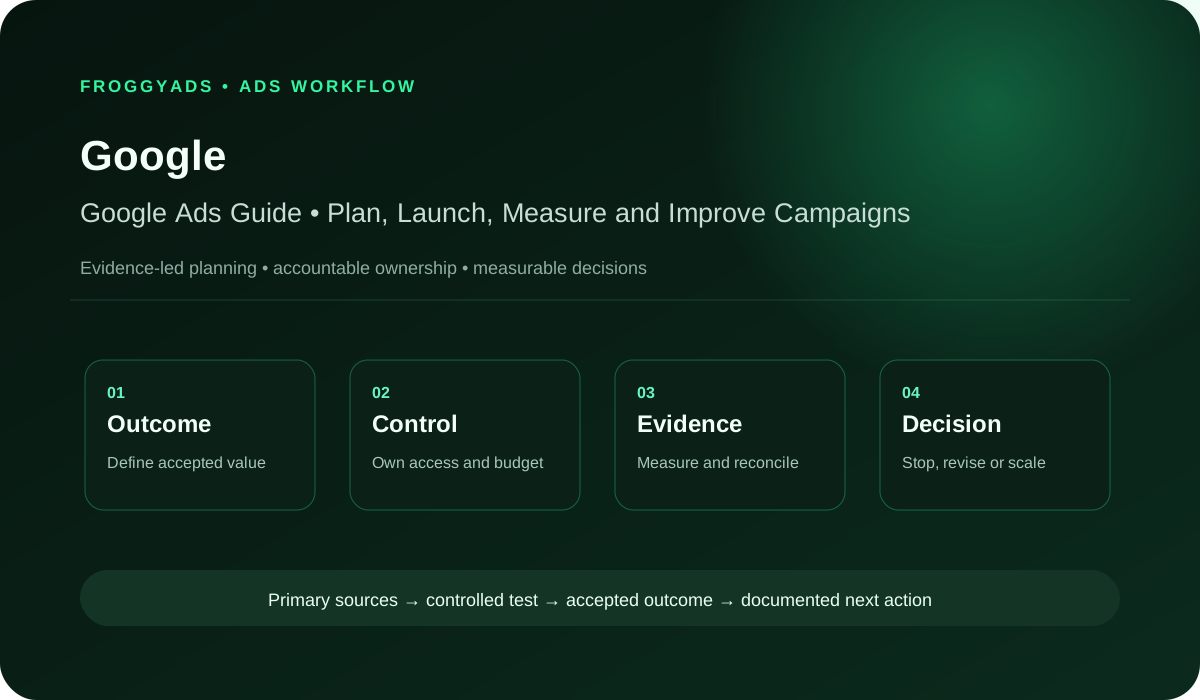
What does this page explain about Google Ads Guide: Plan, Launch & Optimize Campaigns?
Quick answer: The guide workflow is prepare, configure, verify, launch, diagnose and decide, with screenshots or exports retained for material Google settings. Google commonly uses account, campaign, ad group or asset group, ads and assets. Eligible formats may include Search, Display, Shopping, Demand Gen, App, Performance Max and eligible video inventory. Implement Google tag, conversion actions, enhanced conversions where eligible, Data Manager workflows and backend reconciliation. Follow Google Ads policies, destination requirements, consent controls and restricted-content rules.
Reference for Google Ads Guide: Plan, Launch & Optimize Campaigns: Google Ads: Create a campaign.
Key takeaways
- Define an accepted business outcome and accountable owner before configuring Google.
- For Google Ads Guide, keep account access, audience, creative, destination, budget and measurement decisions visible in the review record so ownership and later changes remain auditable.
- For Google Ads Guide, use platform metrics diagnostically and judge value with validated backend outcomes after conversion delay, rejection and downstream quality have matured.
- For Google Ads Guide, verify current platform policy, privacy and consent duties, truthful claims, content or data rights and an accessible user experience before launch.
- For Google Ads Guide, preserve a versioned control, comparison cohort and rollback path for every material audience, creative, bid, destination or measurement change.
Prerequisites and account readiness for Google Ads Guide: Plan, Launch, Measure and Improve Campaigns
Before opening Google Ads, confirm account ownership, billing, business verification where required, destination readiness, rights-cleared creative, policy eligibility and a tested measurement path. The guide workflow is prepare, configure, verify, launch, diagnose and decide, with screenshots or exports retained for material Google settings. The working record should name the owner, evidence source, decision threshold and next review date. Keep assumptions separate from observed data, and preserve the previous stable setup so the team can reverse a change when quality, policy, billing or tracking deteriorates. Evidence note 1 is specific to /google-ads-guide/ and the search intent google ads guide. This paragraph belongs uniquely to Google Ads Guide: Plan, Launch, Measure and Improve Campaigns.
Before opening Google Ads, confirm account ownership, billing, business verification where required, destination readiness, rights-cleared creative, policy eligibility and a tested measurement path. A second review for Google should test whether the documented plan still matches actual inventory, audience response, destination capacity and accepted outcome quality. The guide workflow is prepare, configure, verify, launch, diagnose and decide, with screenshots or exports retained for material Google settings. A useful operating document should distinguish platform-reported diagnostics from accepted backend outcomes, record exclusions and rejected actions, and explain why the current configuration is appropriate for the audience, offer and destination. Evidence note 2 is specific to /google-ads-guide/ and the search intent google ads guide. This paragraph belongs uniquely to Google Ads Guide: Plan, Launch, Measure and Improve Campaigns.
Campaign architecture for Google Ads Guide: Plan, Launch, Measure and Improve Campaigns
Google commonly uses account, campaign, ad group or asset group, ads and assets. Naming conventions should encode objective, market, audience, placement, offer, creative version and date so teams can diagnose and export settings without guesswork. The guide workflow is prepare, configure, verify, launch, diagnose and decide, with screenshots or exports retained for material Google settings. The working record should name the owner, evidence source, decision threshold and next review date. Keep assumptions separate from observed data, and preserve the previous stable setup so the team can reverse a change when quality, policy, billing or tracking deteriorates. Evidence note 3 is specific to /google-ads-guide/ and the search intent google ads guide. This paragraph belongs uniquely to Google Ads Guide: Plan, Launch, Measure and Improve Campaigns.
Google commonly uses account, campaign, ad group or asset group, ads and assets. Naming conventions should encode objective, market, audience, placement, offer, creative version and date so teams can diagnose and export settings without guesswork. A second review for Google should test whether the documented plan still matches actual inventory, audience response, destination capacity and accepted outcome quality. The guide workflow is prepare, configure, verify, launch, diagnose and decide, with screenshots or exports retained for material Google settings. A useful operating document should distinguish platform-reported diagnostics from accepted backend outcomes, record exclusions and rejected actions, and explain why the current configuration is appropriate for the audience, offer and destination. Evidence note 4 is specific to /google-ads-guide/ and the search intent google ads guide. This paragraph belongs uniquely to Google Ads Guide: Plan, Launch, Measure and Improve Campaigns.
| Preparation item | Required evidence | Accountable owner |
|---|---|---|
| Access | Administrator, billing and asset permissions | Advertiser |
| Destination | Mobile, forms, routing and confirmation tested | Web or product owner |
| Creative | Rights, disclosures and versions retained | Creative owner |
| Measurement | Google tag, conversion actions, enhanced conversions where eligible, Data Manager workflows and backend reconciliation | Analytics owner |
Connect Google Ads Guide to a controlled audience test
Use the choices established in “Campaign architecture for Google Ads Guide: Plan, Launch, Measure and Improve Campaigns” to define one audience, budget and source set in FroggyAds. Keep the surrounding offer and measurement rule stable so the test adds evidence to google ads guide instead of mixing several changes at once.
Create My Free Account
Objective and optimization event for Google Ads Guide: Plan, Launch, Measure and Improve Campaigns
Choose the objective from the accepted business outcome and the nearest reliable event. A click, view, message or lead is not automatically an accepted sale or customer, so define the backend state and maturity window before bidding. The guide workflow is prepare, configure, verify, launch, diagnose and decide, with screenshots or exports retained for material Google settings. The working record should name the owner, evidence source, decision threshold and next review date. Keep assumptions separate from observed data, and preserve the previous stable setup so the team can reverse a change when quality, policy, billing or tracking deteriorates. Evidence note 5 is specific to /google-ads-guide/ and the search intent google ads guide. This paragraph belongs uniquely to Google Ads Guide: Plan, Launch, Measure and Improve Campaigns.
Choose the objective from the accepted business outcome and the nearest reliable event. A click, view, message or lead is not automatically an accepted sale or customer, so define the backend state and maturity window before bidding. A second review for Google should test whether the documented plan still matches actual inventory, audience response, destination capacity and accepted outcome quality. The guide workflow is prepare, configure, verify, launch, diagnose and decide, with screenshots or exports retained for material Google settings. A useful operating document should distinguish platform-reported diagnostics from accepted backend outcomes, record exclusions and rejected actions, and explain why the current configuration is appropriate for the audience, offer and destination. Evidence note 6 is specific to /google-ads-guide/ and the search intent google ads guide. This paragraph belongs uniquely to Google Ads Guide: Plan, Launch, Measure and Improve Campaigns.
Platform formats and placements for Google Ads Guide: Plan, Launch, Measure and Improve Campaigns
Google connects declared search demand, visual discovery and automated cross-channel delivery. Campaign type changes the available controls, reporting granularity and creative requirements. Eligible formats may include Search, Display, Shopping, Demand Gen, App, Performance Max and eligible video inventory. Select placements because they fit the audience and creative, not merely because the interface recommends broad inventory. The guide workflow is prepare, configure, verify, launch, diagnose and decide, with screenshots or exports retained for material Google settings. The working record should name the owner, evidence source, decision threshold and next review date. Keep assumptions separate from observed data, and preserve the previous stable setup so the team can reverse a change when quality, policy, billing or tracking deteriorates. Evidence note 7 is specific to /google-ads-guide/ and the search intent google ads guide. This paragraph belongs uniquely to Google Ads Guide: Plan, Launch, Measure and Improve Campaigns.
Google connects declared search demand, visual discovery and automated cross-channel delivery. Campaign type changes the available controls, reporting granularity and creative requirements. Eligible formats may include Search, Display, Shopping, Demand Gen, App, Performance Max and eligible video inventory. Select placements because they fit the audience and creative, not merely because the interface recommends broad inventory. A second review for Google should test whether the documented plan still matches actual inventory, audience response, destination capacity and accepted outcome quality.
The guide workflow is prepare, configure, verify, launch, diagnose and decide, with screenshots or exports retained for material Google settings. A useful operating document should distinguish platform-reported diagnostics from accepted backend outcomes, record exclusions and rejected actions, and explain why the current configuration is appropriate for the audience, offer and destination. Evidence note 8 is specific to /google-ads-guide/ and the search intent google ads guide. This paragraph belongs uniquely to Google Ads Guide: Plan, Launch, Measure and Improve Campaigns.
Audience setup for Google Ads Guide: Plan, Launch, Measure and Improve Campaigns
Available controls may include keywords, search themes, locations, devices, audiences, customer data, remarketing and automated signals depending on campaign type. Build prospecting, retargeting and customer-exclusion logic separately, document sensitive-category limits and preserve an estimate of reachable audience before launch. The guide workflow is prepare, configure, verify, launch, diagnose and decide, with screenshots or exports retained for material Google settings. The working record should name the owner, evidence source, decision threshold and next review date. Keep assumptions separate from observed data, and preserve the previous stable setup so the team can reverse a change when quality, policy, billing or tracking deteriorates. Evidence note 9 is specific to /google-ads-guide/ and the search intent google ads guide. This paragraph belongs uniquely to Google Ads Guide: Plan, Launch, Measure and Improve Campaigns.
Available controls may include keywords, search themes, locations, devices, audiences, customer data, remarketing and automated signals depending on campaign type. Build prospecting, retargeting and customer-exclusion logic separately, document sensitive-category limits and preserve an estimate of reachable audience before launch. A second review for Google should test whether the documented plan still matches actual inventory, audience response, destination capacity and accepted outcome quality. The guide workflow is prepare, configure, verify, launch, diagnose and decide, with screenshots or exports retained for material Google settings. A useful operating document should distinguish platform-reported diagnostics from accepted backend outcomes, record exclusions and rejected actions, and explain why the current configuration is appropriate for the audience, offer and destination. Evidence note 10 is specific to /google-ads-guide/ and the search intent google ads guide. This paragraph belongs uniquely to Google Ads Guide: Plan, Launch, Measure and Improve Campaigns.
| Planning layer | Google decision | Records to keep |
|---|---|---|
| Audience need | Problem, stage and eligibility | Research notes and customer language |
| Platform expression | keywords, search themes, locations, devices, audiences, customer data, remarketing and automated signals depending on campaign type | Settings export and exclusions |
| Creative fit | Search, Display, Shopping, Demand Gen, App, Performance Max and eligible video inventory | Rendered previews and version IDs |
| Quality | Backend state proving fit | Accepted and rejected outcomes |
Creative preparation for Google Ads Guide: Plan, Launch, Measure and Improve Campaigns
Prepare a matrix for hook, problem, value proposition, proof, format, disclosure, destination and call to action. Review safe zones, captions, audio dependence, text size, rights and rendered previews across likely devices. The guide workflow is prepare, configure, verify, launch, diagnose and decide, with screenshots or exports retained for material Google settings. The working record should name the owner, evidence source, decision threshold and next review date. Keep assumptions separate from observed data, and preserve the previous stable setup so the team can reverse a change when quality, policy, billing or tracking deteriorates. Evidence note 11 is specific to /google-ads-guide/ and the search intent google ads guide. This paragraph belongs uniquely to Google Ads Guide: Plan, Launch, Measure and Improve Campaigns.
Prepare a matrix for hook, problem, value proposition, proof, format, disclosure, destination and call to action. Review safe zones, captions, audio dependence, text size, rights and rendered previews across likely devices. A second review for Google should test whether the documented plan still matches actual inventory, audience response, destination capacity and accepted outcome quality. The guide workflow is prepare, configure, verify, launch, diagnose and decide, with screenshots or exports retained for material Google settings. A useful operating document should distinguish platform-reported diagnostics from accepted backend outcomes, record exclusions and rejected actions, and explain why the current configuration is appropriate for the audience, offer and destination. Evidence note 12 is specific to /google-ads-guide/ and the search intent google ads guide. This paragraph belongs uniquely to Google Ads Guide: Plan, Launch, Measure and Improve Campaigns.
Choose a paid-media format that supports Google Ads Guide
Use the criteria around “Creative preparation for Google Ads Guide: Plan, Launch, Measure and Improve Campaigns” to decide whether push, native, display or pop fits the message and destination. Set format, targeting and spend as campaign controls in FroggyAds while the google ads guide decision remains the standard for judging the result.
Create My Free Account
Offer and destination for Google Ads Guide: Plan, Launch, Measure and Improve Campaigns
The destination should restate the promise, explain material terms and make the next step obvious. Test mobile speed, forms, payments, app routing, consent, accessibility, confirmation and campaign parameter persistence. The guide workflow is prepare, configure, verify, launch, diagnose and decide, with screenshots or exports retained for material Google settings. The working record should name the owner, evidence source, decision threshold and next review date. Keep assumptions separate from observed data, and preserve the previous stable setup so the team can reverse a change when quality, policy, billing or tracking deteriorates. Evidence note 13 is specific to /google-ads-guide/ and the search intent google ads guide. This paragraph belongs uniquely to Google Ads Guide: Plan, Launch, Measure and Improve Campaigns.
The destination should restate the promise, explain material terms and make the next step obvious. Test mobile speed, forms, payments, app routing, consent, accessibility, confirmation and campaign parameter persistence. A second review for Google should test whether the documented plan still matches actual inventory, audience response, destination capacity and accepted outcome quality. The guide workflow is prepare, configure, verify, launch, diagnose and decide, with screenshots or exports retained for material Google settings. A useful operating document should distinguish platform-reported diagnostics from accepted backend outcomes, record exclusions and rejected actions, and explain why the current configuration is appropriate for the audience, offer and destination. Evidence note 14 is specific to /google-ads-guide/ and the search intent google ads guide. This paragraph belongs uniquely to Google Ads Guide: Plan, Launch, Measure and Improve Campaigns.
Budget, bids and pacing for Google Ads Guide: Plan, Launch, Measure and Improve Campaigns
Derive the learning budget from maximum affordable loss, expected conversion delay and review capacity. Set pacing, caps, approval thresholds and rollback rules, and separate media cost from production and operational overhead. The guide workflow is prepare, configure, verify, launch, diagnose and decide, with screenshots or exports retained for material Google settings. The working record should name the owner, evidence source, decision threshold and next review date. Keep assumptions separate from observed data, and preserve the previous stable setup so the team can reverse a change when quality, policy, billing or tracking deteriorates. Evidence note 15 is specific to /google-ads-guide/ and the search intent google ads guide. This paragraph belongs uniquely to Google Ads Guide: Plan, Launch, Measure and Improve Campaigns.
Derive the learning budget from maximum affordable loss, expected conversion delay and review capacity. Set pacing, caps, approval thresholds and rollback rules, and separate media cost from production and operational overhead. A second review for Google should test whether the documented plan still matches actual inventory, audience response, destination capacity and accepted outcome quality. The guide workflow is prepare, configure, verify, launch, diagnose and decide, with screenshots or exports retained for material Google settings. A useful operating document should distinguish platform-reported diagnostics from accepted backend outcomes, record exclusions and rejected actions, and explain why the current configuration is appropriate for the audience, offer and destination. Evidence note 16 is specific to /google-ads-guide/ and the search intent google ads guide. This paragraph belongs uniquely to Google Ads Guide: Plan, Launch, Measure and Improve Campaigns.
Tracking and measurement for Google Ads Guide: Plan, Launch, Measure and Improve Campaigns
Implement Google tag, conversion actions, enhanced conversions where eligible, Data Manager workflows and backend reconciliation. Document event triggers, deduplication, attribution settings, currency, time zone, maturity period and reconciliation logic before the first optimization decision. The guide workflow is prepare, configure, verify, launch, diagnose and decide, with screenshots or exports retained for material Google settings. The working record should name the owner, evidence source, decision threshold and next review date. Keep assumptions separate from observed data, and preserve the previous stable setup so the team can reverse a change when quality, policy, billing or tracking deteriorates. Evidence note 17 is specific to /google-ads-guide/ and the search intent google ads guide. This paragraph belongs uniquely to Google Ads Guide: Plan, Launch, Measure and Improve Campaigns.
Implement Google tag, conversion actions, enhanced conversions where eligible, Data Manager workflows and backend reconciliation. Document event triggers, deduplication, attribution settings, currency, time zone, maturity period and reconciliation logic before the first optimization decision. A second review for Google should test whether the documented plan still matches actual inventory, audience response, destination capacity and accepted outcome quality. The guide workflow is prepare, configure, verify, launch, diagnose and decide, with screenshots or exports retained for material Google settings. A useful operating document should distinguish platform-reported diagnostics from accepted backend outcomes, record exclusions and rejected actions, and explain why the current configuration is appropriate for the audience, offer and destination. Evidence note 18 is specific to /google-ads-guide/ and the search intent google ads guide. This paragraph belongs uniquely to Google Ads Guide: Plan, Launch, Measure and Improve Campaigns.
| Control | Planning rule | Review trigger |
|---|---|---|
| Learning cap | Maximum affordable loss before reliable evidence | Cap reached without accepted outcomes |
| Pacing | Budget tied to review capacity | Unexpected acceleration or underdelivery |
| Economics | Accepted value and break-even point | Marginal cost exceeds boundary |
| Rollback | Previous stable settings and owner | Quality, policy, billing or tracking failure |
Turn Google Ads Guide into a bounded campaign test
With “Tracking and measurement for Google Ads Guide: Plan, Launch, Measure and Improve Campaigns” documented, launch only the next reversible test. Set a spending limit, preserve the baseline and use source-level and audience controls so the next step depends on qualified outcomes for google ads guide, not activity volume.
Create My Free Account
Pre-launch QA for Google Ads Guide: Plan, Launch, Measure and Improve Campaigns
Use a four-part launch check: account and billing, audience and exclusions, creative and destination, then tracking and reporting. Capture screenshots or exports of settings and verify that the final URL, disclosures and events work on mobile. The guide workflow is prepare, configure, verify, launch, diagnose and decide, with screenshots or exports retained for material Google settings. The working record should name the owner, evidence source, decision threshold and next review date. Keep assumptions separate from observed data, and preserve the previous stable setup so the team can reverse a change when quality, policy, billing or tracking deteriorates. Evidence note 19 is specific to /google-ads-guide/ and the search intent google ads guide. This paragraph belongs uniquely to Google Ads Guide: Plan, Launch, Measure and Improve Campaigns.
Use a four-part launch check: account and billing, audience and exclusions, creative and destination, then tracking and reporting. Capture screenshots or exports of settings and verify that the final URL, disclosures and events work on mobile. A second review for Google should test whether the documented plan still matches actual inventory, audience response, destination capacity and accepted outcome quality. The guide workflow is prepare, configure, verify, launch, diagnose and decide, with screenshots or exports retained for material Google settings. A useful operating document should distinguish platform-reported diagnostics from accepted backend outcomes, record exclusions and rejected actions, and explain why the current configuration is appropriate for the audience, offer and destination. Evidence note 20 is specific to /google-ads-guide/ and the search intent google ads guide. This paragraph belongs uniquely to Google Ads Guide: Plan, Launch, Measure and Improve Campaigns.
Optimization workflow for Google Ads Guide: Plan, Launch, Measure and Improve Campaigns
Diagnose delivery before conversion, conversion before quality and quality before scale. Change one meaningful variable at a time, allow for attribution delay and compare the latest marginal results with the previous stable configuration. The guide workflow is prepare, configure, verify, launch, diagnose and decide, with screenshots or exports retained for material Google settings. The working record should name the owner, evidence source, decision threshold and next review date. Keep assumptions separate from observed data, and preserve the previous stable setup so the team can reverse a change when quality, policy, billing or tracking deteriorates. Evidence note 21 is specific to /google-ads-guide/ and the search intent google ads guide. This paragraph belongs uniquely to Google Ads Guide: Plan, Launch, Measure and Improve Campaigns.
Diagnose delivery before conversion, conversion before quality and quality before scale. Change one meaningful variable at a time, allow for attribution delay and compare the latest marginal results with the previous stable configuration. A second review for Google should test whether the documented plan still matches actual inventory, audience response, destination capacity and accepted outcome quality. The guide workflow is prepare, configure, verify, launch, diagnose and decide, with screenshots or exports retained for material Google settings. A useful operating document should distinguish platform-reported diagnostics from accepted backend outcomes, record exclusions and rejected actions, and explain why the current configuration is appropriate for the audience, offer and destination. Evidence note 22 is specific to /google-ads-guide/ and the search intent google ads guide. This paragraph belongs uniquely to Google Ads Guide: Plan, Launch, Measure and Improve Campaigns.
Reporting and decision rules for Google Ads Guide: Plan, Launch, Measure and Improve Campaigns
Reports should separate impressions, reach, clicks, views or messages, platform conversions, accepted outcomes, rejected actions and revenue or contribution. Every review should end with a named decision and owner. The guide workflow is prepare, configure, verify, launch, diagnose and decide, with screenshots or exports retained for material Google settings. The working record should name the owner, evidence source, decision threshold and next review date. Keep assumptions separate from observed data, and preserve the previous stable setup so the team can reverse a change when quality, policy, billing or tracking deteriorates. Evidence note 23 is specific to /google-ads-guide/ and the search intent google ads guide. This paragraph belongs uniquely to Google Ads Guide: Plan, Launch, Measure and Improve Campaigns.
Reports should separate impressions, reach, clicks, views or messages, platform conversions, accepted outcomes, rejected actions and revenue or contribution. Every review should end with a named decision and owner. A second review for Google should test whether the documented plan still matches actual inventory, audience response, destination capacity and accepted outcome quality. The guide workflow is prepare, configure, verify, launch, diagnose and decide, with screenshots or exports retained for material Google settings. A useful operating document should distinguish platform-reported diagnostics from accepted backend outcomes, record exclusions and rejected actions, and explain why the current configuration is appropriate for the audience, offer and destination. Evidence note 24 is specific to /google-ads-guide/ and the search intent google ads guide. This paragraph belongs uniquely to Google Ads Guide: Plan, Launch, Measure and Improve Campaigns.
Policy and troubleshooting for Google Ads Guide: Plan, Launch, Measure and Improve Campaigns
Follow Google Ads policies, destination requirements, consent controls and restricted-content rules. When delivery fails, inspect account eligibility, review status, budget, bid, audience size, placements, creative, destination, tracking and market restrictions in that order. The guide workflow is prepare, configure, verify, launch, diagnose and decide, with screenshots or exports retained for material Google settings. The working record should name the owner, evidence source, decision threshold and next review date. Keep assumptions separate from observed data, and preserve the previous stable setup so the team can reverse a change when quality, policy, billing or tracking deteriorates. Evidence note 25 is specific to /google-ads-guide/ and the search intent google ads guide. This paragraph belongs uniquely to Google Ads Guide: Plan, Launch, Measure and Improve Campaigns.
Follow Google Ads policies, destination requirements, consent controls and restricted-content rules. When delivery fails, inspect account eligibility, review status, budget, bid, audience size, placements, creative, destination, tracking and market restrictions in that order. A second review for Google should test whether the documented plan still matches actual inventory, audience response, destination capacity and accepted outcome quality. The guide workflow is prepare, configure, verify, launch, diagnose and decide, with screenshots or exports retained for material Google settings. A useful operating document should distinguish platform-reported diagnostics from accepted backend outcomes, record exclusions and rejected actions, and explain why the current configuration is appropriate for the audience, offer and destination. Evidence note 26 is specific to /google-ads-guide/ and the search intent google ads guide. This paragraph belongs uniquely to Google Ads Guide: Plan, Launch, Measure and Improve Campaigns.
SEO and GEO evidence design for Google Ads Guide: Plan, Launch, Measure and Improve Campaigns
A useful Google ads guide uses direct answers, question-led headings, visible tables, definitions, current primary sources and explicit limitations. This creates passages that can be cited without turning recommendations into guarantees. The guide workflow is prepare, configure, verify, launch, diagnose and decide, with screenshots or exports retained for material Google settings. The working record should name the owner, evidence source, decision threshold and next review date. Keep assumptions separate from observed data, and preserve the previous stable setup so the team can reverse a change when quality, policy, billing or tracking deteriorates. Evidence note 27 is specific to /google-ads-guide/ and the search intent google ads guide. This paragraph belongs uniquely to Google Ads Guide: Plan, Launch, Measure and Improve Campaigns.
A useful Google ads guide uses direct answers, question-led headings, visible tables, definitions, current primary sources and explicit limitations. This creates passages that can be cited without turning recommendations into guarantees. A second review for Google should test whether the documented plan still matches actual inventory, audience response, destination capacity and accepted outcome quality. The guide workflow is prepare, configure, verify, launch, diagnose and decide, with screenshots or exports retained for material Google settings. A useful operating document should distinguish platform-reported diagnostics from accepted backend outcomes, record exclusions and rejected actions, and explain why the current configuration is appropriate for the audience, offer and destination. Evidence note 28 is specific to /google-ads-guide/ and the search intent google ads guide. This paragraph belongs uniquely to Google Ads Guide: Plan, Launch, Measure and Improve Campaigns.
Google launch checklist
| Area | Evidence to request | Decision standard |
|---|---|---|
| Account | Access, billing and eligibility | Ready |
| Campaign | Objective, structure and naming | Ready |
| Audience | Inclusions, exclusions and reach | Ready |
| Creative | Specifications, rights and previews | Ready |
| Measurement | Events, QA and reporting | Ready |
Frequently asked questions
Before launching Google Ads, which business outcome needs definition?
The account needs one accepted result the business can verify, such as a qualified enquiry, completed purchase or activated customer. Clicks and platform conversions can diagnose the path, but they should not replace that commercial definition.
Which account permissions protect a shared Google Ads workflow?
Each person and service needs the narrowest role that supports current work, with named ownership and a removal process. Billing, conversion actions and administrative access deserve separate review because mistakes can affect every campaign.
How does campaign structure improve Google Ads reporting clarity?
Structure can separate markets, offers, budgets, objectives and material targeting differences. A useful hierarchy reflects decisions the team may change rather than creating many groups that never receive enough evidence.
Why are search terms different from the keywords advertisers select?
Keywords help define auction eligibility, while search terms show the wording people actually used. Search-term review can reveal new demand, poor fit and exclusions that the initial keyword list did not anticipate.
Which details belong in an accurate Google search advertisement?
The advertisement should identify the offer, meaningful condition and relevant next step in language the destination continues. Assets and automated combinations still require review because every possible presentation must remain accurate.
At what budget level can a Google Ads test remain controlled?
The budget needs a total loss limit, daily boundaries and enough room for the chosen customer outcome to mature. A larger forecast does not justify spend before conversion tracking and destination function are proven.
Where should Google Ads traffic arrive after a specific promise?
Traffic should reach a page that confirms the same offer, audience context, material terms and action. Sending every advertisement to a generic home page can erase the relevance created by the query and creative.
What conversion data should be ready before Google uses automated bidding?
A live test should connect the ad interaction with the declared event and accepted business record, while duplicate rules and timing remain known. Automation trained on an unverified page action may optimise the wrong behaviour.
How is poor Google Ads performance diagnosed without guessing?
Query fit, auction eligibility, creative, destination, event tracking and later acceptance should be reviewed as separate stages. The first weak stage suggests the next test more reliably than changing bids, copy and pages together.
Under which conditions can Google Ads targeting broaden safely?
Wider targeting becomes reasonable after tracking is stable, accepted acquisition cost remains viable and the destination can absorb more demand. New match types, markets or audiences should keep separate labels so marginal performance stays visible.
Official sources used
For Google Ads Guide, prioritize current primary platform, government and standards documentation because interfaces, eligibility, policy wording and terminology can change before launch.
Launch a controlled paid-media test
If Google Ads Guide requires paid reach, FroggyAds provides self-serve targeting, source controls, campaign budgets and reporting for a controlled test.
Google Ads Guide: Plan, Launch, Measure and Improve Campaigns — buyer decision
For Google Ads Guide: Plan, Launch, Measure and Improve Campaigns, begin with the campaign condition this guide covers and end with a written keep, change or stop rule. Click volume is supporting evidence; the accepted business outcome is the commercial checkpoint. The campaign-specific job is to follow a practical setup and optimization sequence. The adjacent Google Marketing Strategy page should remain a separate decision.
Evidence already visible on this page: A reliable Google ads guide starts with the business outcome, then defines account access, campaign structure, targeting, creative, budget, measurement and stop rules before launch. Use platform metrics for diagnosis… Quick answer: The guide workflow is prepare, configure, verify, launch, diagnose and decide, with screenshots or exports retained for material Google settings. Google commonly uses account, campaign, ad group or… The working concepts for this URL are audience targeting, source quality.
Questions to resolve before scale: Before launching Google Ads, which business outcome needs definition? Which account permissions protect a shared Google Ads workflow? How does campaign structure improve Google Ads reporting clarity?
| Checkpoint | Campaign action | Evidence to keep |
|---|---|---|
| Campaign condition | Use “Key takeaways” to define the first operating boundary for Google Ads Guide: Plan, Launch, Measure and Improve Campaigns. | Record the answer to “Before launching Google Ads, which business outcome needs definition?” together with source, targeting and destination identifiers. |
| Proof | Use “Prerequisites and account readiness for Google Ads Guide: Plan, Launch, Measure and Improve Campaigns” to test whether delivery is producing the expected path toward the accepted business outcome. | Keep the evidence needed to answer “Which account permissions protect a shared Google Ads workflow?” after the same maturation window. |
| Follow-up | Use “Campaign architecture for Google Ads Guide: Plan, Launch, Measure and Improve Campaigns” to decide what changes next; change one material variable before comparing again. | Write the answer to “How does campaign structure improve Google Ads reporting clarity?” plus accepted cost/value and the rollback condition. |
Transparent decision example
Hypothetical example: A controlled Google Ads Guide: Plan, Launch, Measure and Improve Campaigns test spending USD 125 with 7 accepted outcomes has an accepted cost of USD 17.86 per outcome after the same review window. Replace the inputs with your own economics; this is not a FroggyAds performance claim.
Why use FroggyAds for this step?
Use FroggyAds when Google Ads Guide: Plan, Launch, Measure and Improve Campaigns needs a measurable paid-media test. Our self-serve workflow keeps targeting, budget and source decisions under your control while your accepted accepted business outcome remains the scale signal. Create your free FroggyAds account.
Google Ads Guide worked application example
Hypothetical example: a buyer using this Google Ads Guide guide can turn one recommendation into a test by naming the accepted event, fixing the review window and changing one campaign variable. If USD 125 produces 7 accepted outcomes, the resulting accepted CPA is USD 17.86; use your own numbers and economics before deciding what to change next.
Google Ads Guide: Plan, Launch, Measure and Improve Campaigns — what matters first
Google Ads Guide: Plan, Launch, Measure and Improve Campaigns is most useful when it helps a buyer follow a practical setup and optimization sequence. Define the accepted outcome first, then use targeting, budget and source-level evidence to decide what deserves more spend.