
Fast Approval Direct Link Traffic
Fast approval direct link traffic describes a short provider review before a campaign sends users directly from a paid placement to an advertiser URL. Approval speed is an operational timing claim, not evidence of audience quality, destination acceptance or business results. The launch still needs source, creative, URL, measurement, policy and loss controls.
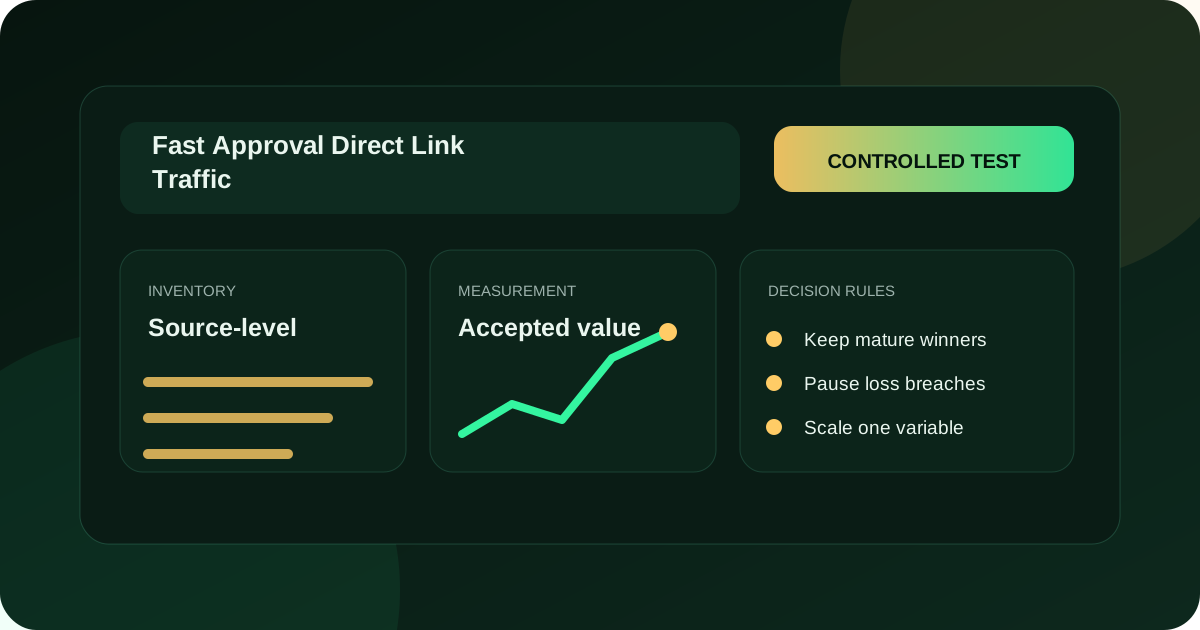
Official destination and invalid-traffic boundary
Google Ads documentation distinguishes display and landing URLs and requires destinations in its system to be functional, useful, easy to navigate and consistent with the displayed domain. Google also defines invalid clicks as interactions that do not result from genuine user interest, including accidental, duplicate or automated activity, and explains that its own filtering applies to Google Ads. These sources illustrate separate destination and traffic-quality controls; they do not certify another direct-link provider or guarantee that fast approval produces valid visitors. A buyer should review the selected network's current policies, render the placement, trace the final URL and redirects, retain actionable source identifiers and validate accepted first-party outcomes before increasing spend. Archive the approved scope, resolved path, source report and adjustment rules with the review date so provider-specific evidence cannot be confused with Google's product definitions or reused after conditions change.
- Google Ads URL types - display URL, final URL and landing-page distinctions
- Google Ads invalid clicks definition - accidental, duplicate and automated interaction context
Define what approval covers
Ask whether the provider reviews advertiser identity, category, creative, final URL, tracking, funding, geography or only account creation. Record submitted fields, decision time, reviewer response and conditions. Do not translate a quick account response into campaign, placement or destination acceptance.
Keep account approval, campaign approval, creative approval and live delivery as separate states. Name who can pause each state. A campaign is not ready merely because one supplier screen shows approved while a destination or compliance owner still has an open condition.
Map the direct-link path
Draw placement, click or interaction, tracking template, redirects, final URL, landing session and accepted event. Record every domain and parameter owner. Google's URL documentation illustrates why displayed and landing destinations must be understood; verify the actual provider's rules separately.
Test the route on representative devices and browsers, including back navigation and failed parameters. Shorteners or cross-domain transitions can obscure the destination and complicate policy review. Preserve the resolved URL and test time with the campaign version.
Classify the placement context
Document site, app, source or placement identifier, format, trigger, device, geography and user action before the link opens. A direct link can originate from a deliberate content link, a full-page interruption or another interaction with different intent and accidental-click risk.
Render representative placements and check whether the destination is accurately signaled. Require the granularity needed for exclusion. Unknown or blended supply may receive only a smaller limit and should not be called high quality because approval was quick.
Connect the guide to live testing
Connect Fast Approval Direct Link Traffic to a controlled audience test
Use the choices established in “Classify the placement context” to define one audience, budget and source set in FroggyAds. Keep the surrounding offer and measurement rule stable so the test adds evidence to fast approval direct link traffic instead of mixing several changes at once.
Create My Free Account
Approve the offer and destination
Retain substantiation for product, price, comparison, scarcity and outcome claims. Check selected network requirements and applicable advertising rules. The landing page should continue the material promise and show important conditions before requesting payment or personal information.
Test HTTPS, redirects, mobile layout, form behavior, service eligibility, confirmation and support. A fast media launch cannot rescue a broken destination. When the page changes, close the old evidence period so its results are not attributed to a different user path.
Create direct-link creative variants
Design for the actual placement dimensions, initiation and viewing time. Identify the offer, material condition and destination without imitating system controls. Preserve rights, approvals and version IDs. If the placement has little creative, review the publisher context and link wording as part of the message.
Test one meaningful promise or context difference at a time. Keep automatic resizing or provider-generated combinations visible. An asset upload count is not evidence that users saw the intended version.
Build a click and session ledger
Keep provider-billed interaction, resolved final URL, landing request, usable session, accepted event, rejection and reversal distinct. Align timestamps, timezone, currency and identifiers. Document which parameters survive redirect and which records are aggregated.
Sample provider rows toward the first-party ledger and accepted records back toward available source evidence. Differences can arise from filtering, browser behavior, consent, redirects and processing; they do not by themselves prove fraud. Preserve unknowns and request investigation with evidence.
Review invalid-activity signals carefully
Google's invalid-click definition and filtering describe Google Ads, not a promise about third-party direct-link supply. For the selected provider, request its current billing and adjustment rules. Inspect impossible timing, repeated patterns, click-to-session gaps and geography mismatch without assigning an unsupported label.
Use keep, observe, reduce, pause and retest states. Record evidence and action at source level. A shared IP or short visit can have benign explanations, while a consistent combination of anomalies can justify a bounded pause and provider inquiry.
Set approval and launch service levels
Measure the time from complete submission to a documented decision and from approval to controllable delivery. Exclude delays caused by missing advertiser inputs when assessing provider response. Record support channel, hours and escalation for a live destination or spend incident.
Speed matters only inside the launch plan. A slower documented review can be preferable when it prevents rework, while instant activation can create risk if no owner can stop delivery. Price staff monitoring required by the chosen approval model.
Protect the initial budget
Set maximum total loss and smaller ceilings by source, device, geography, placement and creative. Validate low-volume tracking before opening the approved cap. A fast launch should use more conservative early exposure because operational controls have had less time to reveal defects.
Define abnormal-spend, source-shift, destination, policy and accepted-cost pauses in advance. Separate continuation from scaling. Budget is a learning control, not proof that a provider can deliver the planned volume at the same quality.
Calculate effective acquisition cost
Include billed traffic, creative, destination work, tracking, verification, tools, support and internal monitoring. Reconcile credits and adjustments after the relevant period. Retain the supplier's billing unit alongside mature total cost per accepted outcome.
Show gross events, rejected events, reversals and net accepted value. A low click price can be expensive after lost sessions or ineligible outcomes. Use marginal cost for added delivery instead of projecting the first small cell.
Choose the execution format
Choose a paid-media format that supports Fast Approval Direct Link Traffic
Use the criteria around “Calculate effective acquisition cost” to decide whether push, native, display or pop fits the message and destination. Set format, targeting and spend as campaign controls in FroggyAds while the fast approval direct link traffic decision remains the standard for judging the result.
Create My Free Account
Run an approval-to-outcome pilot
Choose one source class, placement context, creative, final URL, accepted event and maximum exposure. Exercise approval exception, broken redirect, event loss and pause paths before meaningful volume. The pilot tests operability and evidence, not a permanent provider rank.
Review approval record, resolved destinations, source distribution, session continuity, accepted outcomes and staff effort together. Unknown critical fields remain unresolved. Authorize only the next bounded state with an owner and review date.
Inspect geography and device evidence
Record targeting setting and available geographic and device report fields. Test the actual landing path across representative environments. Do not infer physical location or human identity from one signal when eligibility matters.
Compare accepted events and technical failures by declared cell. Preserve unknown and mismatched records. Pause the failing device or region without condemning every source, and reopen the comparison after the destination or configuration changes.
Preserve account and export ownership
The advertiser should control funding, approved creative, destination and first-party event records, with named roles and least privilege. Test access removal and emergency pause. A managed provider should not be the only party able to stop a broken campaign.
Export campaign settings, approvals, source decisions, spend, credits, event definitions and open issues before renewal. Identify what cannot move and price recreation. Approval speed is not valuable when account departure erases the evidence needed to learn or reconcile billing.
Close reviews with a dated action
State source, placement, device, geography, creative, final URL, event window, complete cost and unresolved limits. Choose pause, repair, continue, retest or increase to a named ceiling. Link the decision to exact exports and destination version.
Assign the action owner and next review trigger. Reopen after inventory, policy, price, redirect, offer, creative or measurement changes. A prior pass can support a retest, but it cannot guarantee that a newly approved campaign will behave the same.
Test tracking-template failure
Create an approved test URL, then exercise missing parameters, duplicate parameters, encoded values, redirect timeout and an unavailable destination. Confirm that failures do not strand users or send them to an unrelated domain. Record which party can edit the template and how quickly an unsafe route can be disabled.
Compare provider click records with server requests for the controlled tests. Do not use live customer identifiers. The purpose is to verify routing and evidence, not to inflate traffic. Keep the template version and resolved destination beside every campaign review.
Review mobile and in-app behavior
Open the direct link from representative mobile browsers and app webviews where the placement can occur. Test back, close, orientation, keyboard, consent, deep-link fallback and form input. A desktop destination approval does not establish that the mobile transition is usable.
Record app or browser context at the granularity available and permitted. Separate technical failure from audience quality. If an environment consistently breaks, exclude or repair that cell while retaining a stable comparison instead of changing creative and destination together.
Put the guide into practice
Turn Fast Approval Direct Link Traffic into a bounded campaign test
With “Review mobile and in-app behavior” documented, launch only the next reversible test. Set a spending limit, preserve the baseline and use source-level and audience controls so the next step depends on qualified outcomes for fast approval direct link traffic, not activity volume.
Create My Free Account
Set source exclusion governance
Define who can move a source among keep, observe, reduce, pause and retest, which evidence is required and how quickly the action should take effect. Preserve the source identifier and reason. A spreadsheet exclusion that is never applied in the provider account is not a control.
Audit a sample of excluded sources after campaign duplication or relaunch. Automation and copied settings can restore inventory silently. Keep a master decision record and compare it with the active configuration before approving more exposure.
Reconcile invoices and adjustments
Match campaign, source and date spend to invoices using the same currency and timezone. Record taxes, fees, credits and invalid-activity adjustments when the provider supplies them. Do not force delivery and billing totals to agree by deleting unexplained rows.
Close the economic window only after material late adjustments and event reversals have matured. Preserve the original and adjusted views. Finance needs the settled cost, while campaign owners also need the delivery evidence that explains why a change occurred.
Protect consent and data boundaries
Map click identifiers, URL parameters, device or location evidence, form fields and downstream follow-up. Remove unnecessary personal data from the link and logs. Review notice, purpose, retention, access and transfer with responsible owners for the actual campaign and markets.
Test consent-limited behavior and deletion routes before volume. A direct URL makes the handoff fast but does not remove responsibilities across provider, tracker, destination and customer systems. Unknown data processing is a launch stop, not a quality score.
Coordinate provider support evidence
Submit a representative question about approval scope, source detail, redirect handling or adjustment policy. Record channel, response, resolution and documentation. One rapid reply should not become a permanent service rating, but the exercise reveals whether critical campaign evidence can be obtained.
Define escalation for a live policy, spend or destination incident and verify the advertiser can pause without support. Price managed-service dependency and after-hours monitoring. Fast approval has limited value when urgent control depends on an unavailable contact.
Run a marginal source expansion
After one cell passes, add a single source group or budget increment with all other material conditions held stable. Compare source mix, usable sessions, accepted outcomes and complete marginal cost after the same maturation. Added volume may enter different inventory.
Stop at the declared ceiling when evidence weakens or becomes opaque. Do not average the new cell into the initial result before deciding. Preserve the former stable configuration as a rollback target and document who can restore it.
Prepare the campaign closure packet
At campaign end, export approvals, settings, link chain, creative, source decisions, spend, credits, accepted-event rules, incidents and final action. Revoke unnecessary access and confirm schedules are stopped. Keep the packet under the organization's retention process.
Write which conclusions apply only to the tested provider, placement and period. A closure packet supports future comparison without turning an old approval time or cost into a current promise. Record open billing or deletion duties with an accountable owner.
Audit destination promise continuity
Select every active creative or placement label and compare its material offer, price, eligibility and next action with the resolved final page. Record mismatch, hidden condition and unsupported redirect. Review the complete path because a technically functioning URL can still lead to a different promise.
Repair the earliest point that creates the mismatch and retest confirmation and back behavior. Preserve the old campaign and destination versions. Do not credit source optimization for an improvement created by making the landing promise accurate.
Review approval data at renewal
Compare submitted account and campaign information with current ownership, category, destinations, payment and contact details before adding funds or renewing service. Identify approvals that no longer describe the operating entity. A historical fast decision should not be assumed valid after a material change.
Request clarification where the provider's current process is unclear and retain the response. Reverify pause, export and support access. Renewal is a new authorization to accept risk and spend, so it requires current evidence rather than the convenience of an already active account.
Fast direct-link launch matrix
Approval speed is recorded separately from destination, supply, measurement and accepted-value gates.
| Gate | Evidence | Action |
|---|---|---|
| Approval | Submitted scope, decision and conditions | Launch only the approved cell |
| Destination | Resolved URL and rendered journey | Pause broken or misleading routes |
| Supply | Placement and source identifiers | Cap unknown inventory |
| Measurement | Click-to-accepted-event ledger | Keep discrepancies explicit |
| Economics | Complete mature acquisition cost | Scale a reversible dimension |
Retained direct-link traffic resources
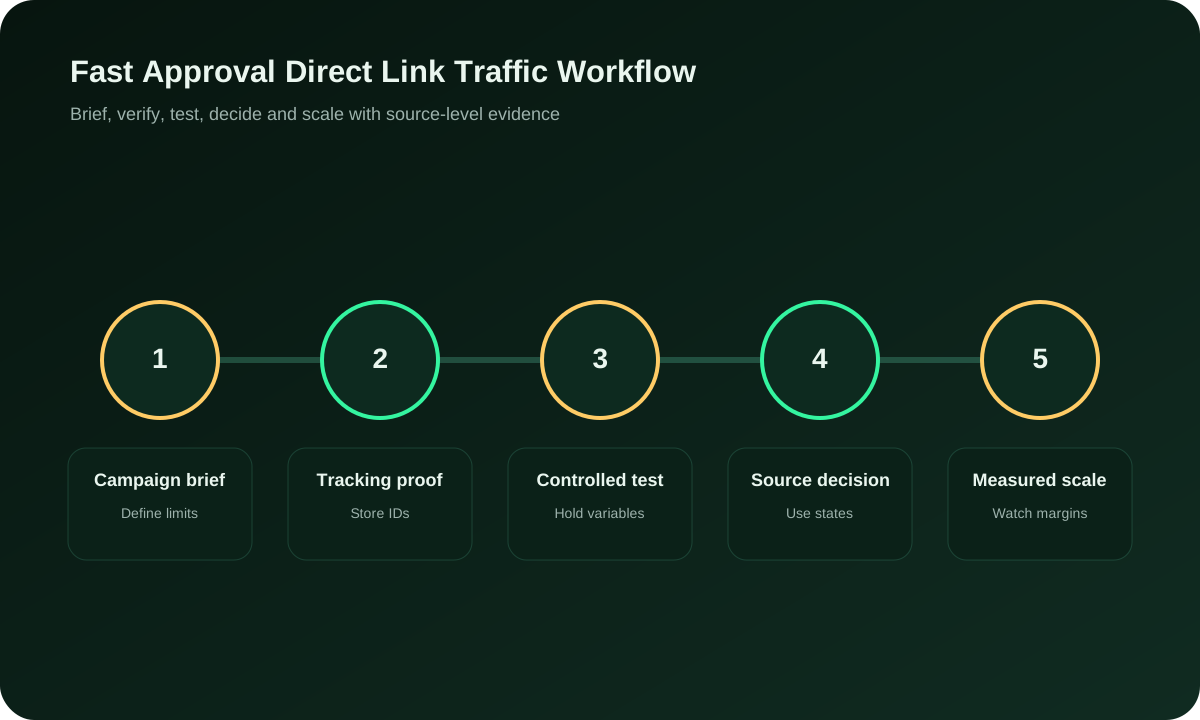
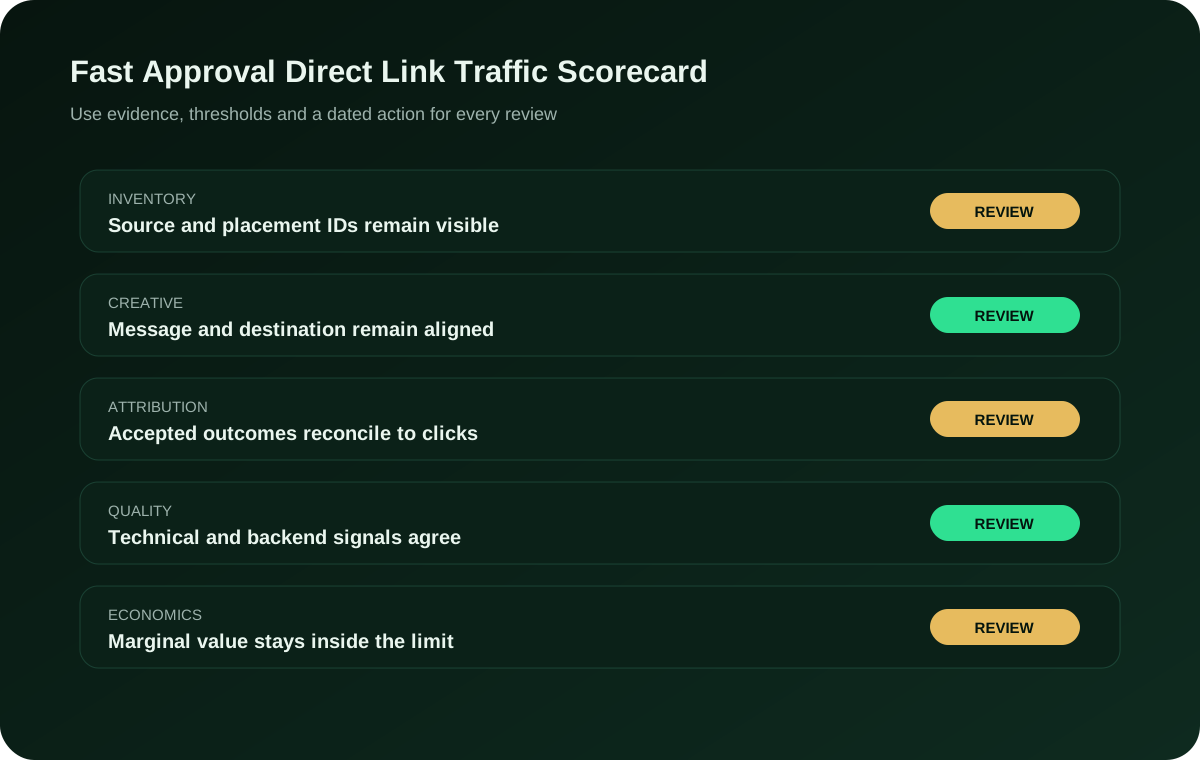
The original direct-link guides, calls to action and three images remain below in their original sequence. They preserve navigation and do not certify approval time, traffic quality or results.
Fast approval direct link traffic questions
Is fast approval direct-link traffic suitable when launch speed matters?
It can be, provided approval speed does not hide source ownership, redirects, allowed offers or billing terms. Start with a small route set. A fast yes is useful only when the buyer can still verify what will deliver.
Which users should a fast direct-link test send to the offer?
Choose people whose current intent already matches the destination and who are eligible for the offer. Define device, region and exclusions before approval. Direct routing leaves little room to correct a weak audience assumption later.
What source record is required despite rapid approval?
Keep the source ID, upstream context, referrer evidence, redirect chain, device, region, approval time and billed visit. Join it to landing behaviour. Speed should shorten waiting, not remove the trail needed to explain delivery.
How should the upstream promise work in a quick direct-link launch?
The source message must describe the approved destination accurately and avoid invented urgency. Preserve any required disclosure. Review the promise and final page together, because a rapid handoff can otherwise conceal a damaging mismatch.
What destination checks cannot be skipped for fast approval traffic?
Open every redirect on target devices, confirm the final domain, preserve parameters and verify offer availability, price basis and action. Stop if the route changes after approval. Launch speed never justifies an untested landing path.
How much should the first fast-approval test spend?
Use a firm cap by source ID and redirect route. Allow enough visits to inspect real landing actions, but keep exposure small until charges reconcile. Do not raise the limit merely because approval completed quickly.
Which quality signals matter after a rapid direct-link launch?
Review successful redirects, engaged landings, accepted conversions, rejection reasons and charge accuracy by source. Approval time is an operational metric, not proof of visitor quality. Useful behaviour must persist beyond the first traffic burst.
What activity should pause a fast direct-link source?
Pause duplicate click chains, hidden hops, abrupt destination changes, repeated devices or visits with no page use. Compare server and post-click timing before deciding. Low conversion by itself does not establish invalid traffic.
How should fast approval direct-link performance be judged?
Measure cost per accepted destination action after removing failed redirects and reversals. Include customer quality and support burden. Compare against a slower approved source so the team can see whether speed adds value or simply moves risk.
When can a fast-approval route accept more volume?
Expand only after several review periods show stable redirects, source identity, billing and customer outcomes. Add one route or budget step at a time. Keep the original destination and quality pause rules active throughout growth.
Fast Approval Direct Link Traffic: the decision this URL owns
Decision inputs for Fast Approval Direct Link Traffic: campaign objective, audience targeting, bid, conversion tracking. Keep these inputs tied to accepted conversion or business-value event and the page-specific job: understand approval speed without treating it as a performance guarantee.
Fast Approval Direct Link Traffic should resolve one practical media decision for a performance advertiser: understand approval speed without treating it as a performance guarantee. Keep the evaluation tied to this URL rather than borrowing conclusions from a neighboring format or channel.
URL boundary for Fast Approval Direct Link Traffic: This URL owns Fast Approval Direct Link Traffic; Fast Approval Direct Link Ads is the nearest neighboring topic and should keep its separate task. Use this page only for the decision implied by Fast Approval Direct Link Traffic.
Review fast direct-link approval without weakening campaign gates is an evidence checkpoint for Fast Approval Direct Link Traffic. To answer “Is fast approval direct-link traffic suitable when launch speed matters?”, keep campaign objective in the same campaign record and use it to understand approval speed without treating it as a performance guarantee.
Official destination and invalid-traffic boundary is the measurement checkpoint for this URL. Resolve “Which users should a fast direct-link test send to the offer?” while retaining audience targeting, conversion tracking, spend and cohort age so the result can be reconciled with accepted conversion or business-value event.
Define what approval covers is the action checkpoint for Fast Approval Direct Link Traffic. Before acting on “What source record is required despite rapid approval?”, document bid, the resulting campaign action and the rollback or retest condition.
| Page checkpoint | How to use it | Evidence to retain |
|---|---|---|
| Review fast direct-link approval without weakening campaign gates | Use Review fast direct-link approval without weakening campaign gates to establish the first evidence boundary for Fast Approval Direct Link Traffic; then record which part of campaign objective, targeting, source evidence, conversion tracking and economics it changes. | Keep campaign objective, source/campaign ID and the accepted-event definition together. |
| Official destination and invalid-traffic boundary | Use Official destination and invalid-traffic boundary as the second checkpoint and reconcile it with accepted conversion or business-value event before changing budget or source allocation. | Retain audience targeting, spend, timestamp/cohort age and accepted/rejected outcomes. |
| Define what approval covers | Use Define what approval covers as the final checkpoint: if it does not change the evidence for accepted conversion or business-value event, keep the test narrow rather than scaling. | Document bid, the decision taken and the rollback or retest condition. |
Transparent Fast Approval Direct Link Traffic decision example
Hypothetical example: For Fast Approval Direct Link Traffic, a hypothetical controlled cell that spends USD 340 and records 10 accepted conversion or business-value event after the same maturity window has an accepted cost of USD 34.00 per outcome. Replace the figures, outcome and review window with your own economics; this is not a FroggyAds performance claim.
Why use FroggyAds here?
When Fast Approval Direct Link Traffic calls for a paid-traffic test, use FroggyAds to keep targeting, budget, format and source decisions in one workflow while the advertiser-side system confirms accepted conversion or business-value event. Create your free FroggyAds account.
Fast Approval Direct Link Traffic — what matters first
Direct answer: This page helps you acquire and qualify fast approval direct link traffic by source, device, market, landing behavior and accepted downstream outcome. Keep the comparison or test inside that scope, then use FroggyAds campaign controls only where paid traffic is part of the decision.