
Display Advertising Platform: Selection, Controls and Launch
Choose a Display advertising platform by comparing inventory access, targeting, bidding, reporting, quality controls and the complete campaign workflow.
What display advertising platform should accomplish
Display Advertising Platform: Selection, Controls and Launch is not a request for more traffic at any price. It is a decision system for matching the offer, audience state, inventory, creative and landing experience to a measurable business outcome. The job on this page is to select and launch a display advertising platform using transparent inventory, targeting, bidding, reporting and quality-control criteria. That job remains measurable only when the team declares the billable event, the conversion definition, the maturity window and the source-level breakdown before the first meaningful spend.
Start with unit economics. Write the accepted value of the outcome, subtract non-media costs and reserve room for uncertainty, reversals and optimization. The resulting break-even range becomes a guardrail for display advertising platform. Use mature value per thousand viewable display impressions as the headline decision metric, then read it beside served and viewable impressions, unique reach, clicks, qualified visits, accepted outcomes and margin. This prevents a cheap click, high CTR or early conversion from being mistaken for durable profit.
The central risk is optimizing a low CPM while viewability, audience fit or downstream value deteriorates. A controlled structure prevents that failure by separating campaign discovery from scaling, keeping publisher, placement, source id, device, geo, creative, audience and frequency visible and recording every material change. When the campaign team can explain why a result moved, the next budget decision becomes a testable action rather than a reaction to a dashboard average. For display advertising platform, apply this principle specifically to select and launch a display advertising platform using transparent inventory, targeting, bidding, reporting and quality-control criteria and document the result against mature value per thousand viewable display impressions.
Build display advertising platform around six controllable layers
For Display Advertising Platform, connect delivery, source visibility, landing behavior, conversion tracking and accepted value to separate operating guardrails.
Definition boundary
Separate the term from adjacent platforms, formats and commercial models. For display advertising platform, connect this control to mature value per thousand viewable display impressions and keep publisher, placement, source id, device, geo, creative, audience and frequency visible.
Transaction flow
Map how an opportunity moves from supply through buying, delivery and measurement. For display advertising platform, connect this control to mature value per thousand viewable display impressions and keep publisher, placement, source id, device, geo, creative, audience and frequency visible.
Control surface
Identify the targeting, bidding, creative and source controls available to the advertiser. For display advertising platform, connect this control to mature value per thousand viewable display impressions and keep publisher, placement, source id, device, geo, creative, audience and frequency visible.
Data and identity
Preserve the identifiers required to connect delivery with later outcomes. For display advertising platform, connect this control to mature value per thousand viewable display impressions and keep publisher, placement, source id, device, geo, creative, audience and frequency visible.
Quality evidence
Use source transparency, page behavior and accepted outcomes instead of labels alone. For display advertising platform, connect this control to mature value per thousand viewable display impressions and keep publisher, placement, source id, device, geo, creative, audience and frequency visible.
Economic decision
Judge the concept by mature value after media and operating costs. For display advertising platform, connect this control to mature value per thousand viewable display impressions and keep publisher, placement, source id, device, geo, creative, audience and frequency visible.
Connect the guide to live testing
Connect Display Advertising Platform to a controlled audience test
Use the choices established in “Build display advertising platform around six controllable layers” to define one audience, budget and source set in FroggyAds. Keep the surrounding offer and measurement rule stable so the test adds evidence to display advertising platform instead of mixing several changes at once.
Create My Free Account
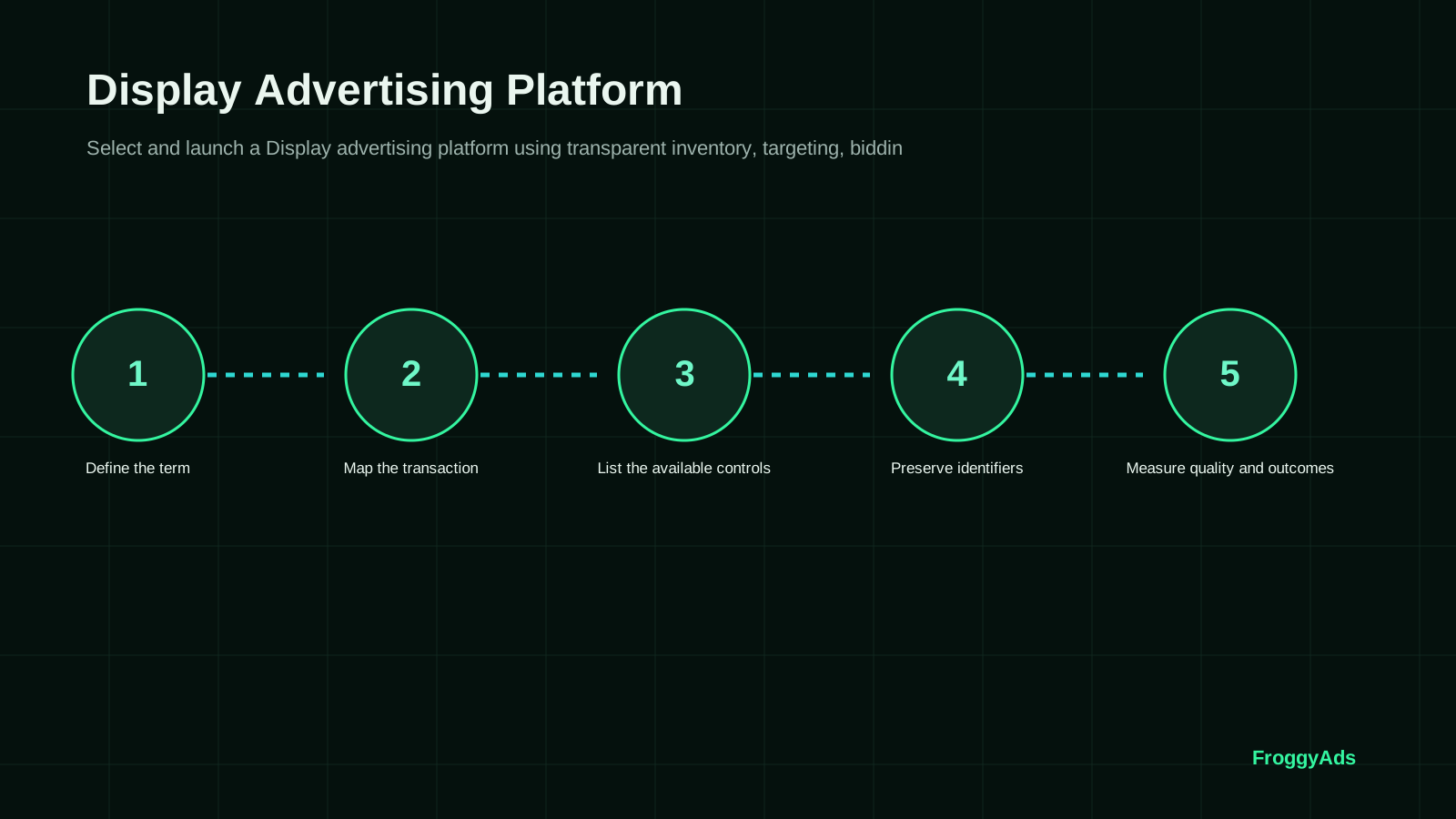
A seven-step display advertising platform process
For Display Advertising Platform, use a bounded pilot budget to validate campaign setup, targeting, source visibility, tracking and reporting before broader spend.
Define the term
Define the term for display advertising platform by documenting the hypothesis, keeping publisher, placement, source id, device, geo, creative, audience and frequency available and recording how the step changes served and viewable impressions, unique reach, clicks, qualified visits, accepted outcomes and margin. Do not move to the next step until tracking and the current decision rule are clear.
Map the transaction
Map the transaction for display advertising platform by documenting the hypothesis, keeping publisher, placement, source id, device, geo, creative, audience and frequency available and recording how the step changes served and viewable impressions, unique reach, clicks, qualified visits, accepted outcomes and margin. Do not move to the next step until tracking and the current decision rule are clear.
List the available controls
List the available controls for display advertising platform by documenting the hypothesis, keeping publisher, placement, source id, device, geo, creative, audience and frequency available and recording how the step changes served and viewable impressions, unique reach, clicks, qualified visits, accepted outcomes and margin. Do not move to the next step until tracking and the current decision rule are clear.
Preserve identifiers
Preserve identifiers for display advertising platform by documenting the hypothesis, keeping publisher, placement, source id, device, geo, creative, audience and frequency available and recording how the step changes served and viewable impressions, unique reach, clicks, qualified visits, accepted outcomes and margin. Do not move to the next step until tracking and the current decision rule are clear.
Measure quality and outcomes
Measure quality and outcomes for display advertising platform by documenting the hypothesis, keeping publisher, placement, source id, device, geo, creative, audience and frequency available and recording how the step changes served and viewable impressions, unique reach, clicks, qualified visits, accepted outcomes and margin. Do not move to the next step until tracking and the current decision rule are clear.
Compare economics
Compare economics for display advertising platform by documenting the hypothesis, keeping publisher, placement, source id, device, geo, creative, audience and frequency available and recording how the step changes served and viewable impressions, unique reach, clicks, qualified visits, accepted outcomes and margin. Do not move to the next step until tracking and the current decision rule are clear.
Choose the right operating model
Choose the right operating model for display advertising platform by documenting the hypothesis, keeping publisher, placement, source id, device, geo, creative, audience and frequency available and recording how the step changes served and viewable impressions, unique reach, clicks, qualified visits, accepted outcomes and margin. Do not move to the next step until tracking and the current decision rule are clear.
Choose the execution format
Choose a paid-media format that supports Display Advertising Platform
Use the criteria around “A seven-step display advertising platform process” to decide whether push, native, display or pop fits the message and destination. Set format, targeting and spend as campaign controls in FroggyAds while the display advertising platform decision remains the standard for judging the result.
Create My Free Account
Measure mature business value, not delivery alone
The headline decision metric for display advertising platform is mature value per thousand viewable display impressions. Define its numerator, denominator, currency, attribution rule and maturity window before comparing campaigns. Platform delivery, analytics events, network approvals and collected revenue can settle at different times. Keep recent results provisional until they have the same opportunity to mature.
Report the result by publisher, placement, source id, device, geo, creative, audience and frequency. This breakdown is not optional administration. It shows whether an apparent improvement came from a different auction, a stronger source, a more qualified audience, a creative change or a temporary traffic mix. Pair the economic metric with served and viewable impressions, unique reach, clicks, qualified visits, accepted outcomes and margin so a short-term efficiency gain does not hide weaker acceptance or lower future scale. For display advertising platform, apply this principle specifically to select and launch a display advertising platform using transparent inventory, targeting, bidding, reporting and quality-control criteria and document the result against mature value per thousand viewable display impressions.
Use a reconciliation table that connects ad spend, click IDs, landing sessions, raw conversions, approved conversions and payout or business value. Differences need reason codes such as attribution delay, invalid event, duplicate, cap, policy rejection or tracking loss. For display advertising platform, the campaign is not ready to scale while the largest gaps remain unexplained.
| Layer | Evidence | Guardrail | Decision |
|---|---|---|---|
| Delivery | Impressions, clicks and reachable sessions | Technical validity and source visibility | Confirm eligible volume |
| Engagement | Page load, qualified visit and meaningful action | Message match and page experience | Keep or revise the path |
| Conversion | Raw and approved outcomes | Attribution and approval rules | Calculate mature acquisition cost |
| Value | served and viewable impressions, unique reach, clicks, qualified visits, accepted outcomes and margin | Mature value per thousand viewable Display impressions | Stop, retest or scale |
Connect creative, landing path and accepted conversion for Display Advertising Platform
A resilient display advertising platform campaign separates traffic eligibility, auction delivery, click handling, landing-page behavior, conversion reporting and final acceptance. Each stage can fail independently. A click can be billable but never load the page, a conversion can be recorded but later rejected, and an approved action can still be unprofitable after media and operating costs. Mapping those stages prevents the team from optimizing the wrong layer.
Use a small number of campaign cells. Each cell should represent a meaningful hypothesis about the offer, source, GEO, device, creative angle or landing path. Give the cell a budget, bid range, loss limit, evidence threshold and maturity date. This structure makes display advertising platform easier to read than one broad campaign with dozens of hidden interactions.
Keep discovery separate from scaling. Discovery spends a bounded amount to find new sources, placements or messages. Scaling spends more on mature cells that meet the economic rule. Mixing both jobs causes successful sources to hide exploration losses and makes it difficult to know whether the account is growing or simply consuming a past winner. For display advertising platform, apply this principle specifically to select and launch a display advertising platform using transparent inventory, targeting, bidding, reporting and quality-control criteria and document the result against mature value per thousand viewable display impressions.
Put the guide into practice
Turn Display Advertising Platform into a bounded campaign test
With “Connect creative, landing path and accepted conversion for Display Advertising Platform” documented, launch only the next reversible test. Set a spending limit, preserve the baseline and use source-level and audience controls so the next step depends on qualified outcomes for display advertising platform, not activity volume.
Create My Free Account
Make the user journey for Display Advertising Platform coherent from placement to conversion
For Display Advertising Platform, align the creative promise, actual placement, landing page and accepted conversion so format performance is not distorted by a broken user journey.
Promise
State one truthful reason to engage. For display advertising platform, the promise should fit the format and avoid claims that the destination cannot verify.
Continuity
For Display Advertising Platform, carry the same core promise, visual cues and next action into the landing page; abrupt message changes make source and creative quality harder to diagnose.
Speed
For Display Advertising Platform, test page load and interaction on the devices and connection conditions being bought; lost sessions can make a viable source look unqualified.
Qualification
For Display Advertising Platform, give the visitor enough context to understand eligibility, material terms and the final action before conversion; direct paths may need more explanation when restrictions or disclosures apply.
Proof
For Display Advertising Platform, use verifiable product details, transparent terms and relevant evidence; avoid fabricated reviews, false urgency and unsupported performance claims.
Tracking
Preserve campaign, source, placement and creative identifiers through the complete path so display advertising platform decisions remain attributable.
How to respond when the metrics disagree
When metrics for Display Advertising Platform disagree, isolate delivery, source, creative, landing path, tracking or acceptance before changing the whole campaign.
Two platforms use the same label differently
Compare the actual transaction, controls, data access and commercial relationship instead of the marketing term. For display advertising platform, compare the response with mature value per thousand viewable display impressions, preserve the source breakdown and write the next action before changing the campaign.
Delivery is high but accepted outcomes are weak
Inspect source, placement, format and landing behavior before concluding that the whole model fails. For display advertising platform, compare the response with mature value per thousand viewable display impressions, preserve the source breakdown and write the next action before changing the campaign.
A new buying option looks more automated
Confirm which decisions are genuinely improved and which responsibilities still remain with the advertiser. For display advertising platform, compare the response with mature value per thousand viewable display impressions, preserve the source breakdown and write the next action before changing the campaign.
Eight mistakes that weaken display advertising platform
Most paid traffic losses are not caused by one dramatic error. They come from small measurement, targeting and decision defects that remain active because the blended account still looks acceptable. Use the list as a pre-launch and weekly review checklist. For display advertising platform, apply this principle specifically to select and launch a display advertising platform using transparent inventory, targeting, bidding, reporting and quality-control criteria and document the result against mature value per thousand viewable display impressions.
- 01Optimizing display advertising platform from an immature conversion or payout window. Use a reason code, review date and measurable correction rather than a vague optimization note.
- 02Changing bid, creative, landing page and targeting together during the same display advertising platform test. Use a reason code, review date and measurable correction rather than a vague optimization note.
- 03Using a blended campaign average for Display Advertising Platform can hide weak sources, placements or devices. Record the affected segment, reason code, review date and measurable correction.
- 04Judging Display Advertising Platform performance by delivery metrics without checking accepted business value can reward the wrong segment. Record the decision metric, reason code, review date and measurable correction.
- 05Increasing spend for Display Advertising Platform before tracking, redirects and postbacks reconcile can amplify bad data. Record the mismatch, reason code, review date and correction before scaling.
- 06Allowing one winning creative or source in Display Advertising Platform to become an untested dependency creates concentration risk. Record a diversification test, review date and fallback.
- 07Ignoring disclosure, destination quality or offer traffic restrictions in Display Advertising Platform creates avoidable compliance and conversion risk. Record the applicable rule, owner, review date and correction.
- 08Keeping losing segments in Display Advertising Platform active because the account-level result is still positive can hide marginal waste. Record the segment threshold, reason code and next action.
Move from instrumentation to a repeatable decision
Review Display Advertising Platform only after enough delivery across relevant sources, devices and creatives has matured to support a format decision.
Days 1 to 3: instrument
Validate the destination, campaign parameters, source identifiers and conversion events for display advertising platform. Record the break-even assumption and the maximum spend that can be lost while still learning something useful.
Days 4 to 10: launch narrow
Run one focused display advertising platform test with a small creative set and a limited targeting scope. Watch delivery, page function and obvious source outliers, but avoid rewriting the campaign before meaningful response data arrives.
Days 11 to 20: reconcile
Compare platform events with served and viewable impressions, unique reach, clicks, qualified visits, accepted outcomes and margin. Separate mature and provisional outcomes, remove segments that violate stop rules and preserve a controlled discovery budget for new sources. For display advertising platform, apply this principle specifically to select and launch a display advertising platform using transparent inventory, targeting, bidding, reporting and quality-control criteria and document the result against mature value per thousand viewable display impressions.
Days 21 to 30: repeat or scale
Increase spend only where mature value per thousand viewable display impressions remains inside the target range and the result is not dependent on one unstable cell. Document what changed and keep the previous stable setup available for rollback. For display advertising platform, apply this principle specifically to select and launch a display advertising platform using transparent inventory, targeting, bidding, reporting and quality-control criteria and document the result against mature value per thousand viewable display impressions.
Standards and first-party evidence for Display Advertising Platform
Use official format specifications, policy and implementation guidance for Display Advertising Platform, then validate performance with your own source-level campaign data.
- IAB Tech Lab OpenRTB 2.6Programmatic request, response and auction context
- Google Ads invalid trafficFirst-party context for invalid activity and measurement quality
- FroggyAds ad formatsOfficial FroggyAds format and campaign context
- Coalition for Better Ads StandardsConsumer-experience guardrails for web, video and app advertising
Display Advertising Platform FAQ
Answers for Display Advertising Platform focus on measurement, campaign control and responsible scaling.
For Display Advertising Platform, what controls should be visible before choosing a display platform?
Look for clear controls over budget, schedule, geography, audience, format, frequency, sources, exclusions, and campaign status. Clear governance means the buyer can inspect active choices, change them deliberately, and recover the reason for each decision.
For Display Advertising Platform, how can two platforms' inventory access be compared fairly?
Give both platforms the same market, format, audience boundary, test period, and quality requirements. Compare identifiable supply, delivery stability, viewability where available, and downstream behaviour; headline reach estimates do not show how much usable inventory overlaps.
For Display Advertising Platform, why does viewable delivery matter in a platform shortlist?
Viewable delivery shows if purchased impressions had a reasonable opportunity to appear on screen. It helps buyers compare supply more meaningfully, but it is not a performance verdict. Creative relevance, source quality, frequency, and destination outcomes still need review.
For Display Advertising Platform, which source settings make display buying easier to govern?
Placement or publisher identifiers, inclusion and exclusion controls, category filters, and a usable source report make buying more accountable. The buyer should be able to investigate a concern and change future delivery without relying only on a blended platform total.
For Display Advertising Platform, what tracking identifiers should remain intact from ad to outcome?
Send distinct campaign, asset, supply-source, placement, and response identifiers into the destination and approved analytics flow. Document how they are stored and reconciled, because missing or rewritten parameters can make a sound media test impossible to interpret.
For Display Advertising Platform, how should platform economics be compared beyond media price?
Include media, minimum commitments, technology charges, creative requirements, service time, verification, and the cost of exporting or reconciling data. Then compare validated outcomes under matched conditions; a cheaper impression can require more work or produce less useful demand.
For Display Advertising Platform, what traffic-quality evidence can a platform make available?
Useful evidence includes source-level delivery, invalid-activity handling, geography and device detail, frequency, viewability where supported, and a process for investigating anomalies. Ask what can be exported and how disputed activity is reviewed before a live test.
For Display Advertising Platform, when should automated platform changes require human approval?
Keep approval when an automated change can raise spend, widen targeting, add unfamiliar supply, alter a conversion goal, or override a safety rule. Automation can handle routine adjustments inside written limits, while material changes remain visible to the accountable campaign owner.
For Display Advertising Platform, what would a disciplined first platform test look like?
A disciplined test uses one objective, a limited inventory set, a small creative group, verified tracking, named review dates, and predefined pause conditions. It should produce enough source-level evidence to decide what deserves another test without turning the first month into a broad rollout.
For Display Advertising Platform, where can FroggyAds sit in a platform evaluation process?
FroggyAds can be evaluated as one candidate against the same brief used for other display platforms. Confirm available formats, controls, reporting, service terms, and campaign fit directly, then use a bounded trial to compare observed delivery rather than relying on assumed advantages.
Continue the paid traffic workflow
Use related resources for Display Advertising Platform to connect source selection, campaign execution, pricing and measurement.
Turn display advertising platform into a controlled campaign test
For Display Advertising Platform, start with one accepted business outcome, transparent tracking, source-level controls and a written stop-or-scale rule. Judge the test by offer fit, creative, landing path, GEO, bid, conversion maturity and downstream acceptance.
Display Advertising Platform: Selection, Controls and Launch: the buyer task this URL owns
Use Display Advertising Platform: Selection, Controls and Launch when the immediate task is to evaluate a platform by media controls, tracking and source-level evidence. For performance-focused advertisers, the useful output is a documented media decision rather than another broad advertising overview. The nearest related FroggyAds page is Display Marketing Course; this URL keeps ownership of the distinct task to evaluate a platform by media controls, tracking and source-level evidence.
For Display Advertising Platform: Selection, Controls and Launch, the operating evidence to keep visible is display inventory, responsive creative, banner dimensions, asset quality. Use these entities only when they change setup, measurement or the commercial decision.
| Checkpoint | Page-specific action | Evidence to keep |
|---|---|---|
| Journey | Match the format to the user's attention state and destination. | Retain evidence specific to Display Advertising Platform: Selection, Controls and Launch and its accepted outcome. |
| Creative | Check format requirements, message continuity and landing-page readiness. | Retain evidence specific to Display Advertising Platform: Selection, Controls and Launch and its accepted outcome. |
| Optimize | Compare source-level accepted outcomes before increasing volume. | Retain evidence specific to Display Advertising Platform: Selection, Controls and Launch and its accepted outcome. |
Hypothetical calculation: if a controlled campaign for display advertising platform: selection, controls and launch spends USD 150 and produces 9 accepted conversions, accepted CPA is USD 150 / 9 = USD 16.67. Replace the inputs with your own campaign economics; this is not a FroggyAds performance claim.
FroggyAds gives performance-focused advertisers a self-serve way to act on the Display Advertising Platform: Selection, Controls and Launch decision: configure the traffic test, preserve source-level reporting and scale only after the accepted outcome supports the next step. Create your free FroggyAds account.
Display Advertising Platform: Selection, Controls and Launch — what matters first
Display Advertising Platform: Selection, Controls and Launch is useful when the format fits the user journey, device context, creative requirements and measurable conversion path.