
Direct Link Ads vs Banner Ads
Compare direct link ads vs banner ads by placement, user journey, creative needs, tracking, source controls and accepted acquisition economics.
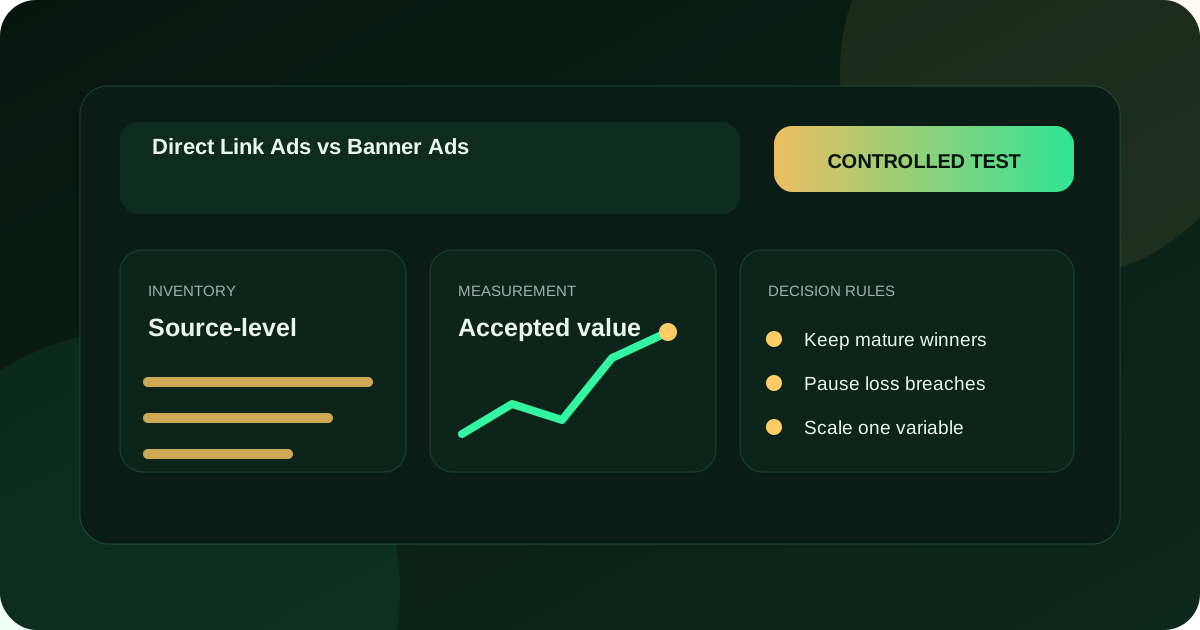
What does this page explain about Direct Link Ads vs Banner Ads: Compare Traffic & Fit?
Quick answer: Direct Link Ads vs Banner Ads compares a direct navigation path with a visible banner placement. Direct link delivery can create an immediate destination visit, while banner ads present a visible creative before the click. Compare user experience, creative burden, source transparency, tracking and accepted acquisition economics under matched conditions.
Reference for Direct Link Ads vs Banner Ads: Compare Traffic & Fit: FTC guidance on online advertising and marketing.
Define the difference before comparing results
Direct link ads route a user from an approved link context to the advertiser's destination, while banner ads expose a graphic unit before a click can occur. The two paths create different evidence. A banner test can observe eligible impressions and creative interactions; a direct link test may begin with the navigation event supplied by the publisher or platform. Do not force both into one funnel label. Write the first observable event, the user context and the final accepted outcome for each arm before spend begins.
Map the user's information state in each format
A banner can communicate the advertiser, benefit and call to action before the destination loads. A direct link relies more heavily on the label, surrounding publisher context and first destination screen. Compare how much expectation each path creates before the click. If the direct link arrives with less context, the page may need a clearer orientation block. If the banner carries a qualified promise, the landing page must repeat it precisely. Format choice therefore includes message continuity, not only a rate card.
Write one comparison question that both arms can answer
A valid comparison asks something bounded, such as which format produces more accepted sign-ups from the same eligible audience under the same offer. Avoid comparing a broad direct-link placement with a retargeted banner campaign and calling the difference a format effect. Align geography, device, destination, offer period and outcome definition where practical. Record remaining differences in placement and user intent. The test can still inform a decision when conditions are imperfect, but the conclusion must match the actual contrast.
Preserve format-specific inventory fields
For direct links, record publisher or source, link context, device, geography and any placement key the platform returns. For banners, add creative ID, dimensions, rendered placement and eligible impression data where available. Keep the common fields in the same naming system so the two arms can be reconciled without discarding their differences. Missing banner exposure data should not be imputed into the direct-link arm, and a direct-link click should not be treated as though a graphic impression necessarily preceded it.
Choose the format from the communication job
Use a banner when the campaign needs a visual introduction, a controlled brand cue or several creative concepts tested before the destination. Consider a direct link when the surrounding context already establishes relevance and the destination can orient the visitor immediately. Neither rule predicts performance. Regulated or complex offers may need disclosures before or at entry, while simple navigation tasks may not benefit from another creative layer. Review the actual publisher context and applicable advertising requirements before selecting the path.
Connect the guide to live testing
Connect Direct Link Ads vs Banner Ads to a controlled audience test
Use the choices established in “Choose the format from the communication job” to define one audience, budget and source set in FroggyAds. Keep the surrounding offer and measurement rule stable so the test adds evidence to direct link ads vs banner ads instead of mixing several changes at once.
Create My Free Account
Design banner creative and direct-link labels separately
Banner production needs dimensions, file-weight limits, legibility, accurate imagery and a call to action that survives the real placement. A direct link needs truthful anchor language or publisher labeling and a destination title that confirms the click. Do not reuse a banner headline as link text without checking how it reads outside the graphic. Give every banner and link treatment a unique identifier. FTC truth-in-advertising principles apply to both paths: a short label can mislead just as a visual advertisement can.
Make the first destination screen resolve the format promise
The landing page should identify the advertiser and answer why the visitor arrived. For the direct-link arm, test whether the page supplies context that a banner would otherwise provide. For the banner arm, confirm that the headline, imagery, price and qualification match the creative. Keep the page version constant while comparing formats. If separate pages are necessary, treat destination design as part of the tested package rather than claiming a pure media-format effect.
Build two auditable event chains
The banner chain may include eligible impression, render opportunity, click, session and accepted outcome. The direct-link chain may begin with an eligible link placement or recorded navigation before session and acceptance. Assign stable format, campaign, source and treatment identifiers. Use consistent campaign parameters without personal information, and reconcile both arms on the same time zone and maturity rule. The comparison is trustworthy when each accepted result can be traced back to its actual entry path without inventing equivalent upstream events.
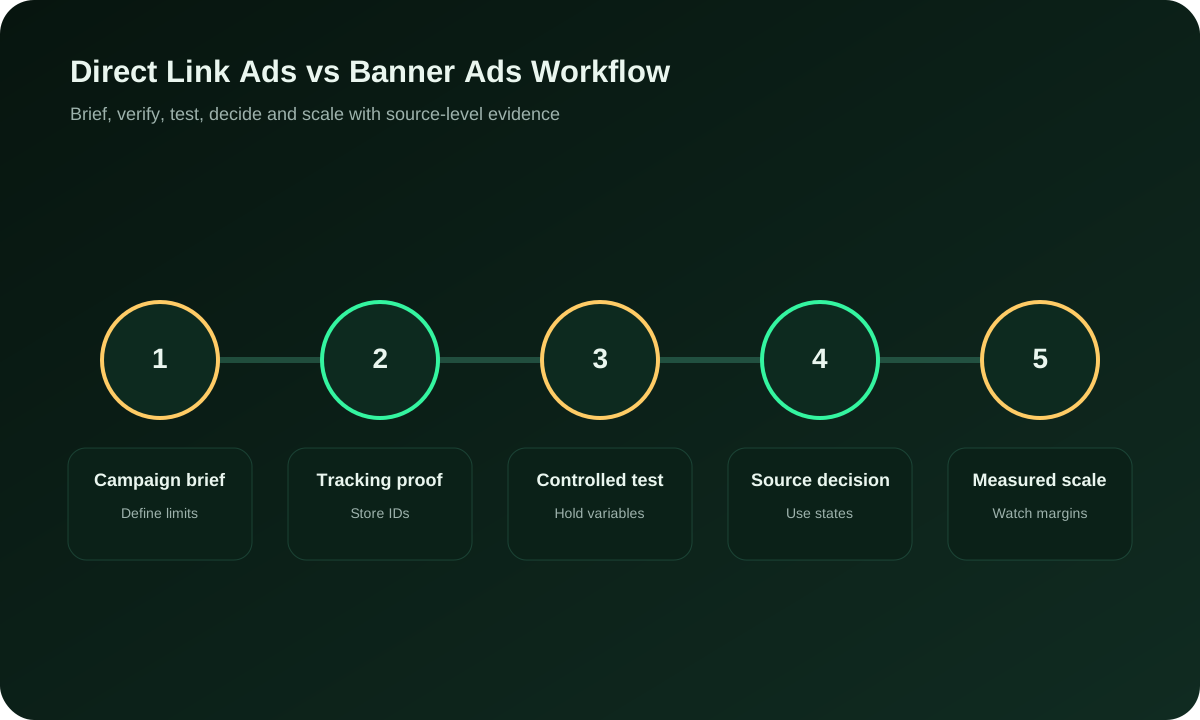
Allocate enough budget to both format hypotheses
Reserve separate budgets so faster delivery in one arm cannot starve the other before it matures. Set a maximum loss and a minimum evidence condition for each format based on its billing event and conversion delay. A banner arm may accumulate impressions before clicks, while a direct-link arm may show navigation volume quickly. Review at planned checkpoints, not whenever one cell gets an early conversion. Unspent reserve remains protected until the evidence supports confirmation or a documented stop.
Choose the execution format
Choose a paid-media format that supports Direct Link Ads vs Banner Ads
Use the criteria around “Allocate enough budget to both format hypotheses” to decide whether push, native, display or pop fits the message and destination. Set format, targeting and spend as campaign controls in FroggyAds while the direct link ads vs banner ads decision remains the standard for judging the result.
Create My Free Account
Normalize rates after the format-specific diagnostics
Keep CPM, CPC or another billing rate visible because it explains delivery, but compare business efficiency through engaged visits and accepted outcomes. Include banner production cost and any direct-link placement fee when they materially differ. Do not divide a direct-link cost by hypothetical banner impressions. Instead, calculate a common downstream unit after validating each arm's own upstream records. The resulting comparison can show which complete format path is more efficient for the tested offer, without pretending the auction mechanics were identical.
Investigate quality patterns that differ by entry path
Banner anomalies can include placements that render poorly, accidental clicks, misleading creative context or unusual impression-to-click behavior. Direct-link anomalies can include ambiguous labels, forced navigation, unexpected referrers or a source that does not match the approved context. Compare device, geography, timing, session behavior, duplicate patterns and backend rejection within each arm. A single blended quality score can hide these mechanisms. Require the investigation to name the suspected event and the evidence that would confirm or reject it.
Keep source decisions separate from format decisions
A weak publisher source does not prove the entire direct-link format fails, and one unsuitable banner placement does not invalidate graphic advertising. Build a matrix of format by source or placement where data allows. Pause the specific cell that crosses a loss, quality or policy boundary, then decide whether the cause follows the format across other contexts. This prevents broad exclusions from one local defect and also prevents a strong aggregate format result from protecting a harmful source.
Test message dependency, not cosmetic variation
For banners, compare materially different propositions or visual explanations. For direct links, compare truthful context labels or the amount of orientation provided on the destination. Keep the outcome and audience stable. A color swap rarely answers whether the format works because it changes little about user understanding. Write what each treatment is expected to change, such as qualified click rate or destination abandonment, and identify the diagnostic metric before launch.
Read the comparison funnel from both ends
Upstream diagnostics explain opportunity and interaction, while backend acceptance explains business value. Start with the accepted outcome and work backward to identify where each format loses qualified users. A banner may have lower click volume but stronger acceptance because the creative prequalifies. A direct link may create efficient visits when the surrounding context is already specific. Show the denominator for every rate and age both arms to the same conversion window before reallocating budget.
Put the guide into practice
Turn Direct Link Ads vs Banner Ads into a bounded campaign test
With “Read the comparison funnel from both ends” documented, launch only the next reversible test. Set a spending limit, preserve the baseline and use source-level and audience controls so the next step depends on qualified outcomes for direct link ads vs banner ads, not activity volume.
Create My Free Account
Use format-specific emergency stops
Stop a banner cell when the asset is broken, the disclosure is unreadable, the destination conflicts with the promise or placement behavior creates material risk. Stop a direct-link cell when the label or navigation context is misleading, the source is unapproved or the destination does not explain the transition. Economic stops come later, after mature cost and acceptance evidence. Document who can stop each path and which exact correction is required before retest.
Combine formats only after each role is proven
A mixed plan can use banners to introduce the offer and direct links to serve contexts where intent is already established. Keep separate identifiers and budgets even when the formats support the same objective. Combining them in one undifferentiated line item destroys the evidence needed to understand incremental value. Define the role, audience and destination behavior of each format, then watch for overlap. The mix should earn its place by accepted outcomes, not by filling a media-plan template.
Apply advertising and publisher rules to both paths
A direct link is not exempt from advertising standards merely because it has no graphic. Review the publisher's labeling, the advertiser identity, material conditions and the destination content. Banner ads require the same claim substantiation plus format and placement checks. Preserve approval records for both treatments. When a platform or jurisdiction has additional requirements, use the current primary rule and qualified advice; this comparison is an operating framework rather than a legal determination.
Plan for device and context reversals
A format that works on desktop may fail on a narrow mobile placement, and a direct link that is clear in a category page may be confusing in a general feed. Model at least one context reversal before scaling. Decide which signal would reveal it, such as destination exits by device or acceptance by publisher section. A scenario is useful when it creates a cap, exclusion or alternate creative, not when it merely adds optimistic and pessimistic totals to a presentation.
Record the decision at format-by-source level
Close the review with the active banner IDs, direct-link labels, sources, destinations, budgets, attribution settings and maturity date. Assign keep, revise, pause or retest to each material cell. State whether the evidence supports a format conclusion, a source conclusion or only a destination repair. This level of detail prevents the next operator from turning a qualified finding into a universal claim. It also preserves the path for a clean follow-up test.
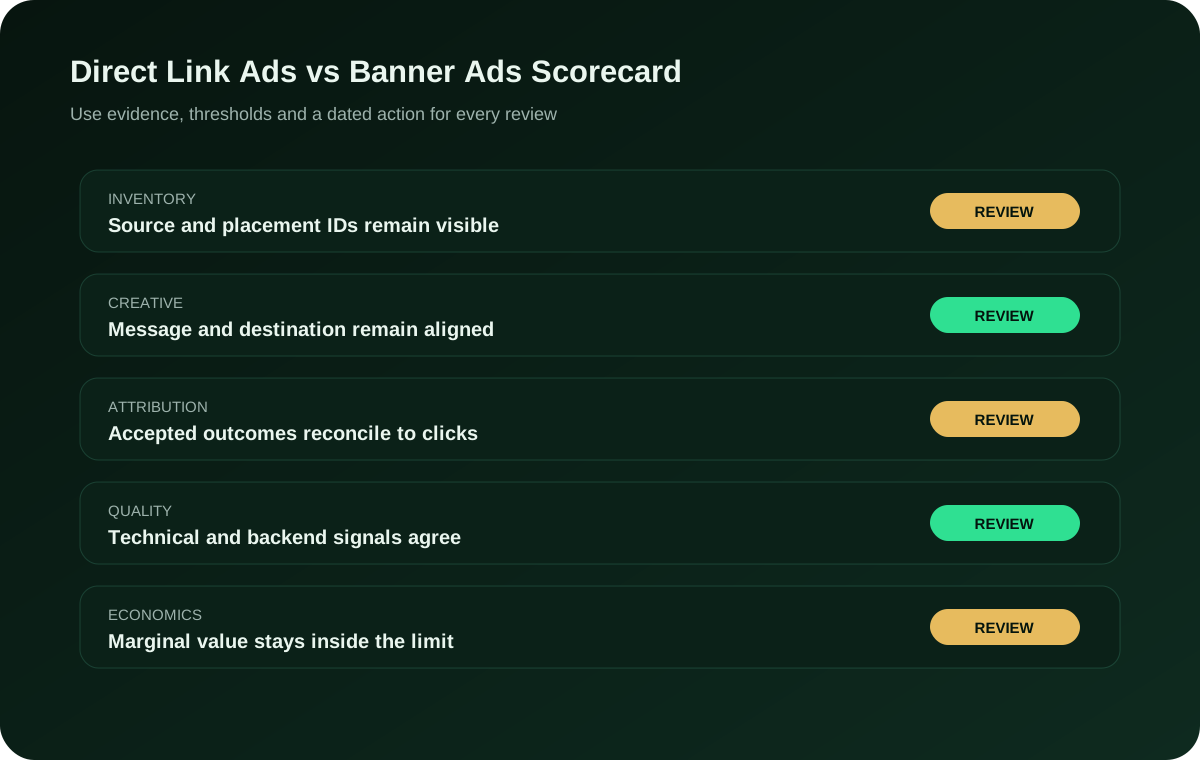
Practical Review Table for Direct Link Ads vs Banner Ads
| Area | Evidence required | Action |
|---|---|---|
| Inventory | Publisher, site, app, link placement, source, device, geo and click identifiers remain visible | Keep only segments that can be controlled and reviewed |
| Creative | The message is legible, original and truthful in the real placement | Retain distinct concepts with stable delivery |
| Attribution | Creative, click, source and placement IDs reach the backend | Complete a live accepted-outcome test |
| Quality | Engagement, acceptance and rejection reasons are visible | Pause abnormal or low-value sources |
| Economics | Effective media cost and accepted acquisition cost are calculated | Compare marginal value with the planned limit |
| Scaling | Performance remains stable after a measured increase | Increase one dimension and preserve rollback control |
Direct Link Ads vs Banner Ads FAQ
For Direct Link Ads vs Banner Ads, how should format comparison define user interaction?
For format comparison, define user interaction before related work begins. Let the format comparison owner record the user interaction source, boundary, and decision. If user interaction changes, reopen the format comparison choice and check one verified outcome.
For Direct Link Ads vs Banner Ads, when does likely intent need a dated format comparison rule?
Likely intent needs a dated rule in format comparison. Name the likely intent verifier and keep the format comparison source accessible. When likely intent expires, pause format comparison activity rather than guessing.
For Direct Link Ads vs Banner Ads, which people should format comparison separate around creative space?
People affected by creative space need a distinct route in format comparison. Give that creative space group a suitable format comparison action. Report the creative space outcome alone so weak format comparison fit remains visible.
For Direct Link Ads vs Banner Ads, why does placement context need a format comparison checkpoint?
Give placement context its own format comparison checkpoint when the placement context condition changes the format comparison promise, destination, cost, or owner. The format comparison checkpoint names the placement context limit before work continues.
For Direct Link Ads vs Banner Ads, where should format comparison show landing dependence?
Keep landing dependence beside each relevant format comparison result. Show the current landing dependence condition when format comparison cost or quality moves. If landing dependence definitions differ, label them before any format comparison comparison.
For Direct Link Ads vs Banner Ads, how can format comparison test complete cost carefully?
Test complete cost through one bounded format comparison change. Preserve the earlier format comparison setup and record the exact complete cost difference. Stop the format comparison test if complete cost weakens quality or capacity.
For Direct Link Ads vs Banner Ads, who owns tracking limits within format comparison?
Assign tracking limits to a named format comparison owner. Give the format comparison owner the tracking limits source, expiry, and pause authority. A stale tracking limits condition should never remain inside format comparison merely to protect delivery.
For Direct Link Ads vs Banner Ads, which source makes visitor experience useful to format comparison?
Visitor experience needs an inspectable source for format comparison. Note any visitor experience gap in the format comparison report. Use the visitor experience limit to keep format comparison decisions honest about uncertainty.
For Direct Link Ads vs Banner Ads, what should stop format comparison when suitable use case fails?
Pause format comparison when suitable use case becomes inaccurate, unsafe, unsupported, or impossible for format comparison to fulfil. Preserve the suitable use case records, repair the format comparison issue, and resume only after suitable use case is current.
For Direct Link Ads vs Banner Ads, when may format comparison extend work on fair test?
Expand format comparison only after fair test passes a bounded review. Check fair test evidence and response, then compare format comparison capacity, quality, and cost. Change one fair test condition, keep the earlier format comparison result, and review it before adding more.
Continue the Direct Link Traffic Workflow
Build a Controlled Direct Link Ads vs Banner Ads Test
For Direct Link Ads vs Banner Ads, define one accepted outcome, verify tracking, protect the test budget and make source-level decisions from mature data. Results vary by offer, GEO, creative, destination, competition and optimization.
Direct Link Ads vs Banner Ads: the decision this URL owns
Use this page when advertisers and media buyers need to compare documented differences and practical fit. For Direct Link Ads vs Banner Ads, keep placement context, creative fit and accepted conversion economics tied to one accepted business outcome and one written decision rule. Use Global Banner Traffic for the adjacent intent instead of blending both jobs on this URL.
Page-specific evidence path: Start with “Define the difference before comparing results” because it defines the first evidence gate for Direct Link Ads vs Banner Ads. Then use “Map the user's information state in each format” to test the next material assumption without changing unrelated variables. Finish with “Write one comparison question that both arms can answer” and reconcile the result with the accepted event before changing spend.
Questions this URL must answer: “For Direct Link Ads vs Banner Ads, how should format comparison define user interaction?” “For Direct Link Ads vs Banner Ads, when does likely intent need a dated format comparison rule?” “For Direct Link Ads vs Banner Ads, which people should format comparison separate around creative space?”
| Checkpoint | Action | Evidence to retain |
|---|---|---|
| Define the difference before comparing results | Translate this section into a concrete setup choice for Direct Link Ads vs Banner Ads. | Retain display inventory, responsive creative, banner dimensions, asset quality, viewability plus the accepted-event definition. |
| Map the user's information state in each format | Change only the variable needed to answer this part of the page. | Keep source, creative, GEO/device and timing identifiers comparable. |
| Write one comparison question that both arms can answer | Use mature downstream evidence to decide keep, cap, exclude or expand. | Retain accepted outcomes, cost/value, decision date and rollback point. |
Transparent decision example: Hypothetical example for Direct Link Ads vs Banner Ads: if a controlled test spends USD 120 and records 6 accepted outcomes after the same maturity window, accepted cost is USD 20.00 per outcome. Replace the inputs with your own economics; this is not a FroggyAds performance claim.
For Direct Link Ads vs Banner Ads, FroggyAds gives display advertisers a self-serve traffic workflow with targeting, budget, format, conversion and source controls. Keep the platform-side delivery record connected to the advertiser-side accepted outcome before scaling. Create your free FroggyAds account.
Direct Link Ads vs Banner Ads — what matters first
Direct Link Ads vs Banner Ads is a comparison decision: verify documented differences, match them to your campaign needs, and test the option that fits rather than assuming a universal winner.