
ROI FRAMEWORK
Digital Marketing ROI: Define, Measure and Govern Marketing Return
Measure digital marketing ROI with 20 evidence layers covering value, total cost, baselines, attribution, incrementality, uncertainty, time horizons and decision rules.
DIRECT ANSWER
What is the digital marketing ROI framework?
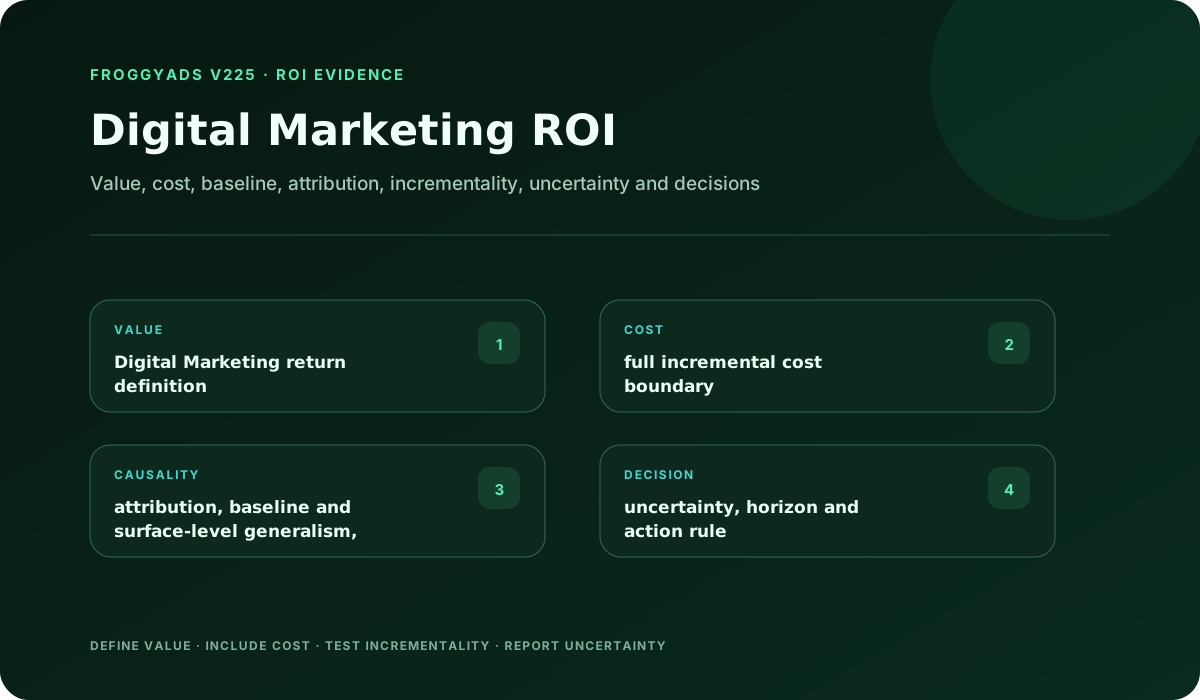
Digital Marketing ROI is a governed comparison between defined return and complete cost across a declared population and time horizon. It helps digital leader, channel owners and analytics team make a resource decision only when attribution, baseline, incrementality, data quality, uncertainty and surface-level generalism, unverifiable claims and tool-led recommendations are visible; it is not a guarantee of validated learning, qualified demand and sustainable commercial outcomes.
What this page owns
This page owns the return definitions, value and cost boundaries, attribution limits, incrementality, uncertainty and ROI decision governance, distinct from budget, cost, pricing, analytics, statistics and guaranteed performance intent. It does not replace the digital marketing budget, cost, pricing, ROAS, analytics, statistics, audit, analysis and guaranteed performance pages.
Evidence standard
Use dated source records, explicit definitions, named owners, visible limitations and reproducible calculations. For Digital Marketing, invented percentages, hidden costs, universal benchmarks and guarantees are excluded.
Primary operating context
The Digital Marketing framework is specific to cross-channel digital capability, including strategy, customer journeys, media, content, data and optimisation. The intended decision owners are digital leader, channel owners and analytics team, supported by analytics, finance, privacy, legal, accessibility, technical and commercial stakeholders where relevant.
Primary risk context
Special attention in Digital Marketing is required for surface-level generalism, unverifiable claims and tool-led recommendations. Decisions must distinguish verified evidence from assumptions and state limitations, ownership, downside controls and the smallest responsible next action.
01
DECISION QUESTION
Decision question for Digital Marketing
Decision and definition
The decision question layer defines how a Digital Marketing ROI model governs the exact resource decision, comparison or continuation question the ROI model is intended to answer. For digital marketing, interpret decision question through cross-channel digital capability and the measurement constraints embedded in strategy, customer journeys, media, content, data and optimisation. Begin with the exact decision, return definition, cost boundary, population and time horizon so a convenient ratio is not mistaken for an answer to a different business question.
Evidence and reconciliation
For Digital Marketing, connect the model to cross-channel digital capability and strategy, customer journeys, media, content, data and optimisation. Owners such as digital leader, channel owners and analytics team should verify source systems, conversion identity, value realization, cost timing, attribution and the strongest available counterfactual before the calculation is used.
Bias and sensitivity tests
Challenge Digital Marketing ROI layer 1 for missing costs, duplicated conversions, delayed refunds, weak identity, channel self-reporting, survivorship, selection bias, model dependence and surface-level generalism, unverifiable claims and tool-led recommendations. Recalculate conservative and sensitivity cases and show how each limitation changes the permitted decision. Here the practical question is whether you can decide whether this option fits the buyer's acquisition workflow. Treat Online Marketing Roi as a separate intent rather than interchangeable copy.
ROI decision
Convert the Digital Marketing decision question review into a declared formula, evidence range, decision threshold, validation task or hold. Preserve the source, date, query or workbook, owner and approval. Do not present attributed value as incremental value or imply a guarantee of validated learning, qualified demand and sustainable commercial outcomes.
Acceptance rule: Accept Digital Marketing ROI layer 1 only when the decision question evidence has explicit value and cost definitions, a documented baseline or limitation, a reproducible calculation, uncertainty disclosure and a named decision owner.
02
RETURN DEFINITION
Return definition for Digital Marketing
The return definition layer defines how a Digital Marketing ROI model governs revenue, gross profit, contribution, retained value, cost avoided or another explicitly governed value measure. The Digital Marketing ROI model must let owners such as digital leader, channel owners and analytics team trace value, cost and uncertainty to a dated definition and decision boundary. Begin with the exact decision, return definition, cost boundary, population and time horizon so a convenient ratio is not mistaken for an answer to a different business question.
Challenge Digital Marketing ROI layer 2 for missing costs, duplicated conversions, delayed refunds, weak identity, channel self-reporting, survivorship, selection bias, model dependence and surface-level generalism, unverifiable claims and tool-led recommendations. Recalculate conservative and sensitivity cases and show how each limitation changes the permitted decision. Apply this evidence to Digital Marketing ROI: Define, Measure and Govern Marketing Return only where it helps you decide whether this option fits the buyer's acquisition workflow; the closest neighboring topic is Online Marketing Roi.
Convert the Digital Marketing return definition review into a declared formula, evidence range, decision threshold, validation task or hold. Preserve the source, date, query or workbook, owner and approval. Do not present attributed value as incremental value or imply a guarantee of validated learning, qualified demand and sustainable commercial outcomes.
Acceptance rule: Accept Digital Marketing ROI layer 2 only when the return definition evidence has explicit value and cost definitions, a documented baseline or limitation, a reproducible calculation, uncertainty disclosure and a named decision owner.
03
COST BOUNDARY
Cost boundary for Digital Marketing
The cost boundary layer defines how a Digital Marketing ROI model governs media, people, creative, technology, data, fees, taxes, compliance, overhead and opportunity costs included or excluded. The Digital Marketing return register should surface-level generalism, unverifiable claims and tool-led recommendations while separating observed value, modeled value, attribution assumptions and excluded effects. Begin with the exact decision, return definition, cost boundary, population and time horizon so a convenient ratio is not mistaken for an answer to a different business question.
Challenge Digital Marketing ROI layer 3 for missing costs, duplicated conversions, delayed refunds, weak identity, channel self-reporting, survivorship, selection bias, model dependence and surface-level generalism, unverifiable claims and tool-led recommendations. Recalculate conservative and sensitivity cases and show how each limitation changes the permitted decision. Here the practical question is whether you can decide whether this option fits the buyer's acquisition workflow. Treat Online Marketing Roi as a separate intent rather than interchangeable copy.
Convert the Digital Marketing cost boundary review into a declared formula, evidence range, decision threshold, validation task or hold. Preserve the source, date, query or workbook, owner and approval. Do not present attributed value as incremental value or imply a guarantee of validated learning, qualified demand and sustainable commercial outcomes.
Acceptance rule: Accept Digital Marketing ROI layer 3 only when the cost boundary evidence has explicit value and cost definitions, a documented baseline or limitation, a reproducible calculation, uncertainty disclosure and a named decision owner.
04
TIME HORIZON
Time horizon for Digital Marketing
The time horizon layer defines how a Digital Marketing ROI model governs conversion, realization, payback, retention and discounting periods used to align cost and value. Use capability audit, evidence portfolio and operating roadmap as the topic-specific evidence artifact for ROI layer 4: time horizon. Begin with the exact decision, return definition, cost boundary, population and time horizon so a convenient ratio is not mistaken for an answer to a different business question.
Challenge Digital Marketing ROI layer 4 for missing costs, duplicated conversions, delayed refunds, weak identity, channel self-reporting, survivorship, selection bias, model dependence and surface-level generalism, unverifiable claims and tool-led recommendations. Recalculate conservative and sensitivity cases and show how each limitation changes the permitted decision. Use this check to advance the Digital Marketing ROI: Define, Measure and Govern Marketing Return task to decide whether this option fits the buyer's acquisition workflow. If the reader needs Online Marketing Roi, route that decision to its own page.
Convert the Digital Marketing time horizon review into a declared formula, evidence range, decision threshold, validation task or hold. Preserve the source, date, query or workbook, owner and approval. Do not present attributed value as incremental value or imply a guarantee of validated learning, qualified demand and sustainable commercial outcomes.
Acceptance rule: Accept Digital Marketing ROI layer 4 only when the time horizon evidence has explicit value and cost definitions, a documented baseline or limitation, a reproducible calculation, uncertainty disclosure and a named decision owner.
Connect the guide to live testing
Connect Digital Marketing ROI to a controlled audience test
Use the choices established in “Time horizon for Digital Marketing” to define one audience, budget and source set in FroggyAds. Keep the surrounding offer and measurement rule stable so the test adds evidence to digital marketing roi instead of mixing several changes at once.
Create My Free Account
05
POPULATION AND SCOPE
Population and scope for Digital Marketing
The population and scope layer defines how a Digital Marketing ROI model governs campaigns, audiences, geographies, products, customer cohorts, devices and dates represented by the model. For digital marketing, interpret population and scope through cross-channel digital capability and the measurement constraints embedded in strategy, customer journeys, media, content, data and optimisation. Begin with the exact decision, return definition, cost boundary, population and time horizon so a convenient ratio is not mistaken for an answer to a different business question.
Challenge Digital Marketing ROI layer 5 for missing costs, duplicated conversions, delayed refunds, weak identity, channel self-reporting, survivorship, selection bias, model dependence and surface-level generalism, unverifiable claims and tool-led recommendations. Recalculate conservative and sensitivity cases and show how each limitation changes the permitted decision.
Convert the Digital Marketing population and scope review into a declared formula, evidence range, decision threshold, validation task or hold. Preserve the source, date, query or workbook, owner and approval. Do not present attributed value as incremental value or imply a guarantee of validated learning, qualified demand and sustainable commercial outcomes.
Acceptance rule: Accept Digital Marketing ROI layer 5 only when the population and scope evidence has explicit value and cost definitions, a documented baseline or limitation, a reproducible calculation, uncertainty disclosure and a named decision owner.
06
BASELINE AND COUNTERFACTUAL
Baseline and counterfactual for Digital Marketing
The baseline and counterfactual layer defines how a Digital Marketing ROI model governs what would probably have happened without the marketing activity and how that estimate is supported. The Digital Marketing ROI model must let owners such as digital leader, channel owners and analytics team trace value, cost and uncertainty to a dated definition and decision boundary. Begin with the exact decision, return definition, cost boundary, population and time horizon so a convenient ratio is not mistaken for an answer to a different business question.
Challenge Digital Marketing ROI layer 6 for missing costs, duplicated conversions, delayed refunds, weak identity, channel self-reporting, survivorship, selection bias, model dependence and surface-level generalism, unverifiable claims and tool-led recommendations. Recalculate conservative and sensitivity cases and show how each limitation changes the permitted decision.
Convert the Digital Marketing baseline and counterfactual review into a declared formula, evidence range, decision threshold, validation task or hold. Preserve the source, date, query or workbook, owner and approval. Do not present attributed value as incremental value or imply a guarantee of validated learning, qualified demand and sustainable commercial outcomes.
Acceptance rule: Accept Digital Marketing ROI layer 6 only when the baseline and counterfactual evidence has explicit value and cost definitions, a documented baseline or limitation, a reproducible calculation, uncertainty disclosure and a named decision owner.
07
ATTRIBUTION MODEL
Attribution model for Digital Marketing
The attribution model layer defines how a Digital Marketing ROI model governs rules assigning observed outcomes across touchpoints, channels and time while stating model limitations. The Digital Marketing return register should surface-level generalism, unverifiable claims and tool-led recommendations while separating observed value, modeled value, attribution assumptions and excluded effects. Begin with the exact decision, return definition, cost boundary, population and time horizon so a convenient ratio is not mistaken for an answer to a different business question.
Challenge Digital Marketing ROI layer 7 for missing costs, duplicated conversions, delayed refunds, weak identity, channel self-reporting, survivorship, selection bias, model dependence and surface-level generalism, unverifiable claims and tool-led recommendations. Recalculate conservative and sensitivity cases and show how each limitation changes the permitted decision.
Convert the Digital Marketing attribution model review into a declared formula, evidence range, decision threshold, validation task or hold. Preserve the source, date, query or workbook, owner and approval. Do not present attributed value as incremental value or imply a guarantee of validated learning, qualified demand and sustainable commercial outcomes.
Acceptance rule: Accept Digital Marketing ROI layer 7 only when the attribution model evidence has explicit value and cost definitions, a documented baseline or limitation, a reproducible calculation, uncertainty disclosure and a named decision owner.
08
INCREMENTALITY EVIDENCE
Incrementality evidence for Digital Marketing
The incrementality evidence layer defines how a Digital Marketing ROI model governs experiments, holdouts, matched comparisons, causal designs or sensitivity analysis used to test additional effect. Use capability audit, evidence portfolio and operating roadmap as the topic-specific evidence artifact for ROI layer 8: incrementality evidence. Begin with the exact decision, return definition, cost boundary, population and time horizon so a convenient ratio is not mistaken for an answer to a different business question.
Challenge Digital Marketing ROI layer 8 for missing costs, duplicated conversions, delayed refunds, weak identity, channel self-reporting, survivorship, selection bias, model dependence and surface-level generalism, unverifiable claims and tool-led recommendations. Recalculate conservative and sensitivity cases and show how each limitation changes the permitted decision.
Convert the Digital Marketing incrementality evidence review into a declared formula, evidence range, decision threshold, validation task or hold. Preserve the source, date, query or workbook, owner and approval. Do not present attributed value as incremental value or imply a guarantee of validated learning, qualified demand and sustainable commercial outcomes.
Acceptance rule: Accept Digital Marketing ROI layer 8 only when the incrementality evidence evidence has explicit value and cost definitions, a documented baseline or limitation, a reproducible calculation, uncertainty disclosure and a named decision owner.
09
CONVERSION IDENTITY
Conversion identity for Digital Marketing
The conversion identity layer defines how a Digital Marketing ROI model governs event definitions, deduplication, cross-device limits, consent, offline imports and record linkage. For digital marketing, interpret conversion identity through cross-channel digital capability and the measurement constraints embedded in strategy, customer journeys, media, content, data and optimisation. Begin with the exact decision, return definition, cost boundary, population and time horizon so a convenient ratio is not mistaken for an answer to a different business question.
Challenge Digital Marketing ROI layer 9 for missing costs, duplicated conversions, delayed refunds, weak identity, channel self-reporting, survivorship, selection bias, model dependence and surface-level generalism, unverifiable claims and tool-led recommendations. Recalculate conservative and sensitivity cases and show how each limitation changes the permitted decision.
Convert the Digital Marketing conversion identity review into a declared formula, evidence range, decision threshold, validation task or hold. Preserve the source, date, query or workbook, owner and approval. Do not present attributed value as incremental value or imply a guarantee of validated learning, qualified demand and sustainable commercial outcomes.
Acceptance rule: Accept Digital Marketing ROI layer 9 only when the conversion identity evidence has explicit value and cost definitions, a documented baseline or limitation, a reproducible calculation, uncertainty disclosure and a named decision owner.
10
VALUE QUALITY
Value quality for Digital Marketing
The value quality layer defines how a Digital Marketing ROI model governs refunds, cancellations, fraud, margin, lifetime assumptions, delayed outcomes and realized versus projected value. The Digital Marketing ROI model must let owners such as digital leader, channel owners and analytics team trace value, cost and uncertainty to a dated definition and decision boundary. Begin with the exact decision, return definition, cost boundary, population and time horizon so a convenient ratio is not mistaken for an answer to a different business question.
Challenge Digital Marketing ROI layer 10 for missing costs, duplicated conversions, delayed refunds, weak identity, channel self-reporting, survivorship, selection bias, model dependence and surface-level generalism, unverifiable claims and tool-led recommendations. Recalculate conservative and sensitivity cases and show how each limitation changes the permitted decision.
Convert the Digital Marketing value quality review into a declared formula, evidence range, decision threshold, validation task or hold. Preserve the source, date, query or workbook, owner and approval. Do not present attributed value as incremental value or imply a guarantee of validated learning, qualified demand and sustainable commercial outcomes.
Acceptance rule: Accept Digital Marketing ROI layer 10 only when the value quality evidence has explicit value and cost definitions, a documented baseline or limitation, a reproducible calculation, uncertainty disclosure and a named decision owner.
Choose the execution format
Choose a paid-media format that supports Digital Marketing ROI
Use the criteria around “Value quality for Digital Marketing” to decide whether push, native, display or pop fits the message and destination. Set format, targeting and spend as campaign controls in FroggyAds while the digital marketing roi decision remains the standard for judging the result.
Create My Free Account
11
COST TIMING
Cost timing for Digital Marketing
The cost timing layer defines how a Digital Marketing ROI model governs commitment date, delivery date, accrual method, amortization, shared costs and currency treatment. The Digital Marketing return register should surface-level generalism, unverifiable claims and tool-led recommendations while separating observed value, modeled value, attribution assumptions and excluded effects. Begin with the exact decision, return definition, cost boundary, population and time horizon so a convenient ratio is not mistaken for an answer to a different business question.
Challenge Digital Marketing ROI layer 11 for missing costs, duplicated conversions, delayed refunds, weak identity, channel self-reporting, survivorship, selection bias, model dependence and surface-level generalism, unverifiable claims and tool-led recommendations. Recalculate conservative and sensitivity cases and show how each limitation changes the permitted decision.
Convert the Digital Marketing cost timing review into a declared formula, evidence range, decision threshold, validation task or hold. Preserve the source, date, query or workbook, owner and approval. Do not present attributed value as incremental value or imply a guarantee of validated learning, qualified demand and sustainable commercial outcomes.
Acceptance rule: Accept Digital Marketing ROI layer 11 only when the cost timing evidence has explicit value and cost definitions, a documented baseline or limitation, a reproducible calculation, uncertainty disclosure and a named decision owner.
12
DATA QUALITY
Data quality for Digital Marketing
The data quality layer defines how a Digital Marketing ROI model governs coverage, completeness, freshness, reconciliation, anomaly checks and ownership of corrections. Use capability audit, evidence portfolio and operating roadmap as the topic-specific evidence artifact for ROI layer 12: data quality. Begin with the exact decision, return definition, cost boundary, population and time horizon so a convenient ratio is not mistaken for an answer to a different business question.
Challenge Digital Marketing ROI layer 12 for missing costs, duplicated conversions, delayed refunds, weak identity, channel self-reporting, survivorship, selection bias, model dependence and surface-level generalism, unverifiable claims and tool-led recommendations. Recalculate conservative and sensitivity cases and show how each limitation changes the permitted decision.
Convert the Digital Marketing data quality review into a declared formula, evidence range, decision threshold, validation task or hold. Preserve the source, date, query or workbook, owner and approval. Do not present attributed value as incremental value or imply a guarantee of validated learning, qualified demand and sustainable commercial outcomes.
Acceptance rule: Accept Digital Marketing ROI layer 12 only when the data quality evidence has explicit value and cost definitions, a documented baseline or limitation, a reproducible calculation, uncertainty disclosure and a named decision owner.
13
UNCERTAINTY RANGE
Uncertainty range for Digital Marketing
The uncertainty range layer defines how a Digital Marketing ROI model governs sampling error, model error, missing data, sensitivity cases and confidence appropriate to the decision. For digital marketing, interpret uncertainty range through cross-channel digital capability and the measurement constraints embedded in strategy, customer journeys, media, content, data and optimisation. Begin with the exact decision, return definition, cost boundary, population and time horizon so a convenient ratio is not mistaken for an answer to a different business question.
Challenge Digital Marketing ROI layer 13 for missing costs, duplicated conversions, delayed refunds, weak identity, channel self-reporting, survivorship, selection bias, model dependence and surface-level generalism, unverifiable claims and tool-led recommendations. Recalculate conservative and sensitivity cases and show how each limitation changes the permitted decision.
Convert the Digital Marketing uncertainty range review into a declared formula, evidence range, decision threshold, validation task or hold. Preserve the source, date, query or workbook, owner and approval. Do not present attributed value as incremental value or imply a guarantee of validated learning, qualified demand and sustainable commercial outcomes.
Acceptance rule: Accept Digital Marketing ROI layer 13 only when the uncertainty range evidence has explicit value and cost definitions, a documented baseline or limitation, a reproducible calculation, uncertainty disclosure and a named decision owner.
14
SEGMENTATION
Segmentation for Digital Marketing
The segmentation layer defines how a Digital Marketing ROI model governs channel, audience, geography, creative, product, cohort and time splits that avoid misleading aggregation. The Digital Marketing ROI model must let owners such as digital leader, channel owners and analytics team trace value, cost and uncertainty to a dated definition and decision boundary. Begin with the exact decision, return definition, cost boundary, population and time horizon so a convenient ratio is not mistaken for an answer to a different business question.
Challenge Digital Marketing ROI layer 14 for missing costs, duplicated conversions, delayed refunds, weak identity, channel self-reporting, survivorship, selection bias, model dependence and surface-level generalism, unverifiable claims and tool-led recommendations. Recalculate conservative and sensitivity cases and show how each limitation changes the permitted decision.
Convert the Digital Marketing segmentation review into a declared formula, evidence range, decision threshold, validation task or hold. Preserve the source, date, query or workbook, owner and approval. Do not present attributed value as incremental value or imply a guarantee of validated learning, qualified demand and sustainable commercial outcomes.
Acceptance rule: Accept Digital Marketing ROI layer 14 only when the segmentation evidence has explicit value and cost definitions, a documented baseline or limitation, a reproducible calculation, uncertainty disclosure and a named decision owner.
15
FORMULA GOVERNANCE
Formula governance for Digital Marketing
The formula governance layer defines how a Digital Marketing ROI model governs documented numerator, denominator, sign convention, units, rounding and treatment of zero or negative values. The Digital Marketing return register should surface-level generalism, unverifiable claims and tool-led recommendations while separating observed value, modeled value, attribution assumptions and excluded effects. Begin with the exact decision, return definition, cost boundary, population and time horizon so a convenient ratio is not mistaken for an answer to a different business question.
Challenge Digital Marketing ROI layer 15 for missing costs, duplicated conversions, delayed refunds, weak identity, channel self-reporting, survivorship, selection bias, model dependence and surface-level generalism, unverifiable claims and tool-led recommendations. Recalculate conservative and sensitivity cases and show how each limitation changes the permitted decision.
Convert the Digital Marketing formula governance review into a declared formula, evidence range, decision threshold, validation task or hold. Preserve the source, date, query or workbook, owner and approval. Do not present attributed value as incremental value or imply a guarantee of validated learning, qualified demand and sustainable commercial outcomes.
Acceptance rule: Accept Digital Marketing ROI layer 15 only when the formula governance evidence has explicit value and cost definitions, a documented baseline or limitation, a reproducible calculation, uncertainty disclosure and a named decision owner.
Put the guide into practice
Turn Digital Marketing ROI into a bounded campaign test
With “Formula governance for Digital Marketing” documented, launch only the next reversible test. Set a spending limit, preserve the baseline and use source-level and audience controls so the next step depends on qualified outcomes for digital marketing roi, not activity volume.
Create My Free Account
16
COMPARISON RULES
Comparison rules for Digital Marketing
The comparison rules layer defines how a Digital Marketing ROI model governs requirements for comparable scope, definitions, horizons, cost treatment, data quality and decision context. Use capability audit, evidence portfolio and operating roadmap as the topic-specific evidence artifact for ROI layer 16: comparison rules. Begin with the exact decision, return definition, cost boundary, population and time horizon so a convenient ratio is not mistaken for an answer to a different business question.
Challenge Digital Marketing ROI layer 16 for missing costs, duplicated conversions, delayed refunds, weak identity, channel self-reporting, survivorship, selection bias, model dependence and surface-level generalism, unverifiable claims and tool-led recommendations. Recalculate conservative and sensitivity cases and show how each limitation changes the permitted decision.
Convert the Digital Marketing comparison rules review into a declared formula, evidence range, decision threshold, validation task or hold. Preserve the source, date, query or workbook, owner and approval. Do not present attributed value as incremental value or imply a guarantee of validated learning, qualified demand and sustainable commercial outcomes.
Acceptance rule: Accept Digital Marketing ROI layer 16 only when the comparison rules evidence has explicit value and cost definitions, a documented baseline or limitation, a reproducible calculation, uncertainty disclosure and a named decision owner.
17
THRESHOLD AND GUARDRAIL
Threshold and guardrail for Digital Marketing
The threshold and guardrail layer defines how a Digital Marketing ROI model governs minimum evidence, allowable downside, protected quality, legal and customer-experience constraints. For digital marketing, interpret threshold and guardrail through cross-channel digital capability and the measurement constraints embedded in strategy, customer journeys, media, content, data and optimisation. Begin with the exact decision, return definition, cost boundary, population and time horizon so a convenient ratio is not mistaken for an answer to a different business question.
Challenge Digital Marketing ROI layer 17 for missing costs, duplicated conversions, delayed refunds, weak identity, channel self-reporting, survivorship, selection bias, model dependence and surface-level generalism, unverifiable claims and tool-led recommendations. Recalculate conservative and sensitivity cases and show how each limitation changes the permitted decision.
Convert the Digital Marketing threshold and guardrail review into a declared formula, evidence range, decision threshold, validation task or hold. Preserve the source, date, query or workbook, owner and approval. Do not present attributed value as incremental value or imply a guarantee of validated learning, qualified demand and sustainable commercial outcomes.
Acceptance rule: Accept Digital Marketing ROI layer 17 only when the threshold and guardrail evidence has explicit value and cost definitions, a documented baseline or limitation, a reproducible calculation, uncertainty disclosure and a named decision owner.
18
DECISION CADENCE
Decision cadence for Digital Marketing
The decision cadence layer defines how a Digital Marketing ROI model governs review dates, maturation windows, cooling periods, remeasurement triggers and responsible approvers. The Digital Marketing ROI model must let owners such as digital leader, channel owners and analytics team trace value, cost and uncertainty to a dated definition and decision boundary. Begin with the exact decision, return definition, cost boundary, population and time horizon so a convenient ratio is not mistaken for an answer to a different business question.
Challenge Digital Marketing ROI layer 18 for missing costs, duplicated conversions, delayed refunds, weak identity, channel self-reporting, survivorship, selection bias, model dependence and surface-level generalism, unverifiable claims and tool-led recommendations. Recalculate conservative and sensitivity cases and show how each limitation changes the permitted decision.
Convert the Digital Marketing decision cadence review into a declared formula, evidence range, decision threshold, validation task or hold. Preserve the source, date, query or workbook, owner and approval. Do not present attributed value as incremental value or imply a guarantee of validated learning, qualified demand and sustainable commercial outcomes.
Acceptance rule: Accept Digital Marketing ROI layer 18 only when the decision cadence evidence has explicit value and cost definitions, a documented baseline or limitation, a reproducible calculation, uncertainty disclosure and a named decision owner.
19
RECONCILIATION
Reconciliation for Digital Marketing
The reconciliation layer defines how a Digital Marketing ROI model governs comparison with finance, billing, CRM, platform and analytics records plus explained residual differences. The Digital Marketing return register should surface-level generalism, unverifiable claims and tool-led recommendations while separating observed value, modeled value, attribution assumptions and excluded effects. Begin with the exact decision, return definition, cost boundary, population and time horizon so a convenient ratio is not mistaken for an answer to a different business question.
Challenge Digital Marketing ROI layer 19 for missing costs, duplicated conversions, delayed refunds, weak identity, channel self-reporting, survivorship, selection bias, model dependence and surface-level generalism, unverifiable claims and tool-led recommendations. Recalculate conservative and sensitivity cases and show how each limitation changes the permitted decision.
Convert the Digital Marketing reconciliation review into a declared formula, evidence range, decision threshold, validation task or hold. Preserve the source, date, query or workbook, owner and approval. Do not present attributed value as incremental value or imply a guarantee of validated learning, qualified demand and sustainable commercial outcomes.
Acceptance rule: Accept Digital Marketing ROI layer 19 only when the reconciliation evidence has explicit value and cost definitions, a documented baseline or limitation, a reproducible calculation, uncertainty disclosure and a named decision owner.
20
ARCHIVE AND LEARNING
Archive and learning for Digital Marketing
The archive and learning layer defines how a Digital Marketing ROI model governs versioned assumptions, evidence, calculations, limitations, decisions, outcomes and lessons for future models. Use capability audit, evidence portfolio and operating roadmap as the topic-specific evidence artifact for ROI layer 20: archive and learning. Begin with the exact decision, return definition, cost boundary, population and time horizon so a convenient ratio is not mistaken for an answer to a different business question.
Challenge Digital Marketing ROI layer 20 for missing costs, duplicated conversions, delayed refunds, weak identity, channel self-reporting, survivorship, selection bias, model dependence and surface-level generalism, unverifiable claims and tool-led recommendations. Recalculate conservative and sensitivity cases and show how each limitation changes the permitted decision.
Convert the Digital Marketing archive and learning review into a declared formula, evidence range, decision threshold, validation task or hold. Preserve the source, date, query or workbook, owner and approval. Do not present attributed value as incremental value or imply a guarantee of validated learning, qualified demand and sustainable commercial outcomes.
Acceptance rule: Accept Digital Marketing ROI layer 20 only when the archive and learning evidence has explicit value and cost definitions, a documented baseline or limitation, a reproducible calculation, uncertainty disclosure and a named decision owner.
SCORECARDDefinition integrityAre return, cost, formula, units and exclusions explicit and stable enough for the decision? Apply this dimension to Digital Marketing and retain the source, calculation, approval and operating artifact. Cost completenessDoes the denominator include all material incremental and governed shared costs? Apply this dimension to Digital Marketing and retain the source, calculation, approval and operating artifact. Value qualityIs the numerator adjusted for margin, refunds, fraud, retention uncertainty and realization timing? Apply this dimension to Digital Marketing and retain the source, calculation, approval and operating artifact. Baseline strengthIs the counterfactual supported by an experiment or the strongest feasible comparison? Apply this dimension to Digital Marketing and retain the source, calculation, approval and operating artifact. Attribution transparencyAre touchpoint, identity, deduplication and model limitations documented? Apply this dimension to Digital Marketing and retain the source, calculation, approval and operating artifact. Data qualityAre coverage, reconciliation, freshness, anomalies and correction ownership acceptable? Apply this dimension to Digital Marketing and retain the source, calculation, approval and operating artifact. Uncertainty disclosureAre sensitivity, confidence and alternative explanations visible rather than hidden in one ratio? Apply this dimension to Digital Marketing and retain the source, calculation, approval and operating artifact. Decision usefulnessDoes the model connect to thresholds, guardrails, owners, cadence and a reversible next action? Apply this dimension to Digital Marketing and retain the source, calculation, approval and operating artifact.
Eight dimensions for consistent digital marketing ROI governance
For Digital Marketing ROI, connect this rule to the named audience, workflow, or comparison before acting. Score each dimension only after value, cost, baseline, attribution, data quality and decision rules are documented. A low score signals evidence risk, not a prediction that the channel will fail.
Suggested calculation:
weighted score = Σ(dimension rating × declared weight) / Σ(declared weights)Publish the Digital Marketing scale, weights, evidence and limitations. Do not compare scores or ratios across organizations unless scope, definitions, horizons, cost treatment and evidence standards are materially comparable.
WORKFLOW01 02 03 04 05 06 07 08 09 10
A 10-step process from decision question to versioned ROI review
Run the Digital Marketing process in order so evidence, choices and implications remain traceable, bounded and connected to accountable owners.
Frame the decision
State what resource choice the ROI model must support, who owns it and when the answer becomes actionable. For this digital marketing ROI workflow, preserve the context around cross-channel digital capability, the evidence constraints in strategy, customer journeys, media, content, data and optimisation and the responsibilities held by digital leader, channel owners and analytics team.
Define return
Choose the value measure, realization rule, quality adjustments and exclusions before viewing performance data. For this digital marketing ROI workflow, preserve the context around cross-channel digital capability, the evidence constraints in strategy, customer journeys, media, content, data and optimisation and the responsibilities held by digital leader, channel owners and analytics team.
Map full cost
Inventory media, people, creative, technology, data, fees, taxes, governance and shared-cost treatment. For this digital marketing ROI workflow, preserve the context around cross-channel digital capability, the evidence constraints in strategy, customer journeys, media, content, data and optimisation and the responsibilities held by digital leader, channel owners and analytics team.
Align scope and horizon
Match populations, dates, maturation windows, currencies, cohorts and cost timing across numerator and denominator. For this digital marketing ROI workflow, preserve the context around cross-channel digital capability, the evidence constraints in strategy, customer journeys, media, content, data and optimisation and the responsibilities held by digital leader, channel owners and analytics team.
Document attribution
Record touchpoint rules, conversion identity, deduplication, consent and cross-device or offline limitations. For this digital marketing ROI workflow, preserve the context around cross-channel digital capability, the evidence constraints in strategy, customer journeys, media, content, data and optimisation and the responsibilities held by digital leader, channel owners and analytics team.
Estimate the baseline
Use experiments or the strongest feasible comparison to estimate what would have happened without the activity. For this digital marketing ROI workflow, preserve the context around cross-channel digital capability, the evidence constraints in strategy, customer journeys, media, content, data and optimisation and the responsibilities held by digital leader, channel owners and analytics team.
Calculate scenarios
Produce observed, conservative and sensitivity cases with the exact formula and assumptions visible. For this digital marketing ROI workflow, preserve the context around cross-channel digital capability, the evidence constraints in strategy, customer journeys, media, content, data and optimisation and the responsibilities held by digital leader, channel owners and analytics team.
Reconcile records
Compare analytics, platform, CRM, billing and finance totals and explain material differences. For this digital marketing ROI workflow, preserve the context around cross-channel digital capability, the evidence constraints in strategy, customer journeys, media, content, data and optimisation and the responsibilities held by digital leader, channel owners and analytics team.
Apply decision rules
Use declared evidence thresholds, quality guardrails, downside limits and approver rights instead of chasing a single ratio. For this digital marketing ROI workflow, preserve the context around cross-channel digital capability, the evidence constraints in strategy, customer journeys, media, content, data and optimisation and the responsibilities held by digital leader, channel owners and analytics team.
Archive and review
Preserve inputs, code or workbook, assumptions, limitations, decision, later outcomes and the next validation date. For this digital marketing ROI workflow, preserve the context around cross-channel digital capability, the evidence constraints in strategy, customer journeys, media, content, data and optimisation and the responsibilities held by digital leader, channel owners and analytics team.
SCENARIO RULES
Use value quality, causal evidence and uncertainty to govern the decision
Strong observed return and strong evidence
When Digital Marketing value is realized, costs are complete, records reconcile and incrementality evidence is credible, apply the declared decision rule while retaining quality and risk guardrails.
Positive ratio with weak causality
When attributed digital marketing return looks positive but the baseline is weak, treat the ratio as descriptive. Run a stronger comparison, sensitivity analysis or bounded validation before materially changing resources.
Negative or immature return
When Digital Marketing outcomes have not matured or complete cost exceeds current realized value, distinguish timing from structural underperformance. Preserve evidence, review value quality and follow the declared stop or reassessment rule.
Conflicting systems or disrupted data
If analytics, platform, CRM, finance or billing records disagree, or surface-level generalism, unverifiable claims and tool-led recommendations affects interpretation, stop causal claims, reconcile definitions and publish the residual uncertainty before using ROI for allocation.
RELATED RESOURCES
Continue the Digital Marketing decision workflow
SOURCE REGISTER
Official and primary guidance used for context
For Digital Marketing ROI, connect this rule to the named audience, workflow, or comparison before acting. These official sources provide context for attribution, conversion values, business planning, advertising controls, privacy and accessibility. They do not supply a universal ROI benchmark or prove FroggyAds performance.
- Google Analytics attribution documentation
- Google Analytics advertising reports documentation
- Google Ads conversion tracking documentation
- Google Ads conversion values documentation
- U.S. Small Business Administration marketing and sales guide
- U.S. Small Business Administration business planning guide
- FTC advertising and marketing basics
- FTC endorsements and reviews guidance
- Google helpful content guidance
- W3C WCAG 2.2
- NIST Privacy Framework
- FroggyAds official Telegram channel
Snapshot date: 2026-07-21. Recheck the relevant primary record before relying on a platform setting, requirement or financial assumption that may change.
FAQ
Digital Marketing ROI questions
What comparison defines return within a digital marketing ROI analysis?
Accepted incremental customer value is compared with complete marketing and acquisition cost over a declared period. Traffic, engagement and attributed revenue are inputs rather than return by themselves.
Which costs belong in a complete digital marketing ROI calculation?
Media, creative, tools, people, agency work, sales effort, incentives and measurement can all contribute. The cost basis should include resources required to create the accepted value.
For Digital Marketing ROI, how is customer value chosen for a digital return analysis?
Reconciled margin, retained revenue or another accepted financial measure can represent value. Refunds, discounts, service cost and cancellations need consistent treatment throughout the declared analysis period.
Why does the measurement period matter in digital marketing ROI?
Acquisition costs and customer value may occur at different times, particularly with considered purchases or subscriptions. The declared period should match the business decision being evaluated.
For Digital Marketing ROI, which attribution assumptions need disclosure beside the ROI result?
Event definitions, windows, channel credit, assisted interactions, duplicates and offline reconciliation determine which outcomes count. Uncertainty remains visible instead of being hidden inside one percentage.
For Digital Marketing ROI, what evidence separates incremental digital value from existing demand?
Holdouts, geographic comparisons, timing analysis or another appropriate design can estimate what changed because of marketing. Each method retains assumptions, material limitations and the responsible reviewer.
For Digital Marketing ROI, why should digital marketing return remain separated by customer segment?
Acquisition cost, sales effort, margin, retention and support can differ substantially. A blended percentage may conceal profitable and unprofitable groups, so segments retain their own records.
For Digital Marketing ROI, how are invalid or refunded outcomes handled in ROI reporting?
Validation rules, deductions, refunds, cancellations and disputed events adjust the accepted value consistently. Reports should retain both the original activity and the reconciled result.
For Digital Marketing ROI, what report fields make a digital ROI conclusion reproducible?
Period, segment, complete cost, accepted value, attribution method, exclusions and calculation formula allow another reviewer to understand the conclusion. Source records remain available for audit.
When does digital marketing ROI justify a measured budget increase?
Additional investment follows stable customer value, acceptable complete cost, operational capacity and known uncertainty through a bounded increase. New channels or segments remain independently measured.
SELF-SERVE MEDIA CONTROL
Connect marketing return to transparent evidence
FroggyAds is a self-serve media-buying platform. Advertisers retain control of budget, targeting, creative, destination, measurement and optimization while using this digital marketing ROI framework to keep evidence, learning and action traceable. In the Digital Marketing ROI: Define, Measure and Govern Marketing Return workflow, this point matters because the buyer needs to decide whether this option fits the buyer's acquisition workflow; Online Marketing Roi has a different scope.
Decision table
Digital Marketing ROI: Define, Measure and Govern Marketing Return: a practical advertiser decision matrix
| Decision | What to verify | FroggyAds action |
|---|---|---|
| Primary decision | Use Digital Marketing ROI: Define, Measure and Govern Marketing Return to define one measurable advertiser outcome, not a traffic-volume goal. | Set one conversion definition and one bounded first test. |
| Audience fit | Use the page-specific context around What is the digital marketing ROI framework?. | Apply only the targeting controls needed for the real journey. |
| Measurement | Connect the result to the evidence described under What this page owns. | Reconcile platform, tracker and backend data. |
| Optimization | Use the logic around Evidence standard to separate source, creative, destination and tracking problems. | Change the narrowest variable supported by evidence. |
| Next step | Scale only after the accepted outcome reproduces. | Start with FroggyAds, preserve the baseline and increase one major control at a time. |
Advertiser decision framework
Digital Marketing ROI: Define, Measure and Govern Marketing Return: what should the advertiser decide next?
For Digital Marketing ROI: Define, Measure and Govern Marketing Return, the commercial task is to turn digital marketing roi into one measurable campaign decision. Use What is the digital marketing ROI framework? to define the audience or problem, use What this page owns to constrain the test, and decide in advance which accepted result would justify more FroggyAds spend.
On this Digital Marketing ROI: Define, Measure and Govern Marketing Return page, the decision should remain tied to the existing evidence around What is the digital marketing ROI framework?, What this page owns and Evidence standard. Those sections give digital marketing roi its specific context; the table below turns that context into campaign actions rather than adding another generic definition.
| Decision | What to verify | FroggyAds action |
|---|---|---|
| Digital Marketing ROI: Define, Measure and Govern Marketing Return objective | Use What is the digital marketing ROI framework? to define the accepted business event and the maximum learning loss for digital marketing roi. | Launch one FroggyAds campaign objective for Digital Marketing ROI: Define, Measure and Govern Marketing Return and keep the conversion definition stable. |
| Digital Marketing ROI: Define, Measure and Govern Marketing Return audience | Use What this page owns to verify market, device, language and offer eligibility for digital marketing roi. | Apply only the FroggyAds targeting controls that change the real Digital Marketing ROI: Define, Measure and Govern Marketing Return customer journey. |
| Digital Marketing ROI: Define, Measure and Govern Marketing Return source evidence | Use Evidence standard to keep source-level differences visible instead of relying on one blended digital marketing roi average. | Keep, cap, exclude or retest Digital Marketing ROI: Define, Measure and Govern Marketing Return inventory from documented source evidence. |
| Digital Marketing ROI: Define, Measure and Govern Marketing Return economics | Use Primary operating context to connect media spend with accepted conversions and downstream value for digital marketing roi. | Protect the Digital Marketing ROI: Define, Measure and Govern Marketing Return test with a written budget boundary and a consistent attribution window. |
| Digital Marketing ROI: Define, Measure and Govern Marketing Return scale rule | Use Primary risk context to define the exact evidence that earns the next budget increase for digital marketing roi. | Scale Digital Marketing ROI: Define, Measure and Govern Marketing Return one major control at a time and compare marginal performance with the prior baseline. |
A page-specific FroggyAds test sequence for Digital Marketing ROI: Define, Measure and Govern Marketing Return
- Digital Marketing ROI: Define, Measure and Govern Marketing Return outcome: define the accepted event for digital marketing roi and the maximum loss permitted while the first test is learning.
- Digital Marketing ROI: Define, Measure and Govern Marketing Return path: verify market eligibility, device experience, landing-page continuity and tracking against What is the digital marketing ROI framework? before buying more traffic.
- Digital Marketing ROI: Define, Measure and Govern Marketing Return hypothesis: launch one bounded FroggyAds test tied to What this page owns; do not change bid, creative, audience and destination together.
- Digital Marketing ROI: Define, Measure and Govern Marketing Return source review: compare qualified activity, accepted conversions, timing and cost by the source or segment dimensions relevant to Evidence standard.
- Digital Marketing ROI: Define, Measure and Govern Marketing Return scaling: use Primary operating context and Primary risk context to define what must reproduce before the next budget increase.
Why FroggyAds is relevant to Digital Marketing ROI: Define, Measure and Govern Marketing Return
For Digital Marketing ROI: Define, Measure and Govern Marketing Return, FroggyAds gives advertisers a self-serve DSP and ad-network workflow for buying supported traffic with campaign-level budgets and targeting. Depending on format and campaign context, available controls can include country, city, device, operating system, browser, carrier, category, source, ID and IP options. SmartCPC and Adscore-supported traffic-quality controls can support the digital marketing roi optimization process, while the advertiser's tracker, analytics and backend acceptance remain the final evidence for commercial quality.
Use Primary risk context as the final checkpoint for Digital Marketing ROI: Define, Measure and Govern Marketing Return. If the accepted result does not reproduce after the next meaningful volume step, return to the last stable configuration instead of widening several controls at once.
Search intent and buyer decision
Digital Marketing ROI: Define, Measure and Govern Marketing Return: the buyer task this URL owns
Use Digital Marketing ROI: Define, Measure and Govern Marketing Return when the immediate task is to calculate return from a defined accepted-value numerator and complete eligible-cost denominator. For advertisers, affiliate marketers, media buyers and growth teams, the useful output is a documented media decision rather than another broad advertising overview. The nearest related FroggyAds page is Online Marketing Roi; this URL keeps ownership of the distinct task to calculate return from a defined accepted-value numerator and complete eligible-cost denominator.
The page-specific control set for Digital Marketing ROI: Define, Measure and Govern Marketing Return is conversion action, conversion window, CPA, source-level reporting. Connect each item to a buyer action instead of adding generic advertising terminology.
Digital Marketing ROI: Define, Measure and Govern Marketing Return measurement context: Keep the measurement definition, source identifiers, observation window and advertiser-side system of record explicit so the result can be reproduced and challenged.
| Checkpoint | Page-specific action | Evidence to keep |
|---|---|---|
| Value basis | Define whether the numerator is contribution, profit or another approved value basis. | Retain the source definitions, timestamps and accepted-outcome evidence needed to reproduce the Digital Marketing ROI: Define, Measure and Govern Marketing Return decision. |
| Cost basis | Include the eligible costs required by the stated ROI definition. | Retain the source definitions, timestamps and accepted-outcome evidence needed to reproduce the Digital Marketing ROI: Define, Measure and Govern Marketing Return decision. |
| Attribution | Use one source/attribution rule and a mature observation window. | Retain the source definitions, timestamps and accepted-outcome evidence needed to reproduce the Digital Marketing ROI: Define, Measure and Govern Marketing Return decision. |
| Decision | Use marginal ROI and business constraints to decide keep, change or scale. | Retain the source definitions, timestamps and accepted-outcome evidence needed to reproduce the Digital Marketing ROI: Define, Measure and Govern Marketing Return decision. |
Hypothetical ROI example for Digital Marketing ROI: Define, Measure and Govern Marketing Return: if accepted value attributable under the documented rule is USD 500 and eligible cost is USD 350, net return is USD 150 and ROI is 42.9%. Define the value basis and eligible costs for Digital Marketing ROI: Define, Measure and Govern Marketing Return before using the result; this is not a FroggyAds performance claim.
When Digital Marketing ROI: Define, Measure and Govern Marketing Return informs a traffic decision, FroggyAds lets advertisers, affiliate marketers, media buyers and growth teams isolate the media cell, retain source-level reporting and change one major control at a time. Let the advertiser-side conversion or value record decide whether the result deserves more spend. Create your free FroggyAds account.
Digital Marketing ROI worked application example
Hypothetical example: a buyer using this Digital Marketing ROI guide can turn one recommendation into a test by naming the accepted event, fixing the review window and changing one campaign variable. If USD 175 produces 5 accepted outcomes, the resulting accepted CPA is USD 35.00; use your own numbers and economics before deciding what to change next.
Direct answer
Digital Marketing ROI: Define, Measure and Govern Marketing Return — what matters first
Digital Marketing ROI: Define, Measure and Govern Marketing Return is most useful when it helps a buyer decide whether this option fits the buyer's acquisition workflow. Define the accepted outcome first, then use targeting, budget and source-level evidence to decide what deserves more spend.