
CPL Advertising: Campaign Setup, Bidding and Optimization
Plan CPL advertising with clear billing units, tracking, source controls, creative tests, landing-page checks and scale rules.
What cpl advertising should mean in a real campaign
CPL Advertising requires a declared billable event, a campaign objective and a written optimization rule. Setup decisions should make it possible to trace spend from the auction or delivery event through the landing page and into the mature business outcome without losing source, creative or device context.
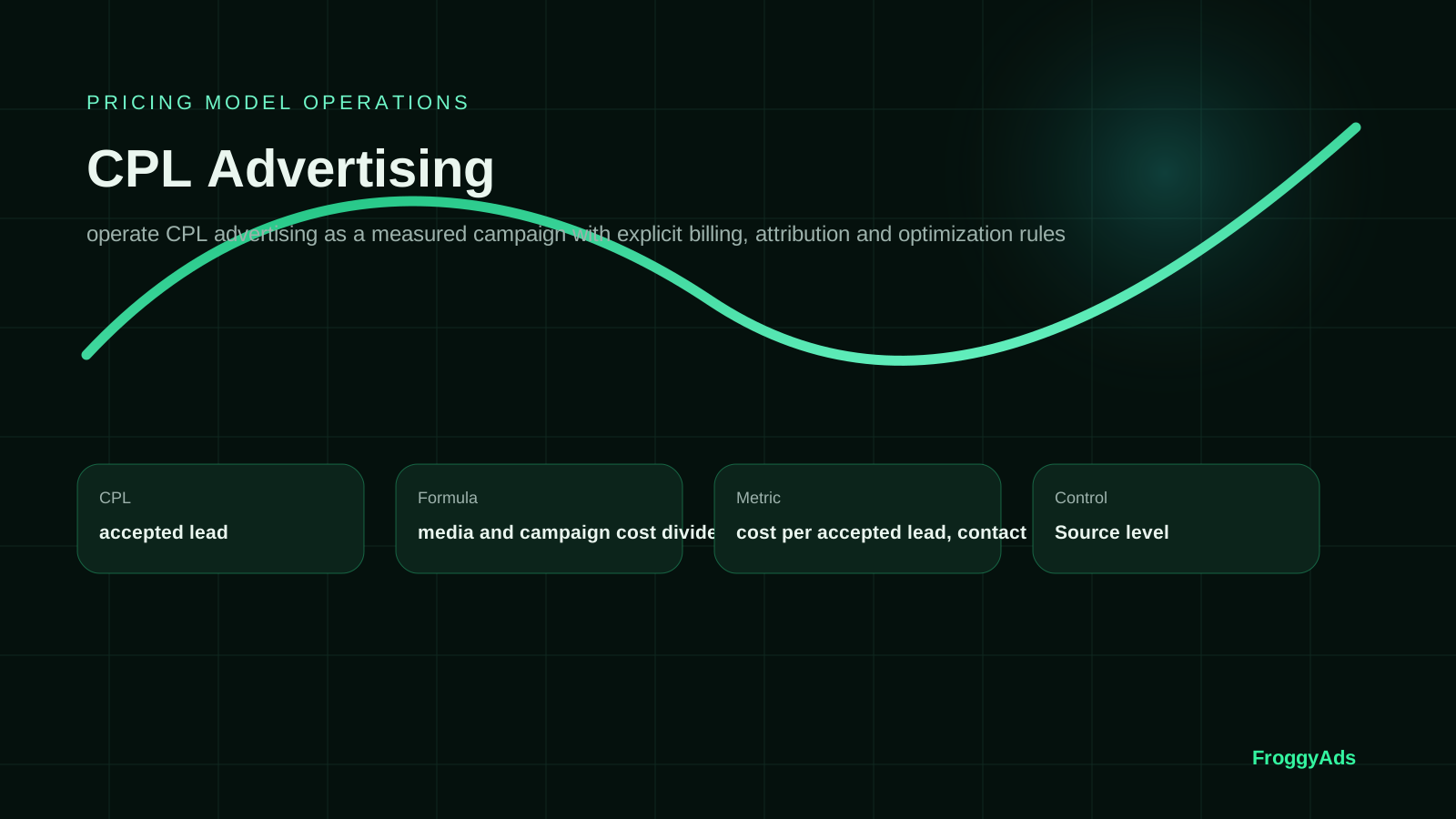
The first cpl advertising document should state the billable event, the formula, the attribution window and the accepted business outcome. For this model, the billable unit is accepted lead, and the base formula is media and campaign cost divided by accepted leads. The formula is only the starting point. The commercial decision should use cost per accepted lead, contact rate, qualification rate and downstream revenue after the underlying outcomes have had enough time to mature.
Use source id, form, geo, device, lead type, qualification status and sales outcome as the minimum reporting breakdown. The central risk is scaling low-cost forms that produce invalid, unreachable or ineligible contacts. A source-level structure, a maximum test loss and a reason-coded change log prevent the team from interpreting a temporary average as a durable result. In this cpl advertising workflow, the practical reason for this control is to operate cpl advertising as a measured campaign with explicit billing, attribution and optimization rules while preserving a source-level explanation for every material change.
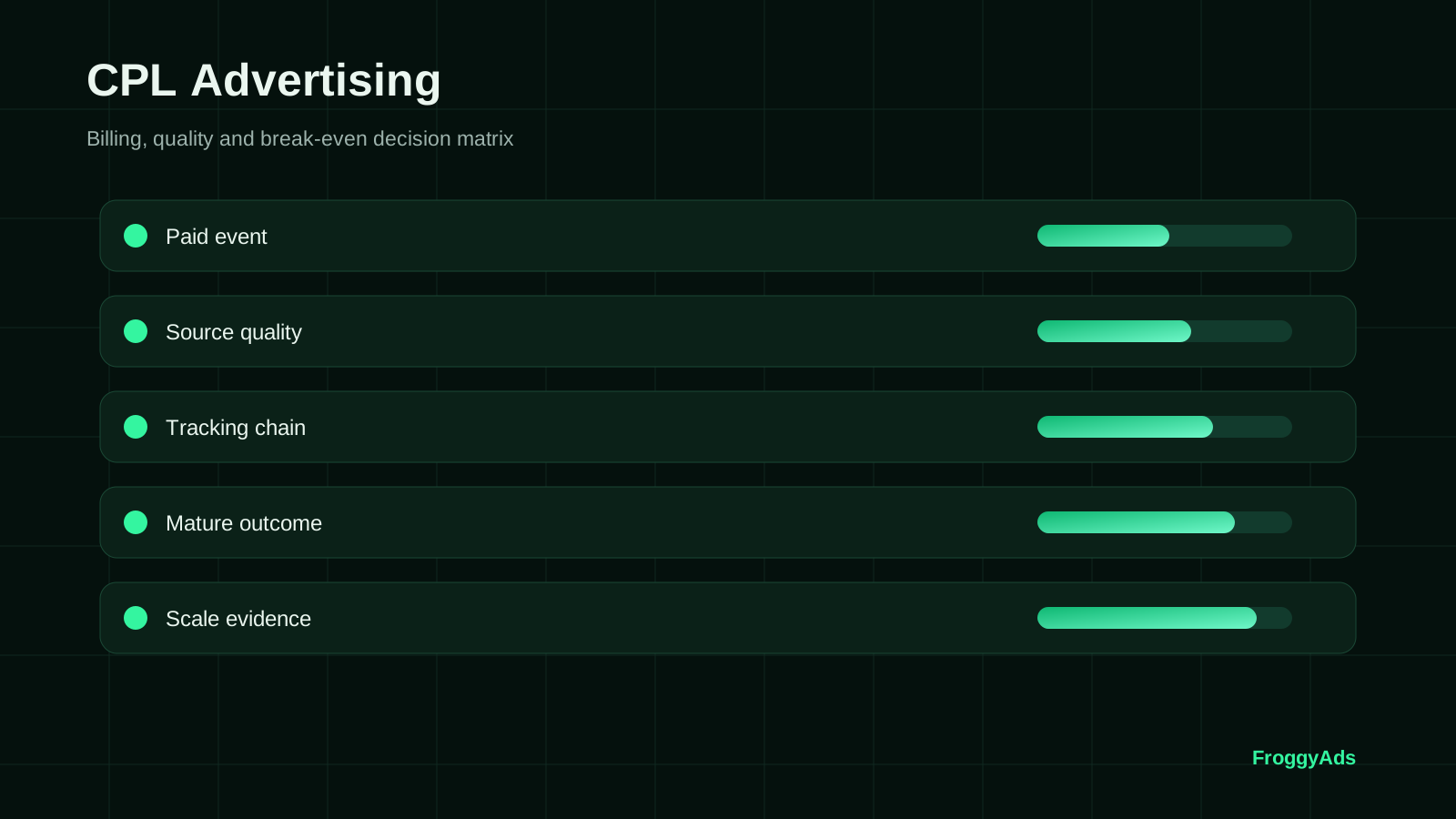
Six layers that make cpl advertising measurable
The pricing label becomes useful when billing, source quality, tracking and scale rules are explicit.
Billing definition
Document exactly when a accepted lead is counted, filtered, adjusted and billed. The page should distinguish the configured bid, the effective price and the cost that remains after invalid-event or reconciliation adjustments. For cpl advertising, connect this layer with the declared objective and keep the decision reversible until the result matures.
Break-even value
Calculate the maximum affordable media cost from accepted outcome value, variable costs, rejection or reversal rates and required margin. Use cost per accepted lead, contact rate, qualification rate and downstream revenue as the commercial decision layer. For cpl advertising, connect this layer with the declared objective and keep the decision reversible until the result matures.
Source transparency
Preserve source id, form, geo, device, lead type, qualification status and sales outcome. Source and placement detail lets the team stop waste without discarding the entire model or hiding weak inventory inside a blended account average. For cpl advertising, connect this layer with the declared objective and keep the decision reversible until the result matures.
Tracking chain
Carry campaign, source, creative and event identifiers through the landing path. Reconcile platform delivery with submitted leads, valid leads, contactable leads, qualified leads, appointments, sales and rejection reasons before changing bids or declaring a winner. For cpl advertising, connect this layer with the declared objective and keep the decision reversible until the result matures.
Creative and page fit
On this CPL Advertising: Campaign Setup, Bidding and Optimization page, Creative and page fit matters because it changes what the advertiser should verify before committing budget or operating effort. Compare Match, promise, destination, paid, unit and attractive under the same scope and review window; if one is unknown, keep that uncertainty explicit rather than filling the gap with an estimate. When the evidence is strong, carry the exact setting or requirement into the next campaign step instead of broadening several variables at once. FroggyAds is useful here because the media-buying decision can stay separate from the broader strategy decision: launch a bounded campaign, inspect source performance and scale only verified value.
Scale governance
Use written stop, revise and scale rules. Increase budget only after the result repeats, the outcome window matures and the next increase remains below the declared break-even limit. For cpl advertising, connect this layer with the declared objective and keep the decision reversible until the result matures.
Connect the guide to live testing
Connect CPL Advertising to a controlled audience test
Use the choices established in “Six layers that make cpl advertising measurable” to define one audience, budget and source set in FroggyAds. Keep the surrounding offer and measurement rule stable so the test adds evidence to cpl advertising instead of mixing several changes at once.
Create My Free Account
Translate the paid unit into a break-even range
For the CPL Advertising: Campaign Setup, Bidding and Optimization decision, use Translate the paid unit into a break-even range to separate a real operating requirement from a broad best-practice statement. Keep the review anchored to Start, forecast, accepted, Subtract, fulfillment and sales; those details are the parts of this section that can materially change the recommendation. Do not scale the conclusion beyond the evidence window; repeat the check after the next meaningful change in volume, scope or audience.
Treat Translate the paid unit into a break-even range as a specific gate for CPL Advertising: Campaign Setup, Bidding and Optimization, not as a reusable checklist item that means the same thing on every page. Use rate, forecast, range, promise, Competition and device as the traceable inputs for this section, then state which missing item would be serious enough to stop or narrow the decision. When the evidence is strong, carry the exact setting or requirement into the next campaign step instead of broadening several variables at once. A controlled FroggyAds test can turn this section into measurable evidence: keep the conversion definition stable, preserve source identifiers and compare marginal performance before expanding.
Separate configured values from effective values. A bid ceiling, target or advertised minimum is not necessarily the amount paid. Automated products can adjust delivery or bids within platform-specific rules. The useful report shows the actual cost, the paid denominator and submitted leads, valid leads, contactable leads, qualified leads, appointments, sales and rejection reasons for the same cohort. In this cpl advertising workflow, the practical reason for this control is to operate cpl advertising as a measured campaign with explicit billing, attribution and optimization rules while preserving a source-level explanation for every material change.
| Paid unit | accepted lead |
|---|---|
| Base formula | media and campaign cost divided by accepted leads |
| Primary business metric | cost per accepted lead, contact rate, qualification rate and downstream revenue |
| Required reporting split | source ID, form, GEO, device, lead type, qualification status and sales outcome |
| Maturity evidence | submitted leads, valid leads, contactable leads, qualified leads, appointments, sales and rejection reasons |
A seven-step cpl advertising operating process
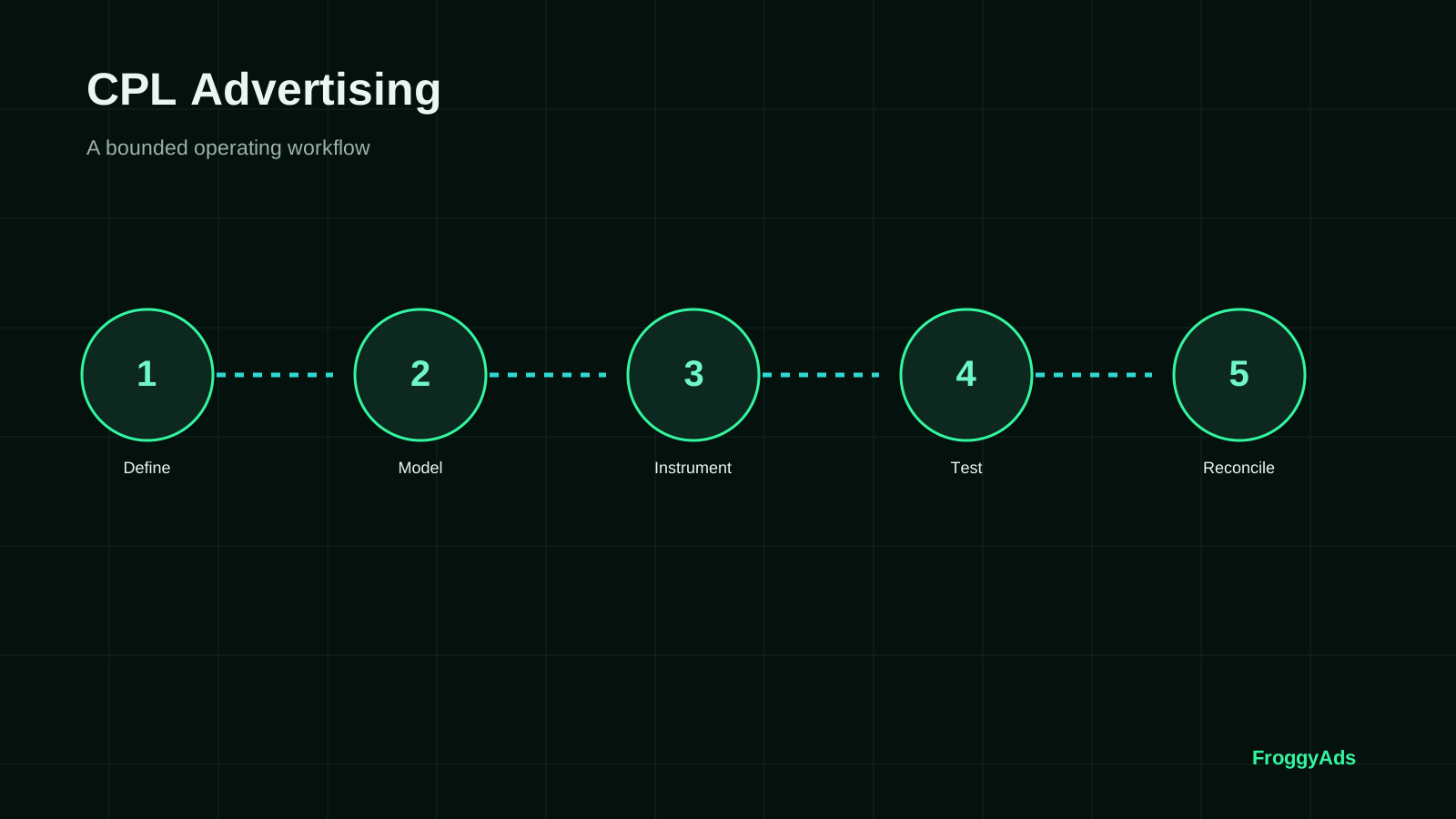
Use a bounded sequence so the first budget creates evidence rather than a collection of unrelated changes.
Define the billable event
Write the exact accepted lead definition for cpl advertising. Include validation, view or click thresholds, attribution, time zone and any platform-specific adjustments. The cpl advertising work log should state the evidence required before the next step begins.
Model the economics
Use media and campaign cost divided by accepted leads for the paid unit, then translate that result into cost per accepted lead, contact rate, qualification rate and downstream revenue. Include non-media costs and a margin reserve. The cpl advertising work log should state the evidence required before the next step begins.
Instrument the path
Test redirects, landing pages, conversion events, postbacks and source parameters. A pricing-model test is not ready while the paid event and business outcome cannot be reconciled. The cpl advertising work log should state the evidence required before the next step begins.
Launch a bounded cell
Choose one offer, a limited GEO and device scope, a small creative set and a maximum test loss. Preserve source id, form, geo, device, lead type, qualification status and sales outcome from the first paid event. The cpl advertising work log should state the evidence required before the next step begins.
Wait for maturity
Separate provisional and mature results. For cpl advertising, do not compare cohorts that have had different time to convert, be approved, generate revenue or reverse. The cpl advertising work log should state the evidence required before the next step begins.
Apply reason-coded actions
Mark each change as bid, creative, source, targeting, page, tracking or policy. Record the previous value and the expected effect so the next review can test the hypothesis. The cpl advertising work log should state the evidence required before the next step begins.
Scale with a control
Keep a stable control while increasing spend on proven cells. Watch whether effective cost, source mix, frequency, outcome quality or margin changes as the campaign reaches more inventory. The cpl advertising work log should state the evidence required before the next step begins.
Choose the execution format
Choose a paid-media format that supports CPL Advertising
Use the criteria around “A seven-step cpl advertising operating process” to decide whether push, native, display or pop fits the message and destination. Set format, targeting and spend as campaign controls in FroggyAds while the cpl advertising decision remains the standard for judging the result.
Create My Free Account
Reconcile delivery, analytics and accepted value
The headline metric for cpl advertising is cost per accepted lead, contact rate, qualification rate and downstream revenue. Define its numerator, denominator, currency, time zone, attribution rule and maturity window before comparing campaigns. Platform delivery, analytics sessions, conversion events, CRM status and collected revenue can settle at different times.
Within CPL Advertising: Campaign Setup, Bidding and Optimization, Reconcile delivery, analytics and accepted value should connect the page's stated intent to evidence that a media buyer or marketing team can actually inspect. Review Build, reconciliation, table, connects, spend and paid together, because a strong result in one of them should not conceal a material failure in another. If the section exposes a measurement gap, repair that gap before changing the offer, creative and targeting simultaneously.
Read early diagnostics without promoting them to final outcomes. Click-through rate, completion rate, viewability, page engagement and raw conversion rate can explain where the path breaks. The budget decision should wait for submitted leads, valid leads, contactable leads, qualified leads, appointments, sales and rejection reasons to mature. In this cpl advertising workflow, the practical reason for this control is to operate cpl advertising as a measured campaign with explicit billing, attribution and optimization rules while preserving a source-level explanation for every material change.
Choose inventory by transparency and control
Volume claims and headline rates cannot replace source-level evidence.
A platform used for cpl advertising should expose the billable event, reporting latency, source or placement identifiers, targeting controls, invalid-event treatment and conversion-tracking options. Check whether the account can separate discovery traffic from proven sources and whether changes are available at the level where performance actually differs.
Ask how cost per lead is implemented for the chosen format. The same label can describe different auction, validation or optimization rules across platforms. For automated variants, document the maximum bid or target, the signals used, the learning period and the advertiser controls that remain available. In this cpl advertising workflow, the practical reason for this control is to operate cpl advertising as a measured campaign with explicit billing, attribution and optimization rules while preserving a source-level explanation for every material change.
Run the first cpl advertising test with a clear loss limit and a narrow question. Compare the platform report with your analytics and business records. A network deserves more budget when the differences are explainable, the quality controls work and the result survives a mature acceptance window.
Make every paid event lead to the same promise
A buyer evaluating CPL Advertising: Campaign Setup, Bidding and Optimization can use Make every paid event lead to the same promise to make the page actionable: identify the condition, document the evidence, and define the response. Use align, creative, landing, path, offer and eligibility as the traceable inputs for this section, then state which missing item would be serious enough to stop or narrow the decision. Do not scale the conclusion beyond the evidence window; repeat the check after the next meaningful change in volume, scope or audience. Use FroggyAds to test the media assumption that follows from this section, not to replace the evidence the section requires. Campaign controls support the decision; they do not manufacture proof.
Promise
For cpl advertising, the ad should state one truthful benefit that the destination can verify.
Qualification
Use the message to attract the user who can complete the accepted outcome, not merely the cheapest accepted lead.
Continuity
Repeat the core reason to act on the landing page so cpl advertising performance reflects the offer rather than surprise or confusion.
Speed
Test the destination on purchased devices and connections. Lost sessions distort effective CPL economics.
Proof
Use transparent terms, relevant evidence and realistic expectations. Fabricated urgency or reviews weaken both trust and measurement.
Tracking
Preserve source, placement, creative and event identifiers so the complete cpl advertising path remains attributable.
Put the guide into practice
Turn CPL Advertising into a bounded campaign test
With “Make every paid event lead to the same promise” documented, launch only the next reversible test. Set a spending limit, preserve the baseline and use source-level and audience controls so the next step depends on qualified outcomes for cpl advertising, not activity volume.
Create My Free Account
How to respond when cpl advertising metrics disagree
Use the disagreement to identify the broken layer instead of changing the entire campaign.
The paid rate falls but CPA rises
The cheaper accepted lead may be coming from weaker sources, lower viewability, accidental response or a landing mismatch. Compare source-level qualified sessions and accepted outcomes before calling the lower rate an improvement. In a cpl advertising review, document the diagnosis and the single next change before editing the campaign.
Delivery grows while quality is flat
Expansion may have changed the inventory mix. Hold the best-performing cells stable, isolate the new sources and compare submitted leads, valid leads, contactable leads, qualified leads, appointments, sales and rejection reasons after the same maturity window. In a cpl advertising review, document the diagnosis and the single next change before editing the campaign.
One creative wins early
The practical role of One creative wins early in CPL Advertising: Campaign Setup, Bidding and Optimization is to expose the exact condition that can change the buyer's next action. Preserve the source, date and owner for Confirm, winner, preserves, accepted, benefiting and unequal whenever they affect the decision, especially when the page compares options or sets a budget boundary. If the section exposes a measurement gap, repair that gap before changing the offer, creative and targeting simultaneously. FroggyAds is useful here because the media-buying decision can stay separate from the broader strategy decision: launch a bounded campaign, inspect source performance and scale only verified value.
Platform and analytics disagree
Check time zones, click IDs, view or click definitions, redirect loss, duplicate rules, consent and attribution windows. Do not average the systems together. Reconcile the event chain with reason codes. In a cpl advertising review, document the diagnosis and the single next change before editing the campaign.
The model works in one GEO only
Treat the GEO as a separate economic cell. Price, device mix, payment behavior, language and source availability can change the break-even point. Do not copy the bid into another market without a local test. In a cpl advertising review, document the diagnosis and the single next change before editing the campaign.
Scale reduces margin
Treat Scale reduces margin as a specific gate for CPL Advertising: Campaign Setup, Bidding and Optimization, not as a reusable checklist item that means the same thing on every page. Document larger, budget, reaching, expensive, auctions and weaker in the same decision record so a later reviewer can see why the option passed, failed or needs a narrower retest. Keep the baseline unchanged while testing the next hypothesis; that comparison is what makes the decision reproducible.
Eight mistakes that weaken cpl advertising
Most pricing-model losses come from small definition, tracking and decision defects that survive because the blended account still looks acceptable. Use the checklist before launch and during every material budget review.
- 01Using a different CPL event definition in the platform, analytics and finance reports. Assign an owner, a reason code, a measurable correction and a review date. For Cpl Advertising, validate this point against CPL Advertising, Plan CPL advertising, cpl advertising work and keep it separate from the What Is Cpl Advertising intent.
- 02Comparing cpl advertising rates across GEOs, devices or formats without normalizing the denominator. Assign an owner, a reason code, a measurable correction and a review date.
- 03Changing bid, creative, source rules and landing page in the same optimization cycle. Assign an owner, a reason code, a measurable correction and a review date. For Cpl Advertising, validate this point against CPL Advertising, Plan CPL advertising, cpl advertising work and keep it separate from the What Is Cpl Advertising intent.
- 04Scaling provisional conversions before acceptance, retention or revenue has matured. Assign an owner, a reason code, a measurable correction and a review date. For Cpl Advertising, validate this point against CPL Advertising, Plan CPL advertising, cpl advertising work and keep it separate from the What Is Cpl Advertising intent.
- 05Judging cpl advertising from a blended account average that hides weak source cells. Assign an owner, a reason code, a measurable correction and a review date.
- 06Treating a lower rate as success while qualified sessions and accepted outcomes decline. Assign an owner, a reason code, a measurable correction and a review date. For Cpl Advertising, validate this point against CPL Advertising, Plan CPL advertising, cpl advertising work and keep it separate from the What Is Cpl Advertising intent.
- 07Allowing tracking loss, duplicate events or attribution differences to remain unexplained. Assign an owner, a reason code, a measurable correction and a review date. For Cpl Advertising, validate this point against CPL Advertising, Plan CPL advertising, cpl advertising work and keep it separate from the What Is Cpl Advertising intent.
- 08Keeping a losing cpl advertising segment active because the total campaign is still above break-even. Assign an owner, a reason code, a measurable correction and a review date.
Move from definition to a repeatable CPL decision
On this CPL Advertising: Campaign Setup, Bidding and Optimization page, Move from definition to a repeatable CPL decision matters because it changes what the advertiser should verify before committing budget or operating effort. Compare fixed, observation, window, spend, changes and follow under the same scope and review window; if one is unknown, keep that uncertainty explicit rather than filling the gap with an estimate. When the evidence is strong, carry the exact setting or requirement into the next campaign step instead of broadening several variables at once. If the next step is a media test, FroggyAds lets the advertiser keep campaign settings and source-level performance visible instead of treating traffic volume as proof of success.
Days 1 to 3: define
Document the CPL event, formula, value model, attribution rule and maximum test loss for cpl advertising. Verify the destination and every measurement handoff before buying volume.
Days 4 to 10: launch narrow
Run a bounded cpl advertising cell with limited GEO, device, sources and creatives. Monitor delivery and obvious technical failures, but avoid rewriting the campaign before representative evidence arrives.
Days 11 to 20: reconcile
Compare platform delivery with submitted leads, valid leads, contactable leads, qualified leads, appointments, sales and rejection reasons. Separate provisional and mature outcomes, remove repeated failures and keep a small controlled budget for source discovery.
Days 21 to 30: repeat or scale
Increase spend only where cost per accepted lead, contact rate, qualification rate and downstream revenue remains inside the target range. Keep the previous stable setup available and record how the larger auction footprint changes effective cost and source mix. In this cpl advertising workflow, the practical reason for this control is to operate cpl advertising as a measured campaign with explicit billing, attribution and optimization rules while preserving a source-level explanation for every material change.
Standards and first-party evidence for CPL Advertising
For the CPL Advertising: Campaign Setup, Bidding and Optimization decision, use Standards and first-party evidence for CPL Advertising to separate a real operating requirement from a broad best-practice statement. Compare standards, official, documentation, make, operating and your under the same scope and review window; if one is unknown, keep that uncertainty explicit rather than filling the gap with an estimate. If the section exposes a measurement gap, repair that gap before changing the offer, creative and targeting simultaneously. FroggyAds is useful here because the media-buying decision can stay separate from the broader strategy decision: launch a bounded campaign, inspect source performance and scale only verified value.
- AppsFlyer CPL glossaryFirst-party definition and formula for cost per lead.
- Google Ads lead form assetsOfficial guidance on capturing leads directly through ad experiences.
- Google Ads CRM integration guidanceOfficial guidance for transferring and reconciling lead data with a CRM.
- LinkedIn marketing qualified leadFirst-party guidance on lead qualification and cost per qualified lead.
CPL Advertising FAQ
Answers focus on billing definitions, measurement, quality and responsible scaling.
Which business conditions make CPL advertising a practical choice?
It is appropriate when a lead can be defined and accepted consistently, consent is lawful, and the business can follow up promptly. The model is weaker when form completion has little relationship to a valuable sales conversation.
For CPL Advertising, what should a first CPL campaign prove?
It should prove that the form, consent, routing, source tracking, acceptance process, and follow-up work together. Use a limited audience and cap so the team can inspect every lead before pursuing scale.
For CPL Advertising, how can CPL ads attract better-fit enquiries?
State the offer, intended audience, important conditions, and next step clearly, then keep the form proportionate. Honest qualification may reduce raw volume while making the remaining enquiries more useful.
For CPL Advertising, why does follow-up speed affect a CPL campaign evaluation?
A suitable lead can become unreachable or lose context when contact is delayed. Record response time beside source and acceptance data so media is not blamed for an operational gap downstream.
For CPL Advertising, how should an affordable CPL target be planned?
Estimate it from contact, qualification, sales conversion, contribution value, sales effort, and desired payback using conservative ranges. Replace assumptions with accepted cohort outcomes as evidence accumulates.
What belongs in the launch checklist for CPL advertising?
Include approved claims, audience rules, form and consent copy, privacy handling, source parameters, deduplication, CRM routing, reason codes, caps, alerts, and named pause owners. Complete a test enquiry end to end.
For CPL Advertising, which reporting view prevents cheap leads from dominating decisions?
Show raw, duplicate, rejected, contacted, qualified, and progressed leads with spend and source. This funnel view shows if a low CPL created value or simply transferred more screening work to sales.
For CPL Advertising, what can cause CPL to rise after a form improvement?
A clearer form may deter unsuitable submissions or add qualification that reduces volume while improving fit. Review accepted-lead cost and downstream progression before reversing a change based on headline CPL.
For CPL Advertising, how can a company protect consent quality in CPL ads?
Use plain disclosure, an unambiguous action, necessary fields, recorded consent context, appropriate retention, and access controls. Do not accept sources whose promotion or form path cannot be verified.
For CPL Advertising, what supports expanding a CPL campaign into a new audience?
Expansion is safer when acceptance and sales progression are stable in the original segment and follow-up capacity is available. Launch the new audience under its own cap so its economics remain visible.
Continue the pricing and campaign workflow
Use the related resources to connect billing models, source selection, optimization and mature outcome measurement.
Turn cpl advertising into a controlled campaign test
For the CPL Advertising decision, record how this control changes the next test or review. Start with one objective, a precise paid-event definition, transparent tracking, source-level controls and a written stop or scale rule. Results depend on the offer, creative, landing page, GEO, bid and optimization.
Cpl Advertising: choose the billing model by measurable business value
Direct answer: Cpl Advertising should be evaluated by the exact billable event, inventory transparency, conversion tracking, source-level controls and the value produced after validation. A low headline rate is not automatically efficient. Compare qualified outcomes, not only the platform charge.
Define the event before bidding
For CPL Advertising, treat this as a page-specific operating check rather than a universal benchmark. Write down what triggers a charge, which events count as qualified, how duplicates and invalid activity are handled, and which reporting window will be used. Keep the media metric separate from the commercial outcome. CPM measures impressions, CPV measures views, CPL measures leads, CPI measures installs and CPA measures an agreed action.
Build a controlled test
For the CPL Advertising decision, record how this control changes the next test or review. Use one offer, one landing path, a limited GEO and device scope, consistent conversion tracking and a written stop rule. Review source-level performance before increasing spend. Pause placements that create volume without downstream value, and retain a clean control group so creative, bid and audience changes can be compared.
Use an outcome-normalized score
Calculate cost per validated outcome, approval rate, conversion lag, refund or rejection rate, and mature revenue where available. For impression or view pricing, translate spend into the business event that matters. For action pricing, verify the action definition and attribution logic before treating the nominal rate as comparable.
| Decision area | Question to answer | Practical control |
|---|---|---|
| Billing | What exact event creates cost? | Document the charge definition and reconcile platform logs. |
| Quality | Does traffic produce validated outcomes? | Use postback or server-side tracking and source reports. |
| Economics | What is the mature cost per useful result? | Include approval, retention, refund and revenue signals. |
| Scale | Can spend grow without efficiency collapse? | Raise budgets gradually and preserve stop thresholds. |
Stop and rollback rules
Stop a source when it exceeds the agreed spend cap without enough validated outcomes, when tracking cannot be reconciled, or when downstream quality falls below the business threshold. Roll back to the last stable bid, creative and targeting combination. Do not compensate for weak quality by scaling volume.
Keyword coverage: cpl advertising, cpl marketing.
CPL Advertising: Campaign Setup, Bidding and Optimization: the buyer task this URL owns
Treat CPL Advertising: Campaign Setup, Bidding and Optimization as an operating page for performance-focused advertisers, not as a synonym page. Its job is to help you make a measurable paid-acquisition decision, with the evidence kept against this exact decision. The nearest related FroggyAds page is What Is Cpl Advertising; this URL keeps ownership of the distinct task to make a measurable paid-acquisition decision.
For CPL Advertising: Campaign Setup, Bidding and Optimization, the operating evidence to keep visible is audience targeting, campaign objective, audience and market fit, ad format. Use these entities only when they change setup, measurement or the commercial decision.
| Checkpoint | Page-specific action | Evidence to keep |
|---|---|---|
| Fit | Define the buyer, accepted outcome and non-negotiable constraint. | Retain evidence specific to CPL Advertising: Campaign Setup, Bidding and Optimization and its accepted outcome. |
| Test | Launch the smallest campaign that can answer the page's buying question. | Retain evidence specific to CPL Advertising: Campaign Setup, Bidding and Optimization and its accepted outcome. |
| Decision | Keep, cap, exclude or expand from accepted-outcome evidence. | Retain evidence specific to CPL Advertising: Campaign Setup, Bidding and Optimization and its accepted outcome. |
Hypothetical calculation: if a controlled campaign for cpl advertising: campaign setup, bidding and optimization spends USD 150 and produces 9 accepted conversions, accepted CPA is USD 150 / 9 = USD 16.67. Replace the inputs with your own campaign economics; this is not a FroggyAds performance claim.
Choose FroggyAds when CPL Advertising: Campaign Setup, Bidding and Optimization calls for a controlled paid-media test. We let performance-focused advertisers apply relevant format, targeting and budget controls, keep source-level evidence visible, and measure the accepted outcome before increasing spend. Create your free FroggyAds account.
CPL Advertising: Campaign Setup, Bidding and Optimization — what matters first
CPL Advertising: Campaign Setup, Bidding and Optimization is most useful when it helps a buyer decide whether this option fits the buyer's acquisition workflow. Define the accepted outcome first, then use targeting, budget and source-level evidence to decide what deserves more spend.