For Buy Website Traffic UK, when does paid UK website traffic fit a campaign?
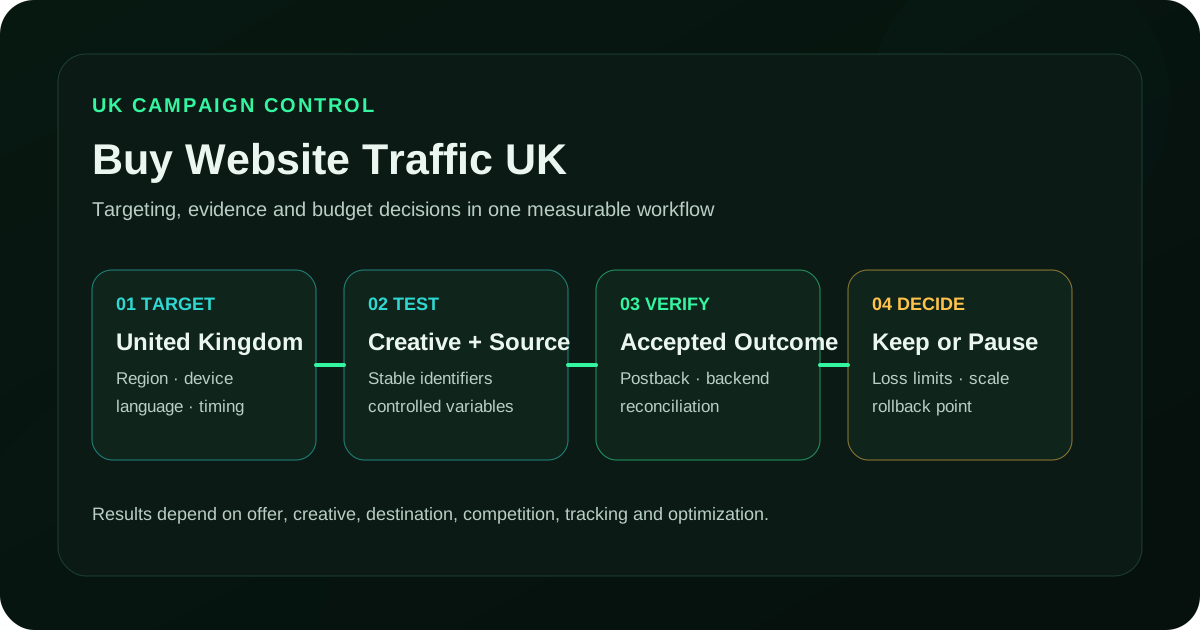
Paid UK traffic fits when your offer is available to the intended customer, your landing journey answers the promise made in the ad, and one meaningful action can be measured from visit to accepted result. Define that action before you buy traffic, then use FroggyAds to open a controlled campaign with the supported geography, format, device and budget settings visible in your account. This gives you a practical test of a real acquisition path instead of a volume-only experiment.
For Buy Website Traffic UK, how should a first UK traffic purchase be contained?
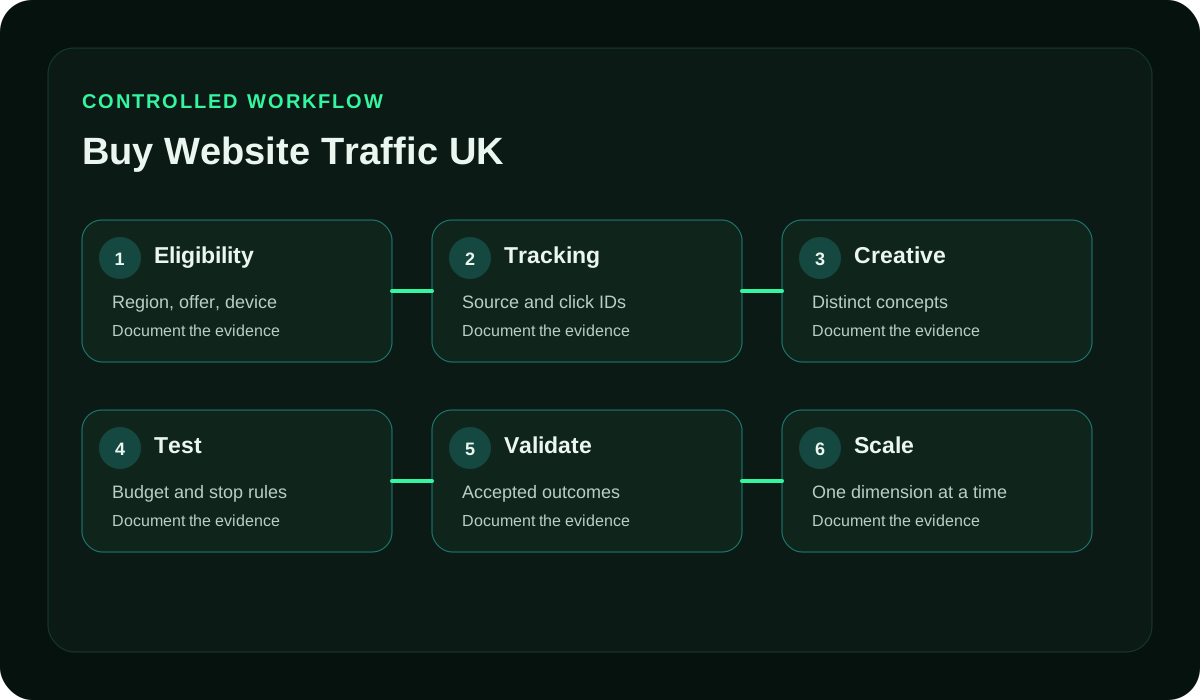
Keep the first purchase small enough to diagnose. Select the supported UK geography in the live platform, isolate the device and traffic source you want to assess, use one landing-page version, and cap spend for a written observation window. Record the consent state and the event that counts as an accepted result. With that boundary in place, your FroggyAds report can support a clear keep, repair or stop decision without blending several audiences into one average.
For Buy Website Traffic UK, what affects the usable cost of UK website traffic?
The useful cost is shaped by auction demand, bid, format, placement, device, timing and how well the destination converts eligible visitors. Judge the campaign on cost per accepted lead, order or other verified outcome after duplicate, rejection, cancellation and refund rules, rather than on the click price alone. In FroggyAds, separate the cells you can control, let each reach the agreed maturity point, and move budget only when the resulting business value supports it.
For Buy Website Traffic UK, which targeting choices matter when buying UK traffic?
Start with the customer you can actually serve. Confirm the supported geography available in your FroggyAds account, then choose device, format and source settings that match the offer and landing experience. Keep England, Scotland, Wales and Northern Ireland separate whenever eligibility, delivery, pricing or customer treatment differs; use a narrower service boundary where your own fulfilment requires it. Check the live controls before launch because this page does not promise that every possible regional or postcode option is available.
For Buy Website Traffic UK, what should UK traffic creative communicate before the click?
Creative should identify the offer clearly and carry every condition that could change a customer's decision. Match the headline, price presentation, eligibility, recurring or optional charges, timing and next step to the destination. Avoid implying availability that the landing page or checkout cannot fulfil. FroggyAds gives you a practical route to test distinct creatives, but the advertiser remains responsible for the claim and customer journey; keep the approved ad and landing versions together in the campaign record.
For Buy Website Traffic UK, how should a landing page prepare for paid UK visits?
Continue the exact promise made in the ad, load cleanly on the targeted devices, and make the primary action obvious. Show the seller, material product or service information, total-price treatment, delivery or fulfilment terms, privacy information and any applicable cancellation route before the customer commits. Verify tracking in the same consent states the campaign will encounter. Then send a bounded FroggyAds test to that version and review both completed actions and the points where eligible visitors leave the journey.
For Buy Website Traffic UK, which outcome should guide a UK traffic decision?
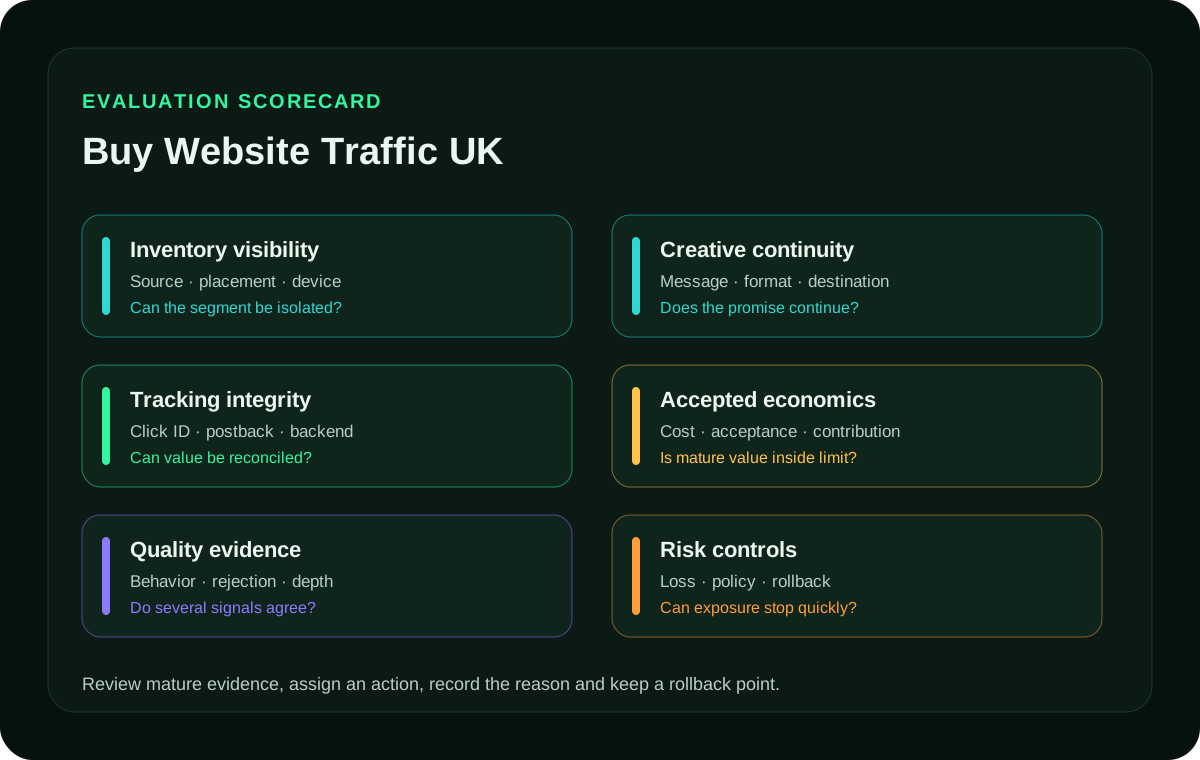
Choose the outcome closest to commercial value that can be verified consistently, such as an accepted lead, completed order or qualified registration. Write the eligibility rule, source of truth and maturity window before launch, and keep diagnostic measures such as clicks, sessions and add-to-cart events separate from the final decision metric. FroggyAds can deliver and segment paid traffic for the test; your acceptance data should decide which source, device or creative deserves another budget unit.
For Buy Website Traffic UK, how can weak UK traffic sources be diagnosed?
Break the result into the smallest useful cells: nation or service region, placement or source, device, creative, landing version and consent state. Compare mature cohorts on accepted outcomes, then inspect message match, session quality, form or checkout completion and backend rejection reasons. A weak average may hide one workable lane or one broken step. Use FroggyAds controls to pause the failing cell, keep the evidence, repair one variable, and run a bounded retest with the same acceptance rule.
For Buy Website Traffic UK, what should be reviewed before purchasing UK website traffic?
Review whether the offer may be advertised and fulfilled for the intended UK customer, whether the claims and total-price presentation are accurate, how privacy and storage choices affect measurement, and whether the landing page and checkout work on target devices. Confirm billing terms, the conversion definition, the attribution window and the person who can act on the result. Once those checks are recorded, create your FroggyAds account and configure the first campaign around that approved path.
For Buy Website Traffic UK, when can a UK website traffic campaign add spend?
Add spend only after more than one mature cohort produces repeatable accepted value inside the documented cost, eligibility and compliance limits. Check that the winning result survives by source, device, landing version and relevant UK service area, then increase one budget variable at a time. Keep a rollback threshold so volume cannot conceal worsening quality. When the evidence supports the next increment, scale the proven lane in FroggyAds and leave unverified regions or formats outside the increase.