
Updated evidence dossier: August 2026

Best Ad Network UK

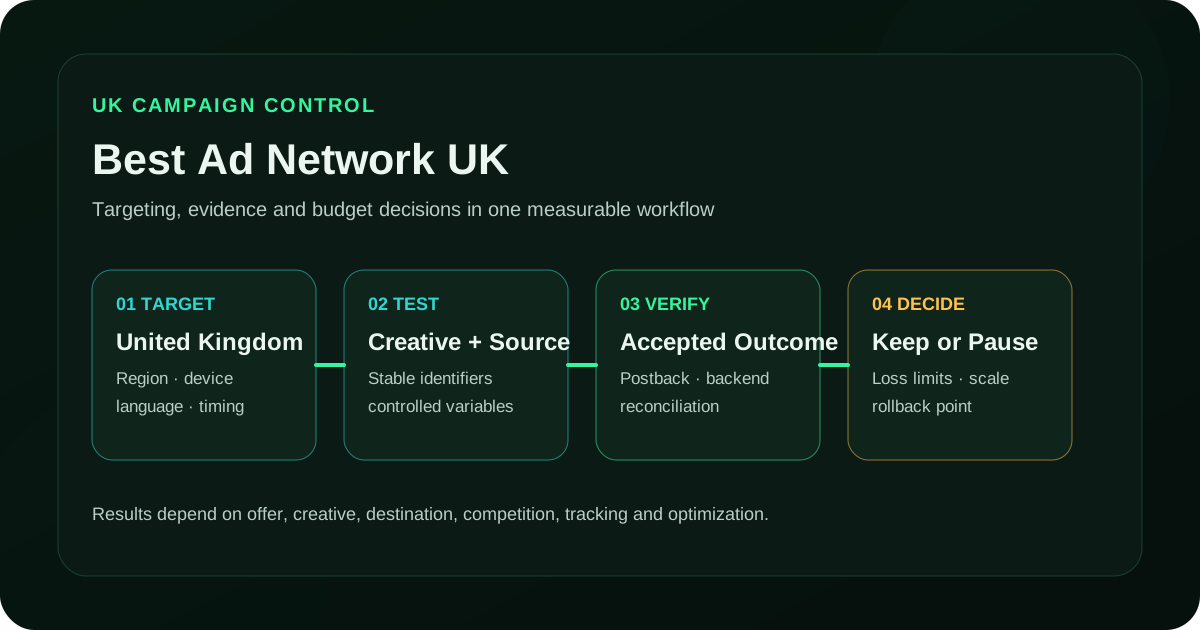
The best ad network for a UK campaign is the one that preserves the intended region, device, placement, claim, consent state, GBP customer path and accepted outcome. As of August 2026, this guide replaces a generic network score with a UK evidence docket that can be audited before budget increases.

What changed: This revision adds a UK claim file, storage-and-access check, regional delivery docket, GBP path rehearsal, source disclosure test and ten UK-only questions.
best ad network uk planning visual
Best Ad Network UK decision evidence.

Best Ad Network UK decision framework
UK brief

What should best mean in a UK network comparison?

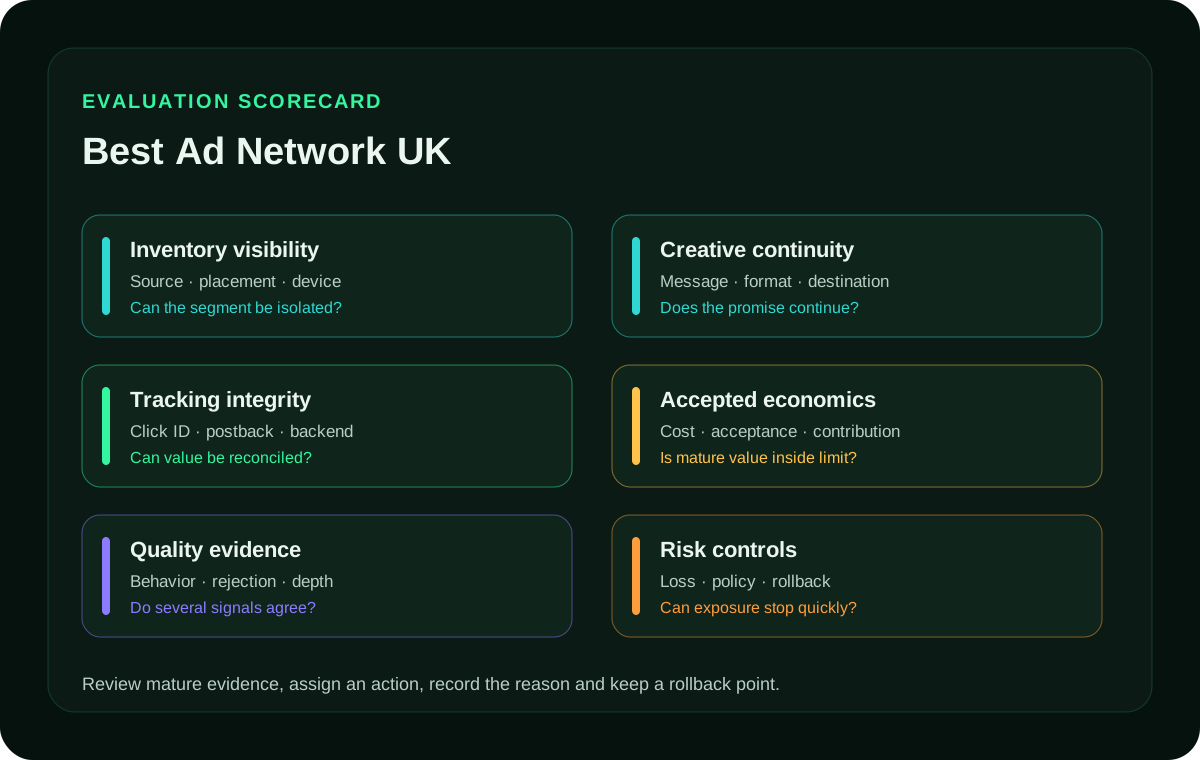
Translate best into weighted operating requirements: supported UK geography, source visibility, device and schedule controls, eligible inventory, creative policy, consent-compatible measurement, GBP customer continuity and accepted acquisition cost. Assign a minimum and evidence source to each requirement. A network cannot win merely through reach or price if it fails a mandatory condition. Keep the comparison date because regulatory guidance, platform controls and inventory change. The score should show unavailable evidence rather than filling gaps with an average.

best ad network uk controlled workflow visual
Retained best ad network uk planning visual.

Consent state

What must a UK network test record about cookies and pixels?

ICO guidance says online advertising that uses storage or access technologies generally requires PECR consent and clear information, with data-protection duties where personal information is used. It also notes current guidance is under review following 2025 legislation. Inventory each cookie, pixel, script, purpose and vendor. Test first visit, refusal, acceptance and withdrawal where implemented. Record which campaign and outcome identifiers remain in every valid state. Do not reassign missing conversions to a source through an undisclosed estimate.

Regional docket

How can a buyer verify UK geographic delivery?

Record the live targeting option, location method, excluded areas, device, schedule and source identifier. Compare observed delivery with the selected route and business service area. Separate England, Scotland, Wales and Northern Ireland only when the platform exposes the control and the offer can serve each region. A UK label does not prove local eligibility or customer support. Investigate mismatches using platform logs and landing records before making a broad statement about regional quality.

Supply view

Which source evidence helps compare UK ad networks?

Ask for publisher, site or app, placement, seller, exchange and time information available to the buyer. IAB Tech Lab describes ads.txt as a public declaration of authorised digital sellers. Use the record to examine supply-chain representation, not as a score for audience intent or content quality. Connect the available source ID to device, creative, consent state and mature outcome. When the network hides a coordinate, note the limitation and narrow the claims made from the test.

Release rule

How should a UK campaign move from test to scale?

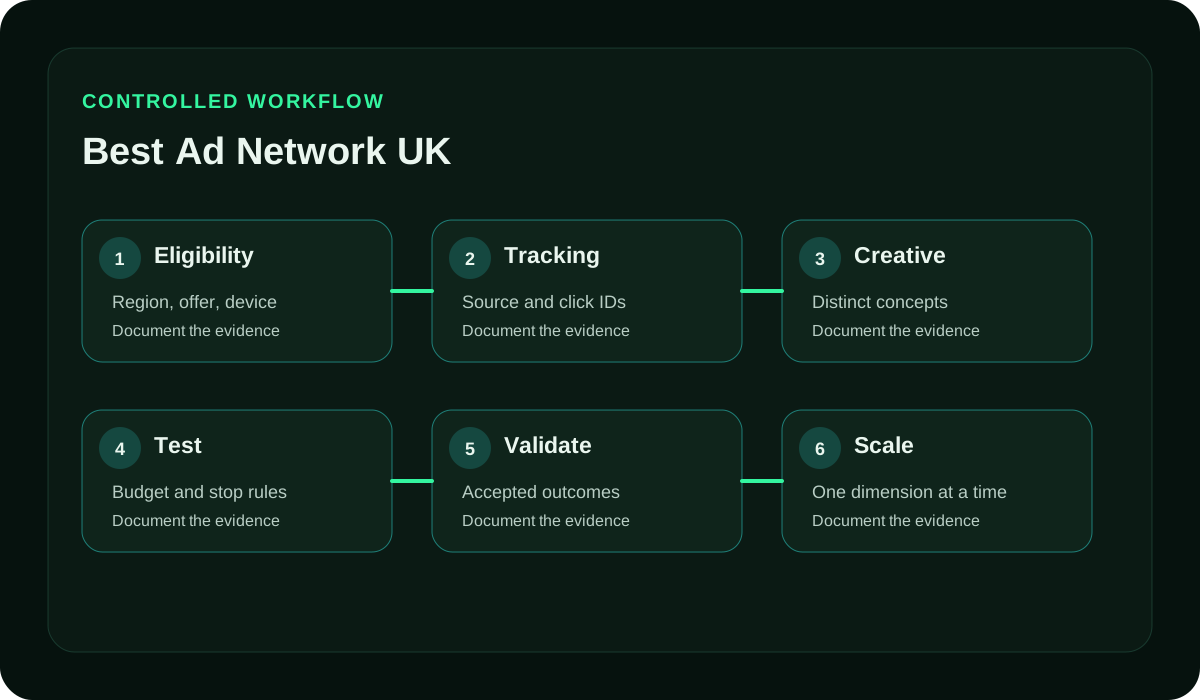
Hold one reference cell fixed and increase one source group, device, region, schedule or creative only after outcomes mature. The release docket should show claim approval, consent behaviour, source evidence, GBP path, complaints, refunds and accepted cost. Set reversal triggers before spending more. A blended national result can conceal a failing marginal source, so compare the added volume with the reference rather than assuming the earlier average continues.
best ad network uk evaluation scorecard visual
Claim file visual retained from the original page.

Official evidence boundaries

  • Information Commissioner's Office: ICO says PECR covers electronic marketing, cookies and similar technologies, and notes that its guidance is under review after the Data (Use and Access) Act 2025.
  • Information Commissioner's Office: ICO says online advertising using storage or access technologies generally requires PECR consent and clear information, alongside data-protection duties where personal information is used.
  • Advertising Standards Authority and Committee of Advertising Practice: CAP Code section 3 addresses misleading non-broadcast marketing communications and the impression created by the communication as well as specific claims.
  • IAB Tech Lab: IAB Tech Lab describes ads.txt as a public record through which publishers and distributors declare authorised digital inventory sellers.

Best Ad Network UK FAQ

What does best mean when choosing an ad network for the UK?

It means the network fits the campaign's audience, geography, format, source evidence, consent route, GBP customer journey and accepted-cost boundary. Popularity or a low quoted rate cannot establish that fit alone. Start with one business-accepted result, such as an eligible order or qualified enquiry, and compare providers against the same brief. Include approval time, operational effort, rejected activity and delayed adjustments so a cheap click is not mistaken for useful value; record the evidence date, cohort maturity, reviewer and unresolved gap beside every score so another team can reproduce the comparison after campaign conditions change.

How should UK geographic delivery be checked in a network trial?

Configure only supported locations, preserve the platform's available region and source fields, and compare observed delivery with serviceable customer records. Report mismatches honestly without claiming precision the network does not expose. Test a bounded set of regions, devices and landing routes before expanding. Where postcode or regional detail is unavailable, keep the broader platform label visible and use later customer eligibility as a separate check rather than inventing a more exact location; retain the observation time, routing settings and exclusions so any mismatch can be investigated against the configuration actually used.

Which advertising-claim evidence should a UK buyer retain?

Keep support for the overall impression, qualifications, price, availability and material conditions of every creative and destination. Platform acceptance does not replace the advertiser's duties under applicable rules and law. Preserve the approved wording, underlying evidence, reviewer, market, version and expiry date together. Recheck the complete customer journey after an offer, product page or price changes, because a previously accurate advertisement can become misleading when the destination no longer carries the same conditions.

How do cookies and consent affect a UK network comparison?

Rehearse the journey under the reviewed consent states and record which permitted identifiers remain. Show unattributed or partially attributed outcomes separately instead of redistributing missing credit to create a complete-looking report. Compare the same consent scenarios across providers and confirm that suppression, withdrawal and deletion routes work through connected systems. Business records may still confirm an outcome without proving every advertising touch, so keep operational attribution distinct from the accepted sale, enquiry or subscription.

Should media costs be converted into GBP before evaluation?

Preserve the billed currency and documented exchange method, while checking that the customer sees the correct supported GBP obligation. Reconcile media cost, payment records and accepted backend value as separate evidence layers. Record the exchange date, fees, taxes where relevant, credits and later adjustments instead of silently rewriting the original invoice. Compare providers on a common mature unit, while keeping the source currency available for finance review and variance investigation.

What can ads.txt contribute to UK source verification?

It can show sellers a participating publisher declares as authorised, but it does not certify the user, placement, page quality or conversion. Match it with the actual seller and source identifiers available in the test. Preserve the file version and observation date because declarations can change. Combine that check with placement reporting, destination review, invalid-activity handling and accepted customer outcomes; no single declaration proves that a particular impression was suitable or commercially valuable.

Which formats should enter a UK ad-network pilot?

Include only formats that suit the message, context, destination and network approval route. Test each format as a distinct cell so delivery quality and accepted cost are not hidden inside a blended average. Check representative mobile and desktop experiences, dismissal or navigation behavior, creative legibility and landing-page continuity before buying volume. A format that delivers cheaply still needs to protect the offer meaning, user control and the campaign's approved loss boundary.

Which failures trigger an immediate pause in a UK source test?

Pause for regional mismatch, inaccurate price or claims, failed consent handling, missing source evidence, a broken GBP path, rising complaints or accepted cost beyond the approved boundary. Preserve the evidence for review. Assign the pause owner and threshold before launch so the response does not depend on a late interpretation. Contain only the affected source or format where evidence permits, keep the last trusted configuration and require a documented retest before resuming spend.

What should the final UK network decision record contain?

Store the brief, eligible regions, claims evidence, consent state, sources, formats, spend, accepted outcomes, exchange method, limitations and decision owner. State clearly whether to scale, revise, retain or stop. Add the observation window, cohort maturity, exclusions, credits, complaints and unresolved differences so another reviewer can reproduce the conclusion. If evidence is incomplete, set the next check and spending ceiling instead of turning a provisional result into a permanent network ranking.

Can FroggyAds be included in a bounded UK comparison?

Run FroggyAds as a separate campaign option with supported UK targeting, a consent-compatible destination, controlled formats and an accepted GBP business outcome. Judge the observed evidence, not a general platform label. Use the same audience brief, claim version, test period, loss limit and maturity rule applied to the other options where practical. Inventory, approval, pricing and results vary by campaign, so the test supports the decision rather than a universal performance promise.


