
Banner Monetization: Improve Yield, Viewability and UX
Improve banner monetization with placement design, responsive sizes, viewability, demand competition and page-speed controls.

What does this banner monetization guide help you decide?
It helps a publisher decide whether a named banner slot should be launched, changed, expanded or removed. The decision combines eligible opportunity, render coverage, viewability, mature net revenue and page-experience evidence. It also shows advertisers why responsive size, honest placement identity and a stable page matter when they evaluate banner traffic.
Start with the slot, not an account-wide average. Record its page template, position, accepted dimensions, breakpoints, consent boundary and empty state. Then observe the path from eligible session to request, response, render and viewable impression. Reconcile revenue only after the reporting window has matured.
A useful banner program makes tradeoffs explicit. Higher eCPM can coexist with lower coverage. More slots can create more requests while weakening viewability or reader engagement. A higher position can improve visible opportunity but introduce layout or navigation problems. The guide gives each tradeoff its own evidence and rollback rule.
The Coalition for Better Ads standards provide an external reference for ad-experience guardrails. Apply the standards alongside your own consent, policy, accessibility and page-performance requirements. They do not replace the site's measurement contract or guarantee commercial results.
What banner monetization should accomplish
Banner monetization should convert a limited set of well-designed page opportunities into explainable net value. The publisher needs to know which sessions were eligible, which placements rendered, which impressions became viewable and which revenue survived adjustments. The reader still needs a stable page, while the advertiser needs a legitimate chance to communicate a relevant offer.
Give each slot a commercial role
An in-content rectangle may monetize deep reading. A leaderboard may support a broad desktop reach opportunity. A mobile anchor, where permitted, has a different attention and experience profile. Write the intended role before choosing sizes or floor rules so the placement can be judged against the job it was designed to do.
Do not use a new slot to solve every revenue problem. Weak viewability calls for placement or render work. Low coverage may point to demand, floor, size compatibility or eligibility. Unreconciled revenue needs a billing and reporting investigation. Adding more requests can amplify the wrong issue.
Protect the source of future inventory
A page earns future opportunities when readers can reach the content, interact without obstruction and choose to return. Reserve the banner container, keep labeling clear and define a maximum experience cost. Track layout movement, load delay, engagement and complaint signals next to yield.
The final output is a versioned placement decision: expand, hold, change one lever or restore the previous setup. It should name the slot, affected pages, devices, evidence window, owner and review date. That makes the decision reproducible when traffic mix or demand changes.
Build banner monetization around six controllable layers
Treat every banner position as a small product decision. A useful placement has a defined job, enough eligible demand to test, a stable measurement contract and a user-experience limit. These six layers separate those decisions so a higher headline rate cannot hide a weaker page.
Inventory eligibility
List the pages, templates, countries and traffic sources where a banner may appear. Record consent state, content restrictions and any placement that must remain ad-free. Eligibility is the boundary for the test, not a promise that every impression will receive an ad.
Placement and viewability
Name the slot, page depth and device breakpoint. Measure whether the slot entered the viewport and stayed available long enough to be useful. Compare sticky, above-content and in-content positions separately because they create different attention and layout effects.
Responsive creative fit
Map accepted banner dimensions to the real container at each breakpoint. Check that the creative label remains clear, the ad does not cover navigation and the reserved space prevents a late layout jump. A technically served asset is not automatically a usable impression.
Demand and floor logic
Keep bid pressure, fill, no-fill and passback behavior visible by slot. A higher floor can raise the value of filled impressions while reducing the share that clears. Judge the change from net slot revenue and session coverage instead of eCPM alone.
Page-experience guardrails
Monitor load delay, layout stability, accidental-click signals, bounce behavior and pages per session beside revenue. Set a rollback condition before the experiment. Monetization is sustainable only when the site remains usable for the audience that creates future inventory.
Revenue reconciliation
Join gross delivery, deductions or adjustments, eligible impressions and the reporting period to the same placement ID. Calculate viewable net revenue per session only after the numerator, denominator and maturity window are fixed. Retain the change log that explains every floor, size or placement update.
A seven-step banner monetization process
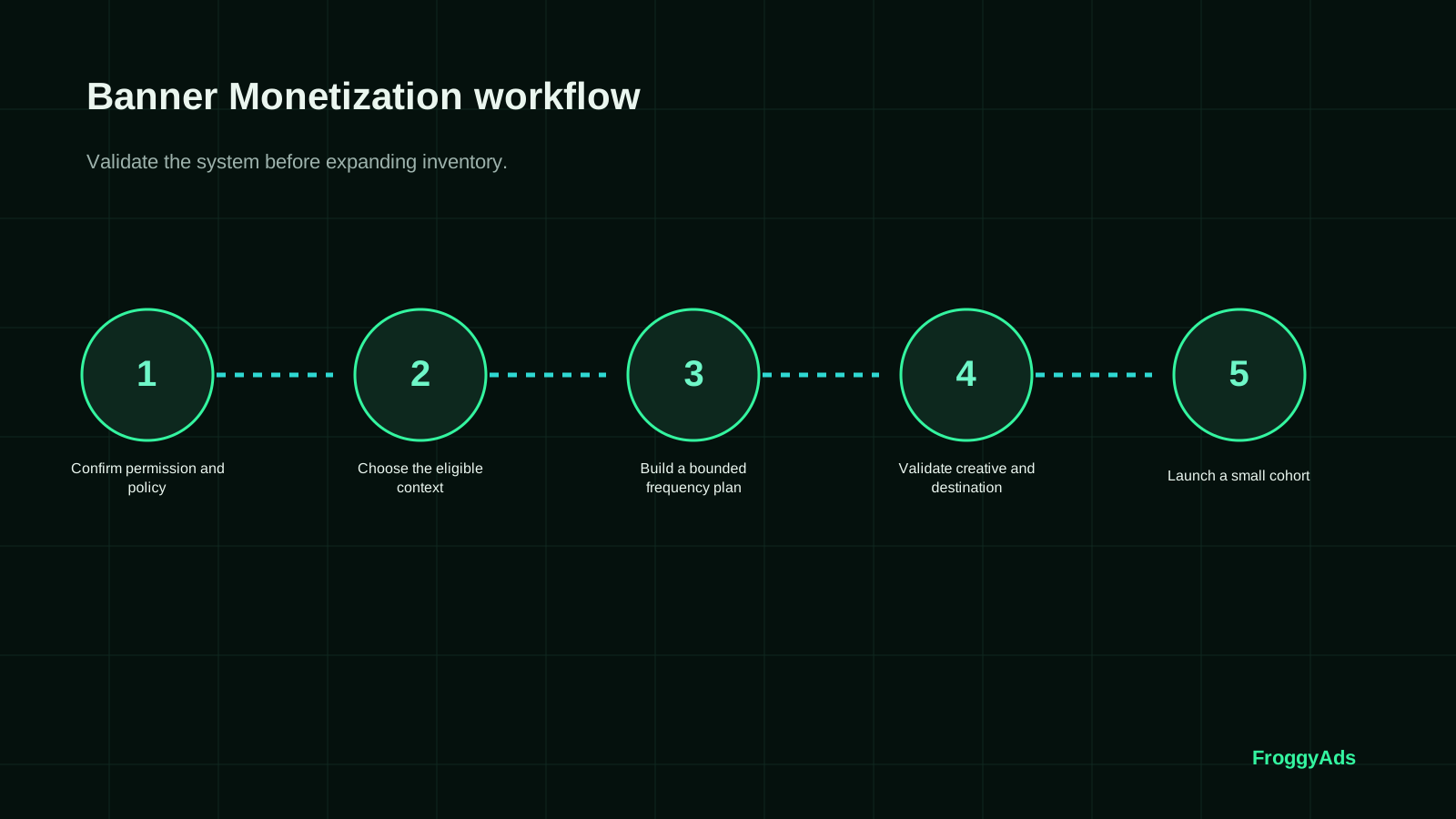
Start with one slot and one page family. The workflow below creates a baseline that a publisher can reproduce, compare and reverse instead of rolling a new banner setup across the entire site at once.
Write the slot brief
Identify the template, exact position, intended dimensions, breakpoints and audience context. State why the banner belongs there and which page element must remain unobstructed. Keep screenshots or a placement map with the slot ID so later reporting refers to a real location.
Define eligibility before demand
Document content categories, countries, devices, consent states and traffic sources that may enter the experiment. Remove pages where policy, user expectation or layout makes the format unsuitable. The eligible opportunity count becomes the denominator for fill and delivery analysis.
Reserve responsive space
Set the container behavior for phone, tablet and desktop widths and decide what happens when no creative is returned. Validate labeling, close controls where relevant, surrounding content order and keyboard flow. Preventing movement at render time protects both readability and measurement quality.
Establish the measurement contract
Use stable placement, page-template and device identifiers. Define eligible impression, served impression, viewable impression, net revenue and session. Fix timezone, currency, reporting delay and adjustment handling before launch so the first result can be reconciled.
Launch a bounded baseline
Expose a limited share of eligible sessions while a comparable control remains unchanged. Hold the placement, size mix and floor logic stable for the written review window. Stop for broken rendering, consent errors, severe layout shift or a material user-experience regression.
Diagnose the whole yield path
Read opportunity, response, render and viewability rates in sequence. Then compare net revenue per eligible session with page latency, engagement and return behavior. This reveals whether a revenue change came from more coverage, stronger clearing prices, better viewability or a smaller denominator.
Change one operating lever
Test one material variable such as slot position, accepted size set or floor rule. Record owner, reason, start time and rollback trigger. Expand only when the improvement persists across the required devices and page families without breaching the experience guardrails.
Measure banner yield from a fixed denominator
Rates become useful only when the counted event and review window are explicit. Choose eligible sessions or eligible page opportunities as the stable denominator for the placement decision. Then keep response, render and viewability rates as diagnostic stages that explain how the slot reached its revenue result.
| Measure | Transparent calculation | What it diagnoses | Common misread |
|---|---|---|---|
| Render coverage | Rendered impressions / eligible opportunities | Whether demand response and technical delivery produce an on-page asset | Treating no-fill and render failure as the same cause |
| Viewable share | Viewable impressions / measurable rendered impressions | Whether the placement creates an opportunity to see the creative | Assuming viewability proves attention or conversion |
| Net revenue per eligible session | Mature net slot revenue / eligible sessions | The slot's economic contribution across the audience that could receive it | Using filled impressions as the denominator and hiding lost coverage |
| Experience cost | Change in the named stability, latency or engagement measure | Whether monetization pressure weakens the page | Ignoring a small revenue gain that creates a large audience loss |
Break the measures out by placement, size group, device class and page family. Add traffic source only when it changes the publisher's decision and can be interpreted responsibly. A split should reveal a controllable cause, not create dozens of small cells that cannot mature.
Mark the latest period as provisional until known adjustments and reporting delays have passed. If the provider changes a definition, size mapping or revenue basis, start a new comparison period. Keep both records rather than rewriting the historical baseline.
Trace every banner opportunity from page to settled revenue
A banner slot moves through distinct states. The page first creates an eligible opportunity. A request may then receive a demand response, the creative may render, measurement may determine viewability, and revenue may later be adjusted. Naming each transition prevents a floor change from being used to fix a broken container or a latency problem.
Use one identifier through the chain
Carry the placement ID into request, reporting and change records where the implementation supports it. Add page-family, device and size dimensions without changing what the slot itself means. When a number falls, compare the current stage with the preceding stage to find the first material loss.
If opportunities stay stable but responses fall, examine eligibility, size support, demand and floor logic. If responses hold but renders fall, inspect creative validity, timeouts and container behavior. If renders hold but viewability falls, review position, page depth and scroll behavior. If delivery looks stable while settled revenue changes, reconcile reporting and adjustments.
Assign owners by failure stage
Product owns the slot's page role and user-experience limit. Engineering owns container and event integrity. Ad operations owns demand, size and floor configuration. Privacy and policy owners define eligibility. Finance reconciles the revenue basis. A named decision owner combines their evidence and authorizes expansion or rollback.
Use a small number of inventory classes only when they simplify a real operating rule. A desktop leaderboard and a mobile in-content rectangle may need separate classes because their sizes, placement behavior and audience effects differ. Avoid labels such as premium unless the class has measurable requirements.
Use the model in three common banner-yield situations
The same headline eCPM can describe very different slot health. Follow the first broken step in the delivery path and make the smallest change that can test the diagnosis.
Requests rise while viewable impressions stall
Check whether the new inventory sits below meaningful page depth, collapses before rendering or loads after the reader has moved on. Compare requested, rendered and viewable events by slot and device. Repair placement or render timing before changing the floor.
eCPM improves while session revenue falls
Inspect eligible opportunities and fill beside the higher price. A restrictive floor may leave too many sessions unmonetized. Restore the last stable configuration or test a narrower floor change, then evaluate net revenue per eligible session rather than the winning impression alone.
Revenue grows while page quality weakens
Segment layout shift, load delay, bounce behavior and accidental-click indicators by the altered slot. Pause the affected placement if it crosses the written guardrail. A smaller, stable slot can create more durable inventory than an aggressive unit that reduces repeat visits.
Protect the audience and advertiser value
User experience is part of the revenue equation. A placement that shifts content, delays interaction, obscures navigation or creates repeated interruptions can reduce session depth and future visits. Measure those effects alongside viewable net revenue per session. The goal is not the fewest ads or the most ads. It is the highest sustainable value from eligible opportunities.
Advertiser value matters too. Clear labeling, accurate placement descriptions, transparent supply paths and source-level reporting make inventory easier to evaluate. For banner monetization, avoid promising guaranteed quality, guaranteed fill or guaranteed revenue. Traffic-quality and supply controls reduce risk, but they do not eliminate every invalid event or market change.
When a change works, scale one lever at a time. Increase eligible inventory, add a demand path, adjust a floor, change a format or expand an audience cohort, but do not do all of them together. Preserve the previous stable version so the team can roll back if the newest banner monetization expansion weakens collected revenue or audience behavior.
Five mistakes that weaken banner monetization
Use these checks before expanding demand, placements or inventory.
Optimizing a headline metric before the placement, size, device, page depth and traffic source breakdown is stable
Changing demand, placement and pricing at the same time during a banner monetization test
Ignoring fees, discrepancies, latency or uncollected revenue when calculating viewable net revenue per session
Treating user experience as a soft preference instead of an input to future inventory value
Scaling banner monetization before the latest traffic period and revenue events have matured
Standards and first-party documentation
These sources define technical concepts and user-experience principles. Your own reporting remains the source of truth for performance.
Banner Monetization FAQ
Practical answers for publishers, site owners, ad operations teams and media buyers.
What does a controllable banner monetization plan include?
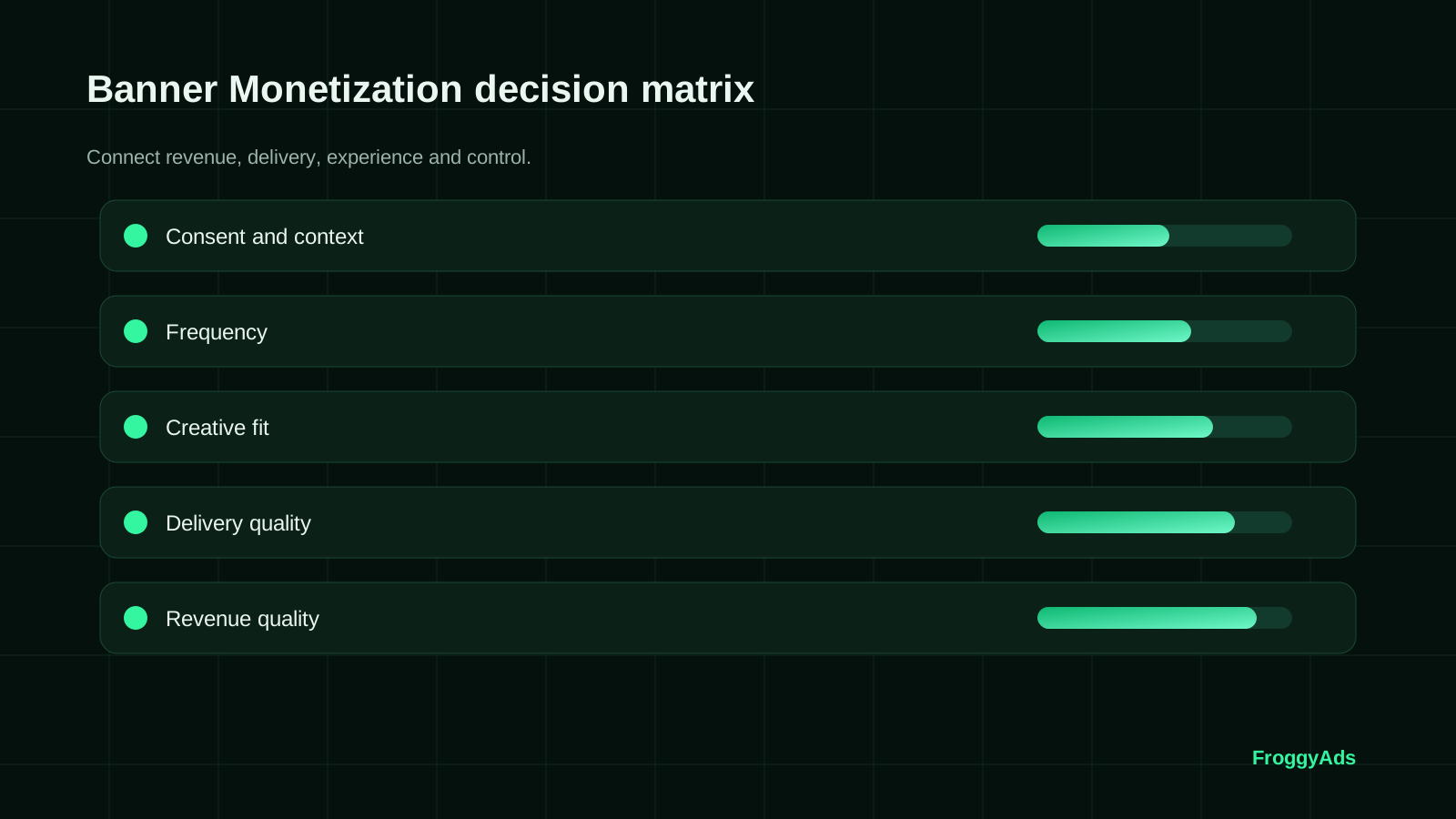
A workable plan connects consent and context, frequency, creative fit, delivery quality, revenue quality and source control. Each layer needs a named signal, a limit and a clear action when performance moves outside the accepted range.
Which outcome gives banner revenue useful context?
Viewable net revenue per session connects banner income with both exposure and audience activity. Read it beside page experience, accepted traffic and partner deductions so a higher gross total does not hide weaker delivery or user value.
How do consent and page context affect banner monetization?
Use banners only where the visitor's choices, the page subject and the intended audience permit them. Record the applicable consent state and placement context before comparing revenue, because ineligible exposure is not a valid monetization gain.
How can banner frequency be kept under control?
Set an exposure boundary for the relevant visitor and session, then review repeat impressions with engagement and revenue quality. Reduce or pause delivery when added exposure stops contributing useful value or begins to damage the page experience.
What makes a banner creative fit its placement?
The creative must suit the available size, surrounding content, device and audience expectation while keeping the advertiser and commercial purpose clear. Check readability and message continuity on the actual destination rather than judging the banner in isolation.
Which checks reveal weak banner delivery quality?
Review whether the placement loads, remains viewable, avoids unintended overlap and reaches the approved device and geography. Compare these signals by source and placement so a delivery problem can be isolated without changing the entire setup.
How is banner revenue quality different from gross revenue?
Revenue quality accounts for accepted traffic, partner adjustments, user experience and the repeatability of the result. A gross increase is less useful when it depends on unsuitable sources, excessive exposure or income that does not remain after review.
Why does source control matter for banner inventory?
Source-level labels let the team trace impressions, viewability, revenue and quality concerns to the traffic that produced them. That evidence supports a precise exclusion or limit instead of penalising every placement for one weak source.
How can a banner monetization test remain reversible?
Change one bounded layer, keep the earlier setting recorded and define a stop condition before launch. If revenue quality, delivery or page experience deteriorates, restore the prior state and preserve both periods for comparison.
When is a banner monetization change ready to expand?
Expand only after viewable net revenue per session and the related quality signals remain acceptable across enough traffic to inform a decision. Increase one boundary at a time so the effect stays visible and can still be reversed.
Continue the publisher revenue workflow
Use the related guides to connect strategy, measurement, infrastructure and format decisions.
Turn banner-supply evidence into a cleaner media-buying test
A publisher's placement record tells an advertiser where an impression can appear, how the container behaves and which identifiers may support analysis. It does not reveal whether your offer will convert. Keep the supply context as a diagnostic layer, then judge the campaign from loaded visits, accepted outcomes, cost and downstream value.
FroggyAds gives advertisers self-serve access to supported Push, Native, Display, Pop, Video and Interstitial formats. For a display test, prepare assets for the intended device and size, connect the creative promise to the landing page, and keep the conversion definition stable. Use targeting and supported source controls to isolate meaningful differences without changing the whole campaign at once.
Begin with a capped cell that your tracking can reconcile. Increase spend only after the accepted result reproduces at the next volume step. If the task is buying traffic, explore FroggyAds for Advertisers. If you are still choosing the creative environment, compare our supported ad formats before opening the campaign.
What makes banner inventory useful to a FroggyAds advertiser?
Advertisers do not buy a publisher's eCPM. They buy a chance to place a clear message in front of an eligible audience and measure what happens after the impression or click. For a banner placement to support that job, the advertiser needs consistent dimensions, honest labeling, usable viewability, a relevant page context and a destination that continues the creative promise.
This demand-side view helps publishers understand why two slots with similar request volume can attract different campaign interest. It also helps FroggyAds advertisers write a better campaign brief. The publisher controls the page and inventory implementation; the advertiser controls the offer, creative, targeting, bid and conversion evidence. Neither side should use the other's headline metric as a guarantee of business value.
| Inventory signal | Why an advertiser cares | Campaign response |
|---|---|---|
| Declared size and device fit | The creative can be prepared for the actual container without being squeezed, cropped or mistaken for page content. | Group assets by breakpoint and check the landing experience on the same device class. |
| Placement identity | A stable slot ID makes delivery and downstream behavior attributable to a specific page position. | Compare cost and accepted outcomes by the identifiers available to the campaign; avoid judging from a blended site average. |
| Viewable opportunity | An impression that never reaches the reader has little chance to communicate the offer. | Use viewability as a delivery diagnostic beside conversion evidence, not as proof that the offer worked. |
| Page context | The surrounding topic changes the user's expectation and the meaning of the message. | Align creative language and destination continuity with the permitted campaign category and audience context. |
| Experience stability | Late movement, accidental interaction or obstructed navigation can create poor clicks and weak post-click behavior. | Watch loaded visits, engagement and accepted conversions; investigate a source when clicks rise without useful sessions. |
| Repeatable supply | A campaign needs enough comparable opportunity to learn whether a result persists. | Scale one budget, bid or targeting boundary at a time and keep the previous configuration available. |
Plan the advertiser test around the banner's job
Begin with one commercial action: a qualified visit, approved lead, completed registration or accepted sale according to your own system. Define the event, attribution window, duplicate rule and maturity delay before traffic starts. Keep impressions, viewability, clicks and raw conversions as diagnostic steps. They can explain performance, but they should not replace the business event used for a budget decision.
Next, build a creative-to-destination chain. The banner should state a benefit or next step that the landing page can immediately confirm. Match language, visual cue and offer eligibility. A broad awareness asset and a direct-response asset may both use the same dimensions, yet they require different success criteria. Separate them into clear campaign hypotheses.
Use FroggyAds targeting controls that materially change the buyer journey. Depending on campaign and format, that can include geography, device, operating system, browser, carrier, category and source-related options. Start with the audience conditions your offer actually supports. Every extra restriction should have a business reason because narrow eligibility can reduce the opportunity available to learn.
Diagnose banner traffic without blaming the format too early
If impressions appear but clicks do not, review message clarity, size, page context and visible opportunity. If clicks arrive but loaded sessions do not, inspect redirects, destination speed, device compatibility and tracking. If sessions engage but conversions remain weak, compare offer relevance, form friction and the acceptance criteria. If raw conversions rise but approved value does not, evaluate source-level evidence and downstream rejection reasons before increasing spend.
FroggyAds gives media buyers a self-serve workflow for campaign budgets, bids, targeting and supported source controls. SmartCPC and Adscore-supported traffic-quality tools can assist the optimization process where applicable, while your tracker, analytics and backend remain the authority for accepted value. Keep a change log that ties every action to the evidence that triggered it.
| Advertiser review | Evidence | Bounded action | Reason to hold |
|---|---|---|---|
| Delivery | Spend, impressions, device, geography and schedule | Adjust one eligibility or bid boundary | The intended cell has not received enough comparable opportunity |
| Creative response | Viewable impressions, clicks and message variant | Test one new promise or visual hierarchy | Multiple creative changes would make the result ambiguous |
| Traffic path | Click, redirect and loaded-session counts | Repair the broken technical step | Destination loss prevents a fair inventory decision |
| Business quality | Accepted outcomes, cost, value and maturity | Keep, cap, exclude or retest from documented evidence | Late or rejected events have not been reconciled |
| Expansion | Marginal accepted value after the last increase | Raise one limit and retain a rollback point | The improvement disappeared outside the original segment |
Choose the next campaign step
A banner test is ready to expand when tracking is reconciled, the creative and landing page remain aligned, and accepted performance survives a meaningful increase in opportunity. It is ready to stop when the loss boundary is reached, the destination cannot accept the traffic or source differences cannot be explained. Both outcomes create useful learning when the campaign contract was written before launch.
If you are evaluating demand for a publisher placement, keep this advertiser evidence separate from the site's revenue report. If you are buying traffic, use the placement logic on this page to ask sharper questions about context and delivery. Visit FroggyAds for Advertisers to connect this decision framework to the self-serve buying workflow.
Decide whether a banner slot earns a permanent place on the page
This URL owns the publisher-side decision for banner monetization: which responsive banner positions can produce sustainable net revenue while preserving a stable, understandable page. It is separate from general website monetization and from smartlink, push or popunder implementation. Those formats expose different inventory, user journeys and risk controls.
FroggyAds primarily serves advertisers through our self-serve platform. We use this publisher perspective to explain what produces measurable banner supply and to help advertisers understand the inventory behind a campaign. It does not promise publisher acceptance, demand, fill, eCPM or revenue. The page owner should reach a conclusion from their own implementation and reporting evidence.
Create a placement register before reading the revenue chart
Give every slot a durable identifier and record its template, page position, accepted sizes, breakpoints, consent requirement and empty-state behavior. Add the first-live date, current floor rule and person responsible for changes. Without that register, a dashboard can show movement without revealing which physical placement created it.
Capture the baseline for the same pages and device mix before the banner appears. Useful fields include eligible sessions, page views, opportunity count, rendered impressions, viewable impressions, net revenue, layout shift, load timing and engagement. A baseline will not remove seasonality, but it exposes whether the new unit changes both monetization and the audience experience.
| Checkpoint | Publisher question | Evidence to retain | Possible decision |
|---|---|---|---|
| Eligibility | Which page sessions can legitimately expose this slot? | Template, consent state, country, device, traffic source and exclusions | Keep a narrow eligibility set or remove an unsuitable context |
| Render path | Where do requests fail before a usable impression appears? | Opportunity, response, render and viewable counts by placement | Repair the container, creative-size mapping or load sequence |
| Yield | Does the slot add net value across eligible sessions? | Net revenue, eligible sessions, fill, viewability and reporting maturity | Hold, test a floor rule or compare an alternate position |
| Experience | Does the banner weaken the page that creates future inventory? | Layout stability, latency, engagement, complaints and repeat behavior | Resize, move, reduce pressure or roll back |
| Demand quality | Can unusual clicks or outcomes be traced to a specific slot or source? | Placement ID, creative or campaign signal, click path and adjustment record | Investigate, restrict eligibility or share evidence with the relevant partner |
| Scale | Did the result survive a second page family or traffic period? | Matched cohort, change log and marginal net value | Expand one boundary or keep the placement contained |
Calculate the decision metric transparently
Use a documented formula rather than a copied industry benchmark. A practical primary measure is viewable net revenue per session: divide net revenue attributed to the slot's viewable impressions by the eligible sessions in the same reporting window. Pair it with fill and viewability so the number can be explained.
For a hypothetical example, suppose one placement records 4,000 eligible sessions, 2,600 rendered impressions, 1,820 viewable impressions and $18 in mature net revenue. The render coverage is 65%, the viewable share of rendered impressions is 70%, and viewable net revenue per eligible session is $0.0045. These invented values demonstrate the calculation only; they are not FroggyAds rates, typical results or a forecast.
If a second configuration produces $20 from the same number of eligible sessions but increases layout shift and reduces engaged sessions, the two-dollar gain is not a complete decision. Use the written experience guardrail and a comparable observation window. Sustainable yield means the economic improvement remains after audience cost and reporting adjustments are considered.
Separate fill, price and coverage
Fill rate answers how much eligible demand received a paid response under the chosen definition. eCPM describes revenue per thousand counted impressions under a particular reporting contract. Neither measure alone shows how much of the page audience produced revenue or whether the unit was viewable. Keep the denominator beside every rate.
When a floor rises, filled impressions may earn more while coverage falls. When a new size is added, coverage can improve while viewability changes because the container behaves differently. When the slot moves higher, viewability may rise while reader engagement weakens. The placement record turns each of these into a distinct hypothesis.
Use a reversible publisher test
- Freeze the baseline. Save the slot definition, eligible pages, device mix, floor rule and measurement contract.
- Change one variable. Alter position, size set, floor or eligible cohort; do not move all four at once.
- Observe the full path. Review opportunity, response, render, viewability, mature net revenue and experience signals.
- Reconcile exceptions. Explain no-fill, reporting delay, adjustments, broken containers and unusual click patterns.
- Apply the written rule. Expand, hold or restore the prior version according to the thresholds chosen before the result.
Store the decision with the placement ID and version. That record keeps a later site redesign, demand change or traffic shift from being mistaken for proof that the original banner rule still works.
Where the advertiser path begins
Publishers should evaluate placement sustainability from their supply and audience records. Advertisers should evaluate traffic from campaign delivery, tracking and accepted business outcomes. The two views meet at clear creative fit, legitimate opportunity and traceable identifiers, but they do not share the same success metric.
If your task is buying banner traffic rather than managing publisher inventory, continue to FroggyAds advertiser resources. Build a bounded campaign around the audience, creative and conversion evidence you can verify. Our platform gives the advertiser the controls to test, measure and refine supported traffic without treating any placement or format as a guarantee of sales.
What matters first for sustainable banner monetization?
Start with one named slot, its eligible sessions and the page-experience limit you will not cross. Reserve responsive space, define rendered and viewable impressions, and reconcile mature net revenue to the same placement and time window. Expand the banner only when improved net value persists without unacceptable layout, latency or audience effects. Advertisers can use the same placement evidence as context, then let their own accepted conversion data decide whether to buy more traffic.