Affordable Video Traffic: Lower-Cost Options for Advertisers
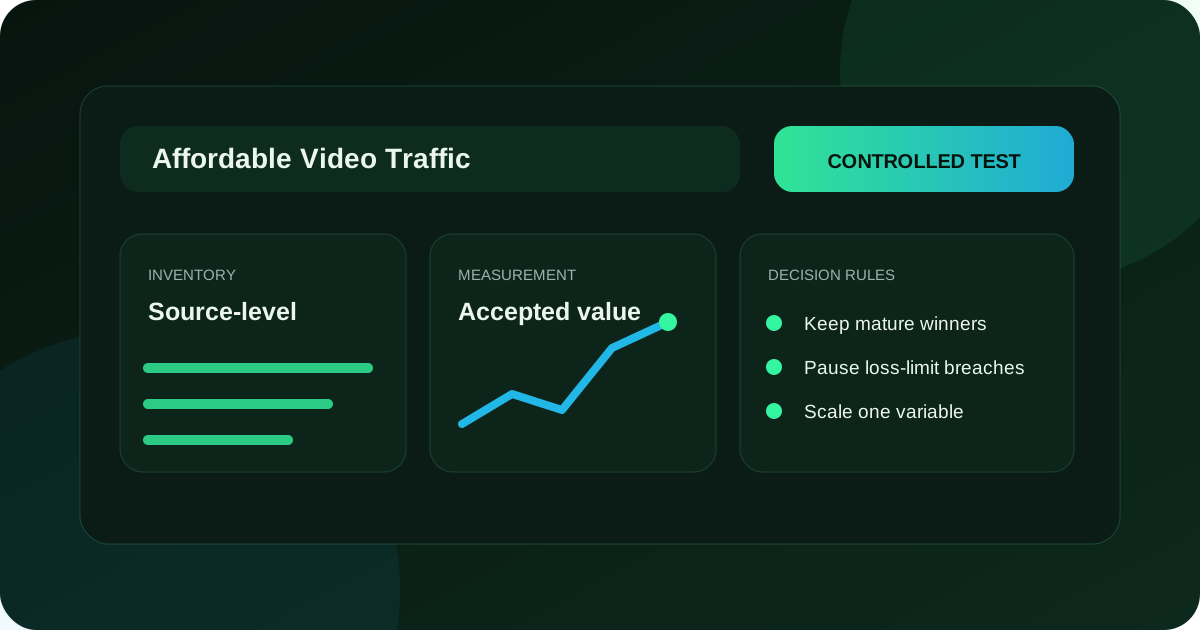
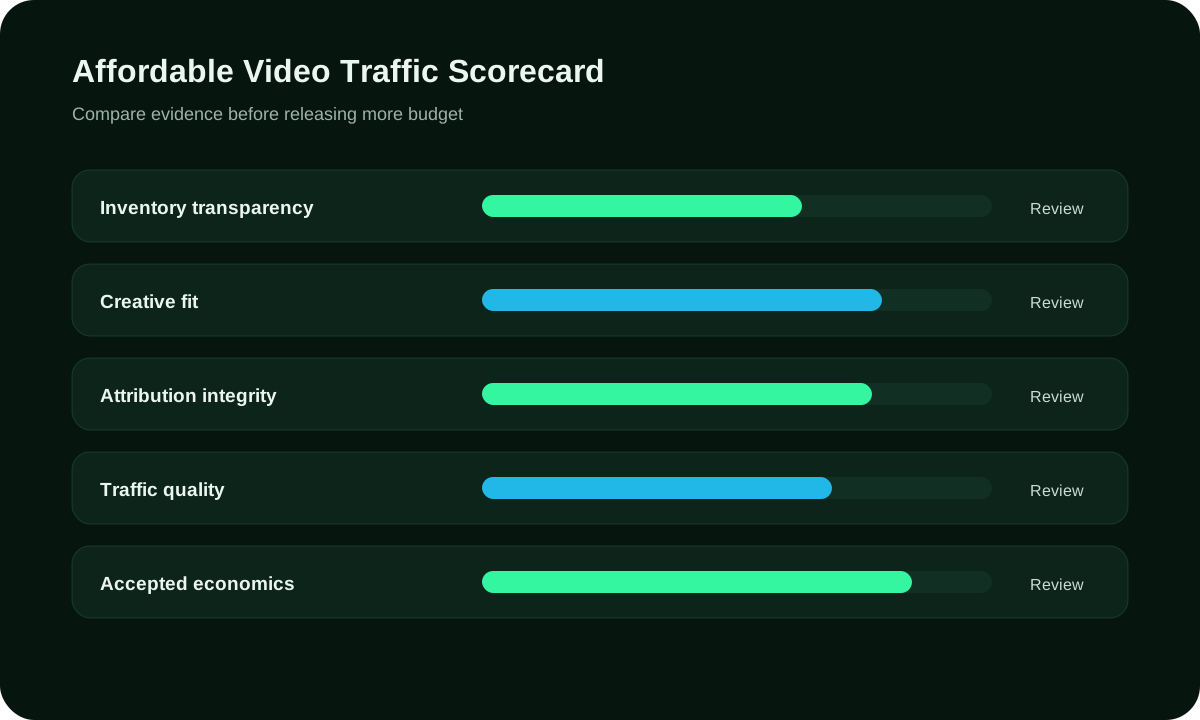
Affordable video traffic is verified delivery in a suitable player and context, connected to a readable advertisement, a relevant destination and a defined business event. Price alone cannot establish value. Buyers should inspect the supply route, technical delivery, creative rendition, exposure evidence, invalid-traffic controls, landing continuity and later commercial confirmation before increasing volume.
Describe the inventory before pricing it
Record environment, player, placement, device, geography, content context, buying route and seller information that the provider exposes. A quoted impression rate without those fields cannot show what the advertiser is comparing. Unknown supply details should remain limitations rather than positive assumptions.
Separate in-stream, out-stream and connected-TV contexts where relevant because the player experience and technical route differ. Verify the provider’s current labels. Do not infer that all video inventory supports the same controls or measurement merely because it accepts a video file.
Verify the serving route
IAB Tech Lab defines VAST as a template for structuring ad tags that serve ads to video players. Use the current owner specification to discuss technical exchange. VAST support does not guarantee placement quality, attention, viewability or business results.
Keep the creative identifier, tag chain, wrappers, error evidence and final rendition where the buying system exposes them. A technical failure should be diagnosed in the serving route before the audience or message is blamed.
Inspect the rendered experience
Review the delivered ratio, resolution, captions, audio behaviour, controls, loading and destination. A source master may look correct while the player selects a poor rendition or crops information. Capture the actual environment and creative version used in the observation.
Avoid equating autoplay, completion or a visible player with human attention. Exposure and playback metrics describe conditions. Keep response, landing behaviour and confirmed commercial outcomes as later stages with their own definitions.
Reconcile quality signals
Document how the provider identifies invalid or non-billable activity, which adjustments can occur and which logs the advertiser can inspect. Use provider-specific documentation. One platform’s process should not be copied into another supply path as an assumed control.
Investigate repeated patterns across placement, device, timing, creative and downstream outcomes. A single anomaly can prompt review but should not become an unsupported declaration about an entire domain or audience.
Connect traffic with the destination
The video promise, call to action and landing page should describe the same offer and material conditions. Test redirects, parameters, consent, load and conversion routing in representative environments. A paid click does not prove that the destination remained usable.
Define the meaningful event before buying volume and preserve later cancellations, qualification or revenue confirmation. Platform-attributed events can guide operation while remaining distinct from the business ledger.
Scale through controlled evidence
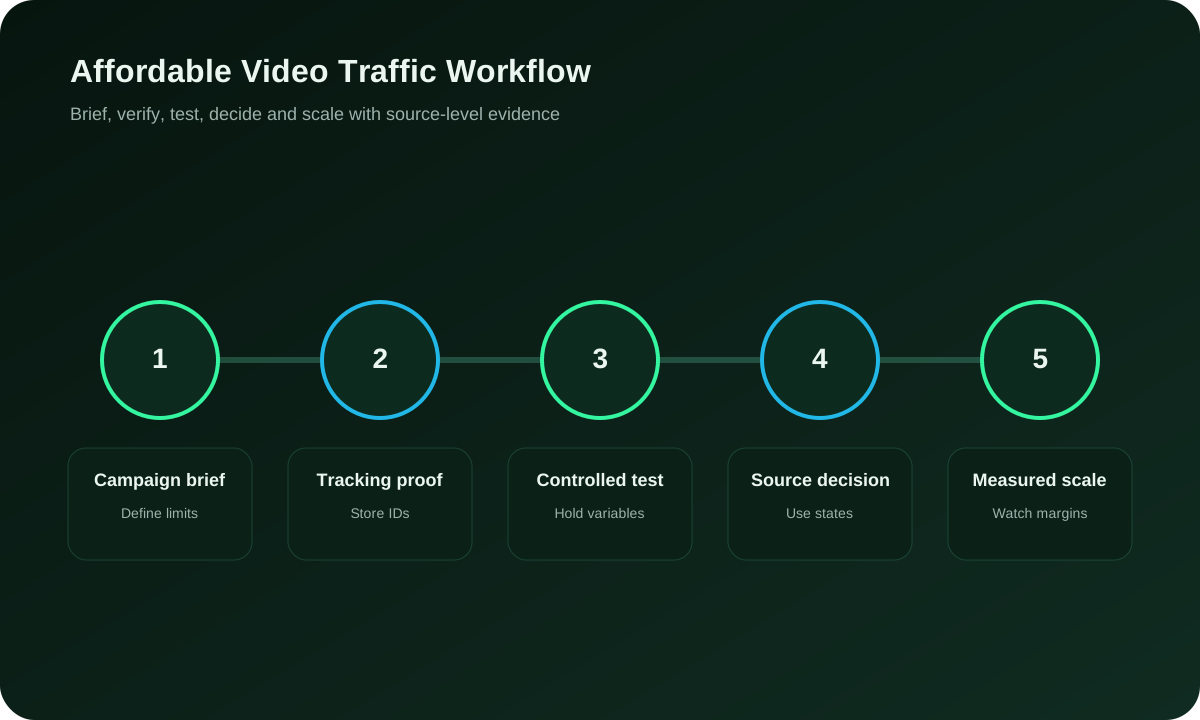
Begin with a bounded inventory and creative test that has a question, observation window and stop condition. Change one important boundary at a time. A low rate is not a reason to continue when the serving or measurement route cannot produce interpretable evidence.
Archive the inventory description, tag or creative version, delivery period, spend, exposure, response and business states. Scaling should follow a documented improvement or a resolved uncertainty, not the desire to consume a cheap allocation.
Connect the guide to live testing
Connect Affordable Video Traffic to a controlled audience test
Use the choices established in “Operating controls” to define one audience, budget and source set in FroggyAds. Keep the surrounding offer and measurement rule stable so the test adds evidence to affordable video traffic instead of mixing several changes at once.
Inventory records player, placement, device, geography and seller path.
Control 2
Video environments remain distinct when their delivery experiences differ.
Control 3
VAST terminology is sourced without implying a quality guarantee.
Control 4
Creative identifiers connect tags, renditions and review evidence.
Control 5
Rendered assets are inspected inside the actual player context.
Control 6
Playback signals remain separate from attention and business value.
Control 7
Invalid-traffic processes use each provider’s own documentation.
Control 8
Anomalies are investigated across repeated evidence before exclusion.
Control 9
Video claims and landing conditions remain continuous.
Control 10
Conversion events retain platform and business interpretations.
Control 11
Tests have bounded inventory, observation windows and stop rules.
Control 12
The archive supports a reproducible scaling or rejection decision.
Review notes
Review note 1
Describe the purchased video opportunity through seller route, publisher or app context, player position, device, geography and billable event before comparing its media rate with another source. Date and disposition stay attached.
Review note 2
Follow one video response from ad server through the available VAST document, media selection and player result; retain error codes and unavailable fields without calling protocol support a quality certificate. Date and disposition stay attached.
Review note 3
Observe the rendered asset under intended bandwidth, orientation and screen conditions; record rendition, crop, captions, controls, start behavior and final call to action with the creative identifier. Date and disposition stay attached.
Review note 4
Check sound, pause, skip, close and replay behavior in the actual player rather than the uploaded file; an affordable route fails when the delivered interaction violates the approved experience. Date and disposition stay attached.
Review note 5
Attach channel, video, app, site or other placement evidence to its delivery interval; aggregate labels remain insufficient for a decision that must exclude unsuitable contexts. Date and disposition stay attached.
Choose the execution format
Choose a paid-media format that supports Affordable Video Traffic
Use the criteria around “Review note 6” to decide whether push, native, display or pop fits the message and destination. Set format, targeting and spend as campaign controls in FroggyAds while the affordable video traffic decision remains the standard for judging the result.
Investigate unusual event patterns from preserved timestamps, source IDs, player evidence and aligned definitions; distinguish a reproducible observation from an unsupported accusation about an entire supplier. Date and disposition stay attached.
Review note 7
Carry the video promise into the first landing screen and test redirects, load, form, confirmation and product availability; cheap exposure has no value when the destination cannot complete the stated action. Date and disposition stay attached.
Review note 8
Separate served, measurable, viewable, started, completed, clicked and landed events under their documented denominators; never compare two prices until their purchased units are aligned. Date and disposition stay attached.
Review note 9
Reconcile media events with accepted leads, settled orders, later reversals and retained value using stable campaign and source identifiers; missing joins reduce precision instead of becoming successful outcomes. Date and disposition stay attached.
Review note 10
Limit the first affordable-video cell by inventory, source, device, market, creative, bid, spend and time; the written stop rule applies before a low headline price encourages extra volume. Date and disposition stay attached.
Review note 11
Expand only the next source or bid band whose marginal rendering, landing and accepted-outcome evidence remains inside the loss boundary; earlier blended averages do not authorize new inventory. Date and disposition stay attached.
Review note 12
Close the traffic review with delivery, player, placement, destination, business and dispute evidence in separate sections; another buyer should reproduce why a source continued, changed or stopped. Date and disposition stay attached.
Evidence lab
Evidence checkpoint 1
Working exercise: Describe the purchased video opportunity through seller route, publisher or app context, player position, device, geography and billable event before comparing its media rate with another source. Inputs, results, limits and rollback stay attached.
Evidence checkpoint 2
Working exercise: Follow one video response from ad server through the available VAST document, media selection and player result; retain error codes and unavailable fields without calling protocol support a quality certificate. Inputs, results, limits and rollback stay attached.
Evidence checkpoint 3
Working exercise: Observe the rendered asset under intended bandwidth, orientation and screen conditions; record rendition, crop, captions, controls, start behavior and final call to action with the creative identifier. Inputs, results, limits and rollback stay attached.
Evidence checkpoint 4
Working exercise: Check sound, pause, skip, close and replay behavior in the actual player rather than the uploaded file; an affordable route fails when the delivered interaction violates the approved experience. Inputs, results, limits and rollback stay attached.
Evidence checkpoint 5
Working exercise: Attach channel, video, app, site or other placement evidence to its delivery interval; aggregate labels remain insufficient for a decision that must exclude unsuitable contexts. Inputs, results, limits and rollback stay attached.
Put the guide into practice
Turn Affordable Video Traffic into a bounded campaign test
With “Evidence checkpoint 6” documented, launch only the next reversible test. Set a spending limit, preserve the baseline and use source-level and audience controls so the next step depends on qualified outcomes for affordable video traffic, not activity volume.
Working exercise: Investigate unusual event patterns from preserved timestamps, source IDs, player evidence and aligned definitions; distinguish a reproducible observation from an unsupported accusation about an entire supplier. Inputs, results, limits and rollback stay attached.
Evidence checkpoint 7
Working exercise: Carry the video promise into the first landing screen and test redirects, load, form, confirmation and product availability; cheap exposure has no value when the destination cannot complete the stated action. Inputs, results, limits and rollback stay attached.
Evidence checkpoint 8
Working exercise: Separate served, measurable, viewable, started, completed, clicked and landed events under their documented denominators; never compare two prices until their purchased units are aligned. Inputs, results, limits and rollback stay attached.
Evidence checkpoint 9
Working exercise: Reconcile media events with accepted leads, settled orders, later reversals and retained value using stable campaign and source identifiers; missing joins reduce precision instead of becoming successful outcomes. Inputs, results, limits and rollback stay attached.
Evidence checkpoint 10
Working exercise: Limit the first affordable-video cell by inventory, source, device, market, creative, bid, spend and time; the written stop rule applies before a low headline price encourages extra volume. Inputs, results, limits and rollback stay attached.
Evidence checkpoint 11
Working exercise: Expand only the next source or bid band whose marginal rendering, landing and accepted-outcome evidence remains inside the loss boundary; earlier blended averages do not authorize new inventory. Inputs, results, limits and rollback stay attached.
Evidence checkpoint 12
Working exercise: Close the traffic review with delivery, player, placement, destination, business and dispute evidence in separate sections; another buyer should reproduce why a source continued, changed or stopped. Inputs, results, limits and rollback stay attached.
Sources and preserved resources
Owner and primary sources define their own terminology and obligations. They do not promise price, delivery or campaign results. Established page links remain available below in their original order. For Affordable Video Traffic, apply this rule to the page-specific audience, market, format or buying decision described here.
Video traffic quality combines inventory context, VAST serving, rendered creative, measurement, invalid-traffic review and landing continuity.
IAB Tech Lab VAST structures ad-tag information used to serve advertisements to video players.
Video delivery evidence separates serving, playback, response, landing and confirmed business states.
An affordable-video closeout should read like a procurement decision, not a generic media recap. Freeze the approved rendition list, observed player states, contextual samples, destination checks and accepted billing unit in one dated record. Reconcile the invoice against that record source by source; place a credit, disputed event or replacement delivery on its own line instead of silently changing the earlier observation.
Show the hours spent on creative corrections, player diagnosis, destination recovery and provider escalation because those costs determine whether the route remained economical. Retain a rejected source with its evidence and reconsideration condition so another buyer can understand why a lower quoted rate was not selected. For every retained route, set a volume ceiling, an accountable reviewer and the exact signal that returns it to verification.
The next review should begin from saved rendition, placement and destination evidence rather than from the prior approval label. This closeout separates an inexpensive accepted result from cheap delivery that merely transferred technical and review work to the buyer.
Affordable video traffic also needs a discrepancy clock. Record when a serving error, placement concern, missing identifier or business reversal was found; who received it; which source cell stopped; and when the provider supplied a reproducible explanation. Keep credits, technical corrections and resumed delivery as separate events. A fast support response can reduce operating loss, but it does not change the original observation.
If the issue cannot be reproduced under the saved player, device and source state, close it as unresolved rather than proven. This incident chronology adds unique operational evidence while keeping the media-price comparison bounded to the conditions actually tested. Build a rendition ledger for each approved asset. The ledger names source file, duration, aspect ratio, captions, audio expectation, call to action, landing version and allowed environments.
During delivery, attach the media file chosen by the player, start latency, buffering observation and error status. A route that serves the wrong crop or omits usable captions creates a different experience even when the ad request completed. Separate those technical faults from source suitability and later customer response. Procurement can then see whether a low rate reflects efficient delivery or merely shifts review and correction work to the buyer. Keep traffic availability distinct from inventory consistency.
A provider may deliver enough starts while the placement, player or seller mix changes between days. Compare daily source composition and flag a new environment before combining its result with the verified cell. If reporting cannot expose that distinction, state the limitation and cap the conclusion. Do not infer that the unreported mix matches the earlier sample. Price reviews should include verification hours, creative rework, failed-destination loss, provider disputes and credit delays. Record currency and billing cutoff with each calculation.
The final affordable-video decision uses the cost of accepted evidence, not only the media invoice, and assigns a future review date for every volatile provider capability. Before closeout, replay a small verified sample from each retained source class. Confirm that the saved identifiers, player behavior, destination and event definitions still match the approved configuration. Any changed source returns to verify status and receives a fresh cap.
This final replay protects the decision from a late inventory shift without pretending that a sample proves every future impression. Assign the replay result to a named reviewer and retain its completion time with the final source ledger.
Questions and answers
Which campaign goals are suited to affordable video traffic?
Video traffic can support product demonstration, story-led awareness or a message that benefits from sight and sound. The campaign still needs a defined action and target group so inexpensive views do not turn into the only success measure.
How does placement context affect the quality of lower-cost video views?
Autoplay settings, page topic, video position and surrounding content affect if a person has a real opportunity to watch. Placement records help buyers separate relevant reach from views created in weak contexts.
What audience evidence is needed before a video traffic purchase?
The buyer should confirm countries, devices, language, interests and any traffic restrictions relevant to the offer. Broad traffic volume is not valuable when it falls outside the target group the creative was made to address.
When does CPV or CPM pricing make sense for a video test?
CPV depends on the exchange's view definition, while CPM prices a thousand ad impressions rather than completed views. The right pricing structure follows the campaign goal and the buyer's ability to test delivery and downstream behaviour.
Which metrics explain if an affordable video view had real value?
View duration, completion, sound, viewability and post-view actions add context to the count. No single metric proves attention, so device, placement and outcome records should be considered together.
Why does the opening of a video matter on lower-cost inventory?
Some placements offer only a brief moment before a person scrolls or closes the player. A truthful early message helps suitable people understand the offer without depending on a misleading hook.
What should happen after a viewer clicks an affordable video advertisement?
The destination should continue the same offer, design identity and terms while loading properly on the viewer's screen. A disconnect after the click loses the interest created by the video and weakens measurement.
How can buyers connect video delivery with accepted campaign outcomes?
Creative, placement, view and click references need to stay linked with the accepted action. Consistent windows and verified destinations let the buyer reconcile network records with first-party records.
How can a video pilot contain risk?
Use one defined audience, a small placement set, consistent creative and verified measurement inside a capped budget. Review customer quality and total cost before adding formats, markets or spend, and keep a written stop condition for weak or unsafe delivery.
When has inexpensive video traffic justified a broader rollout?
A broader rollout needs consistent delivery quality, accepted outcomes and transparent placement records across enough observations. New groups should remain separate so added volume cannot obscure a decline in relevance.
Advertiser decision framework
Affordable Video Traffic: Lower-Cost Options for Advertisers: what should the advertiser decide next?
For Affordable Video Traffic: Lower-Cost Options for Advertisers, video means a motion-based ad placement where the inventory supports video delivery. The buying decision is whether that delivery context fits the offer, creative and destination well enough to produce an accepted post-click result. Use On this page and Describe the inventory before pricing it as the page-specific checkpoints, then judge affordable video traffic on opening message, completion context and post-view or post-click measurement plus downstream conversion quality.
On this Affordable Video Traffic: Lower-Cost Options for Advertisers page, the decision should remain tied to the existing evidence around On this page, Describe the inventory before pricing it and Verify the serving route. Those sections give affordable video traffic its specific context; the table below turns that context into campaign actions rather than adding another generic definition.
Decision
What to verify
FroggyAds action
Affordable Video Traffic: Lower-Cost Options for Advertisers objective
Use On this page to define the accepted business event and the maximum learning loss for affordable video traffic.
Launch one FroggyAds campaign objective for Affordable Video Traffic: Lower-Cost Options for Advertisers and keep the conversion definition stable.
Affordable Video Traffic: Lower-Cost Options for Advertisers audience
Use Describe the inventory before pricing it to verify market, device, language and offer eligibility for affordable video traffic.
Apply only the FroggyAds targeting controls that change the real Affordable Video Traffic: Lower-Cost Options for Advertisers customer journey.
Affordable Video Traffic: Lower-Cost Options for Advertisers source evidence
Use Verify the serving route to keep source-level differences visible instead of relying on one blended affordable video traffic average.
Keep, cap, exclude or retest Affordable Video Traffic: Lower-Cost Options for Advertisers inventory from documented source evidence.
Affordable Video Traffic: Lower-Cost Options for Advertisers economics
Use Inspect the rendered experience to connect media spend with accepted conversions and downstream value for affordable video traffic.
Protect the Affordable Video Traffic: Lower-Cost Options for Advertisers test with a written budget boundary and a consistent attribution window.
Affordable Video Traffic: Lower-Cost Options for Advertisers scale rule
Use Reconcile quality signals to define the exact evidence that earns the next budget increase for affordable video traffic.
Scale Affordable Video Traffic: Lower-Cost Options for Advertisers one major control at a time and compare marginal performance with the prior baseline.
A page-specific FroggyAds test sequence for Affordable Video Traffic: Lower-Cost Options for Advertisers
Affordable Video Traffic: Lower-Cost Options for Advertisers outcome: define the accepted event for affordable video traffic and the maximum loss permitted while the first test is learning.
Affordable Video Traffic: Lower-Cost Options for Advertisers path: verify market eligibility, device experience, landing-page continuity and tracking against On this page before buying more traffic.
Affordable Video Traffic: Lower-Cost Options for Advertisers hypothesis: launch one bounded FroggyAds test tied to Describe the inventory before pricing it; do not change bid, creative, audience and destination together.
Affordable Video Traffic: Lower-Cost Options for Advertisers source review: compare qualified activity, accepted conversions, timing and cost by the source or segment dimensions relevant to Verify the serving route.
Affordable Video Traffic: Lower-Cost Options for Advertisers scaling: use Inspect the rendered experience and Reconcile quality signals to define what must reproduce before the next budget increase.
Why FroggyAds is relevant to Affordable Video Traffic: Lower-Cost Options for Advertisers
For Affordable Video Traffic: Lower-Cost Options for Advertisers, FroggyAds gives advertisers a self-serve DSP and ad-network workflow for buying supported traffic with campaign-level budgets and targeting. Depending on format and campaign context, available controls can include country, city, device, operating system, browser, carrier, category, source, ID and IP options. SmartCPC and Adscore-supported traffic-quality controls can support the affordable video traffic optimization process, while the advertiser's tracker, analytics and backend acceptance remain the final evidence for commercial quality.
Use Reconcile quality signals as the final checkpoint for Affordable Video Traffic: Lower-Cost Options for Advertisers. If the accepted result does not reproduce after the next meaningful volume step, return to the last stable configuration instead of widening several controls at once.
Affordable Video Traffic: Lower-Cost Options for Advertisers: the decision this URL owns
The buying question on Affordable Video Traffic: Lower-Cost Options for Advertisers is whether the page's own setup and evidence justify the next campaign action. For a video media buyer, that means you should balance budget efficiency with measurable accepted outcomes.
URL boundary for Affordable Video Traffic: Lower-Cost Options for Advertisers: This URL owns budget-efficiency for Affordable Video Traffic: Lower-Cost Options for Advertisers: define the loss limit and accepted outcome first so a lower headline price is not confused with better traffic or business value.
Decision inputs for Affordable Video Traffic: Lower-Cost Options for Advertisers: outstream, auction, creative duration, conversion tracking. Keep these inputs tied to accepted conversion or value event and the page-specific job: balance budget efficiency with measurable accepted outcomes.
Describe the inventory before pricing it is the measurement checkpoint for this URL. Resolve “How does placement context affect the quality of lower-cost video views?” while retaining auction, conversion tracking, spend and cohort age so the result can be reconciled with accepted conversion or value event.
Verify the serving route is the action checkpoint for Affordable Video Traffic: Lower-Cost Options for Advertisers. Before acting on “What audience evidence is needed before a video traffic purchase?”, document creative duration, the resulting campaign action and the rollback or retest condition.
On this page is an evidence checkpoint for Affordable Video Traffic: Lower-Cost Options for Advertisers. To answer “Which campaign goals are suited to affordable video traffic?”, keep outstream in the same campaign record and use it to balance budget efficiency with measurable accepted outcomes.
Page checkpoint
How to use it
Evidence to retain
On this page
Use On this page to establish the first evidence boundary for Affordable Video Traffic: Lower-Cost Options for Advertisers; then record which part of video placement, creative/view context, destination and downstream value it changes.
Keep outstream, source/campaign ID and the accepted-event definition together.
Describe the inventory before pricing it
Use Describe the inventory before pricing it as the second checkpoint and reconcile it with accepted conversion or value event before changing budget or source allocation.
Retain auction, spend, timestamp/cohort age and accepted/rejected outcomes.
Verify the serving route
Use Verify the serving route as the final checkpoint: if it does not change the evidence for accepted conversion or value event, keep the test narrow rather than scaling.
Document creative duration, the decision taken and the rollback or retest condition.
Transparent Affordable Video Traffic: Lower-Cost Options for Advertisers decision example
Hypothetical example: For Affordable Video Traffic: Lower-Cost Options for Advertisers, a hypothetical controlled cell that spends USD 210 and records 4 accepted conversion or value event after the same maturity window has an accepted cost of USD 52.50 per outcome. Replace the figures, outcome and review window with your own economics; this is not a FroggyAds performance claim.
Why use FroggyAds here?
For Affordable Video Traffic: Lower-Cost Options for Advertisers, FroggyAds gives the video media buyer a self-serve way to isolate the campaign cell, retain source-level evidence and decide the next spend step from accepted conversion or value event. Create your free FroggyAds account.
Direct answer
Affordable Video Traffic: Lower-Cost Options for Advertisers — what matters first
Affordable Video Traffic: Lower-Cost Options for Advertisers is useful when the format fits the user journey, device context, creative requirements and measurable conversion path.