
Affordable Desktop Traffic: Buy for the Real Screen, Session and Business Outcome
By FroggyAds. Plan desktop delivery around the user's screen context, the placement, browser and operating system, a verified destination and the mature outcome your business accepts.
Affordability is proved when the complete cost of an accepted desktop cohort fits your commercial rule.
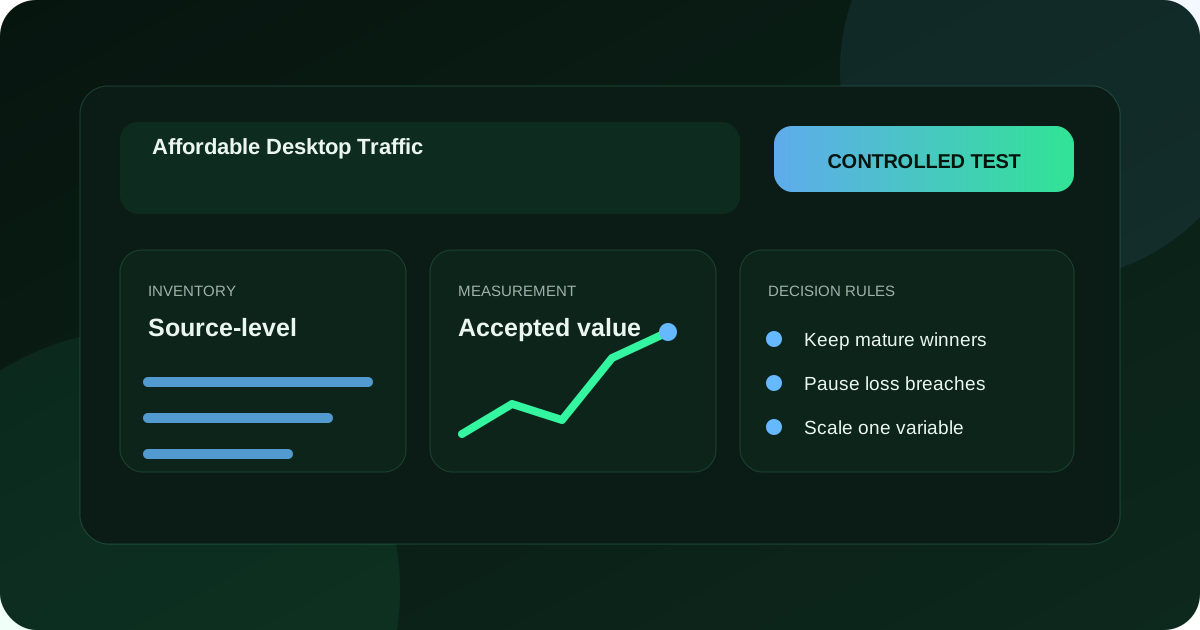
What does affordable desktop traffic mean?
It means desktop and laptop delivery that reaches an eligible audience, loads a usable customer journey and produces mature accepted value inside the advertiser's complete-cost boundary. A cheap visit alone does not establish affordability.
Desktop is a device and browsing context rather than a separate ad format. The selected format, placement and source still determine how attention begins, while browser, operating system, viewport and input method shape what happens after arrival.
Write the accepted business outcome before comparing traffic. Include qualification, duplicate and reversal logic, outcome delay and the finance-owned contribution rule so delivery can be translated into a defensible next action.
How does the desktop context create a different opportunity?
A larger screen can support detailed comparison, multi-field forms, dashboards, downloads and work-related research. Those possibilities are useful only when the offer and page genuinely benefit from them.
Desktop sessions can occur in offices, homes, shared environments or focused research periods. Treat schedule, country, browser and operating system as evidence dimensions rather than inventing one universal desktop persona.
Map the path from placement to accepted outcome. Record how delivery is counted, how the user reaches the destination, which identifiers survive and how the business result returns to reporting.
Keep device context attached to the conclusion. A successful desktop cohort does not automatically predict mobile behavior, and a mobile landing pattern may not fit a keyboard-and-pointer journey.
Which facts turn the phrase into a measurable campaign brief?
Specify eligible markets, languages, desktop operating systems and browsers, schedule, chosen traffic format, destination version, primary action and accepted outcome. Add the maximum total exposure and review date.
Name the desktop-specific reason for the test. The campaign might validate a detailed comparison page, a long form, a downloadable resource, a workday audience or a checkout that performs better with more screen space.
State disqualifiers before launch. Unsupported geographies, incompatible browsers, unserviceable users or actions outside the contribution rule should not be bought merely to increase traffic totals.
Limit the first brief to one answerable question. A stable reference cell makes later browser, source, schedule and budget changes interpretable.
What supply evidence matters beyond a desktop reach claim?
Ask which source or placement, country, browser, operating system, schedule and format dimensions are available to select, report or act on. A reach total is weak evidence when the buyer cannot identify the cohort behind it.
Distinguish available prelaunch controls from diagnostic fields that appear later. For every signal, define the possible action: retain, bid differently, cap, exclude, schedule, retest or record a limitation.
Review concentration. A desktop campaign may rely heavily on one browser, time band or source even when the overall delivery number appears broad.
Keep inventory statements bounded. Availability during one test window does not guarantee future volume, composition or outcome quality.
Build a desktop supply matrix before spend: required market, supported browser and operating system, acceptable placement context, reporting field and available control. Mark each row verified, unavailable or unresolved. The unresolved rows become explicit limits on the question the first cohort can answer.
Who is eligible for the first desktop campaign?
Start with people the business can serve in the selected country and language. Add offer eligibility, device compatibility, service hours and any material age, policy or contractual boundaries.
Use desktop context as a useful filter only when it relates to the task. A complex B2B form or comparison tool may justify the cohort, while a mobile-first app install could require a different route.
State the intended action and the customer commitment. The landing page should reveal important terms before submission or purchase, not after the media event has been counted.
Keep exclusions in the campaign record with reasons. That separates an audience error from a traffic, creative or platform conclusion.
Isolate the desktop cohort
Connect affordable desktop traffic to a controlled audience test
Choose an eligible market, available format and targeting boundary, then preserve browser, operating-system and source evidence through the destination and accepted business record.
Create My Free Account
What creative belongs in a desktop placement?
Design for the real placement and its dimensions rather than stretching a mobile asset. Confirm legibility, brand identity, offer accuracy and the relationship between the creative action and destination.
Build distinct message concepts around a benefit, problem, use case, proof point or objection. Minor color changes do not reveal which proposition helps the desktop audience decide.
Assign a stable identifier to every concept and record its format compatibility, source file, launch time and destination version. This makes fatigue and placement mismatch easier to separate from supply quality.
Preview representative desktop widths and browser zoom states. Avoid tiny interface text, false system messages, unsupported claims and controls that look interactive but are not.
How should the destination use the larger screen?
Continue the campaign proposition immediately, identify the advertiser and keep one primary next step visually clear. More screen space is permission to improve comprehension, not to add competing clutter.
Use desktop layout for information hierarchy: a useful comparison, transparent price or condition, visible proof boundary and supporting detail that remains scannable. Keep line length and focus order comfortable.
Test forms, downloads, checkout, navigation, consent, confirmation and tracking on the browsers and operating systems included in the cell. Include keyboard operation when the journey requires it.
Version the page and record its effective time. A major form, layout or proposition change begins a new result segment even when the campaign name remains the same.
How should desktop delivery connect to an accepted outcome?
Preserve campaign, creative and available source identifiers through the click or visit, analytics and final business record. Reconcile the network's delivery event with usable sessions, meaningful page actions, qualified submissions and mature acceptance.
Align time zone, currency, attribution window, duplicate handling and pending status before the report closes. Record unexplained gaps rather than forcing systems to agree.
Complete a live route test on a supported desktop browser before meaningful spend. The test should prove the destination, action, confirmation and accepted-event path.
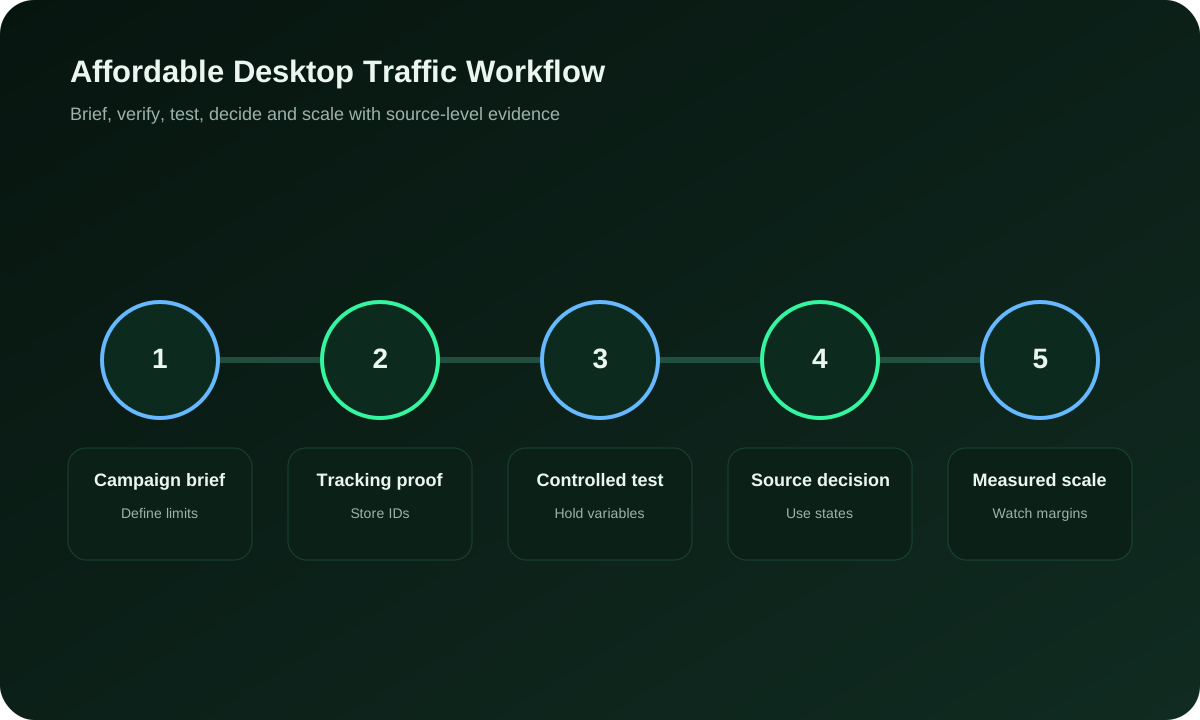
How should a desktop test budget protect learning?
Separate the allocation into route verification, bounded learning, one diagnosed repair and confirmation. Each envelope has a written purpose and cannot be released merely because the previous one was spent.
Set daily pace, a maximum total loss and a pause owner. Add browser or destination failure, lost identifiers and severe source concentration to the stop conditions.
The learning amount must be large enough to observe the agreed stage, but small enough that failure remains acceptable. Use your own economics and available traffic conditions rather than a universal budget figure.
Keep implementation cost apart from repeatable media economics. Landing or tracking work may be necessary for the first cohort without belonging in every later spend band.
Choose the execution format
Select an available media format for the desktop campaign job
Push, native, display, pop, video or interstitial delivery creates different attention and placement conditions. Choose deliberately, then judge the eligible desktop cohort on its own destination and accepted outcome.
Create My Free Account
How should bids and rates become accepted-cost decisions?
Keep the selected buying model and media unit visible, then translate spend into usable desktop arrivals, qualified actions and mature accepted outcomes. Do not compare a click rate with a cost-per-accepted-customer rule.
Calculate media cost per accepted outcome and complete test cost per accepted outcome. The second figure includes material creative, destination, tracking and review work that changes the commercial decision.
Use the same maturity and rejection rules across comparable cohorts. A newer browser or source group may appear cheaper because negative outcomes have not finished processing.
Document the maximum accepted cost and its contribution assumptions before bids are changed. This turns rate movement into an accountable media-buying action.
Which signals reveal desktop traffic quality?
Combine route completion, usable sessions, browser and operating-system consistency, engagement tied to the offer, qualified actions, duplicates, invalid patterns, rejection reasons and later reversals.
Segment by the dimensions the account can actually preserve. A source, browser or schedule verdict requires enough mature evidence within that cohort and a stable destination.
Investigate technical faults before blaming traffic. A script failure in one browser or a desktop layout problem can create a false quality pattern.
Use quality controls to reduce risk, then close the business decision with accepted value. No isolated diagnostic or external label proves the complete customer outcome.
How should each desktop segment be classified?
Use a small decision board: keep for mature value inside the rule, watch for incomplete evidence without a breached guardrail, cap for a deteriorating marginal cohort, exclude for a defined quality or eligibility failure and retest after one verified repair.
Attach the effective time, evidence and owner to every state. A label without an operational action does not control the campaign.
Retest is not a way to ignore a failed result. It requires a named change such as a corrected browser issue, a new destination version or a narrower source boundary.
Review the board after outcomes mature and after material campaign changes. Preserve prior states so later operators can see which condition changed the decision.
Which desktop experiment should run next?
Choose one variable that can explain the current constraint: browser support, landing hierarchy, message concept, source group, schedule, bid or budget band. Keep the offer, acceptance rule and maturity window stable where practical.
Write the primary decision metric and guardrails before launch. A useful experiment states what would be retained, reversed or investigated for each result.
Do not call a winner from a handful of early conversions. Wait for the predeclared observation and maturity conditions or report the test as inconclusive.
When several changes are unavoidable, label the result exploratory. Use it to form the next isolated test rather than to claim causation.
Launch from a written desktop contract
Turn affordable desktop traffic into a bounded FroggyAds campaign
Verify the destination across supported browsers, define the accepted outcome, cap exposure and name the pause owner. Keep the initial device and source cell stable as the reference.
Create My Free Account
How should desktop delivery be measured to mature acceptance?
Report delivered traffic, usable sessions, meaningful page progress, qualified submissions, accepted outcomes, pending records, rejection and reversal. Use the narrowest reliable denominator for each transition.
Segment by source, creative, browser, operating system, market and schedule when those fields are available and sufficiently mature. The goal is to identify the earliest constrained stage.
Give page diagnostics a diagnostic role. The scale decision belongs to accepted value after complete cost and the stated outcome delay.
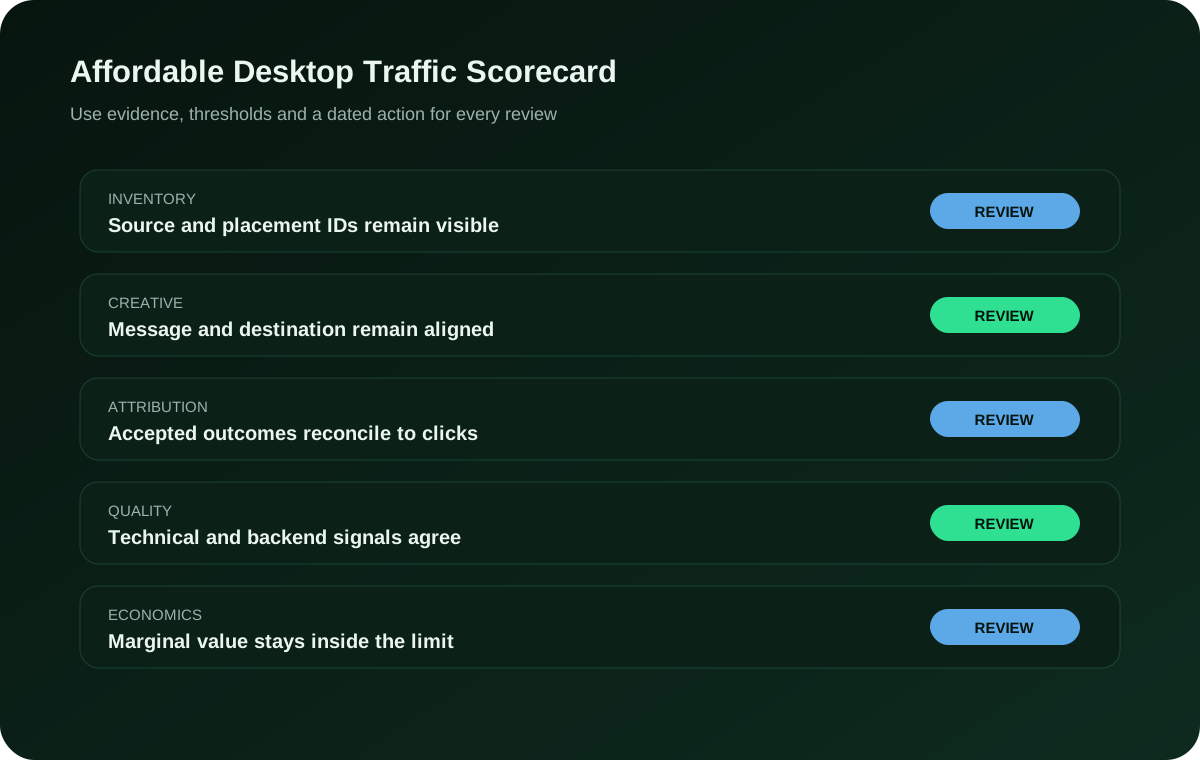
Which stop rules belong in the desktop campaign?
Pause for destination or browser failure, lost tracking, policy concern, unsupported audience delivery, severe concentration, abnormal interaction patterns, repeated business rejection or accepted cost beyond the ceiling.
State who can pause and what proof is required to resume. A repaired page or tracking event needs a fresh route verification, not an assumption that the earlier result remains valid.
Separate a protective stop from a permanent rejection. The decision record should show whether the campaign failed commercially or whether implementation prevented a fair test.
Update thresholds after a material offer, value or qualification change. Old limits should not silently govern a new commercial model.
How should an accepted desktop cohort be scaled?
Preserve the strongest verified cell and release one adjacent source, browser, market, schedule, bid or budget boundary. Report the new traffic separately from the historical average.
Compare marginal accepted cost after the same maturity period. Campaign-wide performance can hide that the latest spend band is no longer viable.
Define the rollback settings and owner before expansion. When the new boundary fails, restore the prior state and retain the failed cohort for diagnosis.
Check sales, support or fulfillment capacity. More desktop demand creates value only when the business can handle accepted customers without weakening the journey.
How do policy, brand safety and ownership affect value?
Confirm that offer, claims, creative, destination, targeting and data collection comply with the applicable rules and law. Keep advertiser identity and material terms accurate and visible.
Review placement context when brand adjacency matters. Use available source controls and record the reason and effective time for exclusions.
Do not use copied creative, fake interfaces, hidden subscriptions or unsupported urgency to improve a diagnostic metric. A cohort that breaches trust cannot be approved by a low cost.
Store campaign approval, asset version, destination version and responsible owner with the closing decision. Governance is part of reproducibility.
Which desktop scenarios should the budget model include?
The conservative case uses weaker engagement, higher rejection, slower maturity and the upper expected media cost. The reference case uses evidence from the bounded cohort rather than a sales estimate.
A browser-stress case models failure or reduced conversion in a material operating-system and browser combination. A source-mix case models volume shifting toward a weaker cohort during expansion.
Calculate total spend, mature accepted outcomes, complete accepted cost and contribution for each case. State the signal and setting that would trigger rollback.
Scenario work does not predict performance. It shows how far the campaign can move before the business rule changes and which evidence should be watched first.
What should a dated desktop review handoff contain?
Record active campaign settings, eligible device definition, sources, browser and operating-system mix, schedule, bids, caps, creative versions, destination version and attribution window.
List mature evidence, pending outcomes and unresolved incidents. Assign one action and one owner to each material cohort rather than leaving a dashboard for the next operator to interpret from scratch.
State the last stable configuration and rollback instruction. Preserve the reason for every excluded or capped segment.
Close with the next evidence threshold and review date. This keeps campaign decisions tied to an observable condition instead of recent noise or pressure to spend.
Which desktop evidence changes the next action?
| Area | Evidence required | Action |
|---|---|---|
| Context | Eligible market, browser, operating system and placement | Remove unsupported combinations |
| Destination | Usable page, form and confirmation across the cell | Repair before judging media |
| Attribution | Campaign and source evidence reaches the business record | Restrict unsupported claims |
| Quality | Qualified and rejected outcomes carry reason codes | Act on the earliest constraint |
| Economics | Complete mature cost fits contribution | Retain or stop the cohort |
| Scale | Latest spend band reproduces accepted value | Open one adjacent boundary |
Affordable Desktop Traffic FAQ
What is affordable desktop traffic?
It is desktop and laptop traffic whose complete mature cost per accepted business outcome fits the advertiser's written rule. The decision includes audience fit, placement context, destination usability, tracking and customer value, not only a low media rate.
Which campaigns can benefit from desktop traffic?
Desktop can suit offers that benefit from a larger screen, sustained comparison, detailed forms, downloads, work-related research or a multi-step checkout. Verify the actual audience and journey instead of assuming desktop is better for every offer.
Is desktop a separate FroggyAds ad format?
Desktop describes a device and browsing context. Choose from the traffic formats available to your campaign, then segment and evaluate eligible desktop delivery inside that format.
Which desktop dimensions should I report?
Preserve available source or placement, country, browser, operating system, screen context, schedule, creative, spend, usable session, qualified action and accepted outcome fields that affect a decision.
How should a desktop landing page be tested?
Check common viewport widths, navigation, forms, downloads, comparison tools, consent, confirmation and tracking on the browsers and operating systems included in the campaign. Keep keyboard and readable-layout requirements visible.
How do I compare desktop and mobile results?
Give each device context its own destination checks, cohort report and mature accepted-cost calculation. Compare like-for-like business outcomes while explaining differences in audience, placement and journey.
What budget should a first desktop test use?
Use an amount large enough to verify the route and observe the agreed learning event without exceeding the approved loss limit. Stage the allocation and reserve funds for one repair or confirmation run.
When should desktop traffic be paused?
Pause for route or browser failure, missing identifiers, policy issues, severe source concentration, repeated rejection, unusable reporting or mature accepted cost outside the approved ceiling.
Does desktop traffic guarantee more sales?
No. A larger screen creates a different opportunity to engage, but sales depend on audience fit, message, destination, offer, follow-up and other business conditions. Use accepted results to decide.
Why test desktop traffic with FroggyAds?
FroggyAds gives advertisers a self-serve path to available traffic formats, targeting and budget controls. You can isolate an eligible desktop cohort, review delivery evidence and expand only after your accepted outcome supports it.
Continue the desktop traffic workflow
Build a controlled affordable desktop traffic test
Bring one eligible audience, supported browser and operating-system scope, prepared destination, accepted outcome, maturity rule and exposure limit. FroggyAds gives you a self-serve campaign environment for buying the available traffic format and reviewing delivery while your systems verify downstream value.
What buyer task does this desktop traffic page own?
This page helps advertisers decide whether a desktop cohort can support a measurable acquisition job at an acceptable complete cost. It owns the screen-and-session decision: browser and operating-system fit, placement evidence, destination usability, accepted value and marginal scale.
Use the desktop ads comparison guide when your decision begins with creative or format options. Keep this URL focused on buying and qualifying desktop traffic as a distinct device context.
Choose FroggyAds when you want to create a bounded desktop campaign cell with available format, targeting and budget controls, then connect delivery evidence with the outcome your business accepts. Start your next campaign with FroggyAds.
What does a transparent desktop campaign calculation look like?
Consider a hypothetical $900 test in which $720 funds media and $180 covers material landing, tracking and review work. If 30 qualified actions arrive and 18 remain accepted after the stated maturity window, media cost per accepted action is $40 and complete test cost per accepted action is $50.
This arithmetic is an illustration, not a rate, forecast or claim about FroggyAds performance. Replace every value with the advertiser's observed spend, accepted records and attributable costs.
The decision depends on the finance-owned contribution boundary, rejection reasons and whether the accepted outcomes are concentrated in a browser, source or schedule cohort. A passing average supports one adjacent confirmation test, not an unrestricted budget increase.
What matters first when buying affordable desktop traffic?
Define why desktop fits the customer task, verify the destination on eligible browsers and operating systems, preserve source evidence and set a complete mature accepted-cost rule before comparing reach. Use FroggyAds to run one bounded desktop cell, keep the first configuration as the reference and expand only the marginal cohort that meets quality, trust, capacity and contribution boundaries. When a route or page fault appears, repair it before assigning the failure to traffic. When identifiers cannot support the next decision, narrow the claim instead of creating a precise-looking number the campaign cannot defend.