Advertising Network Nigeria
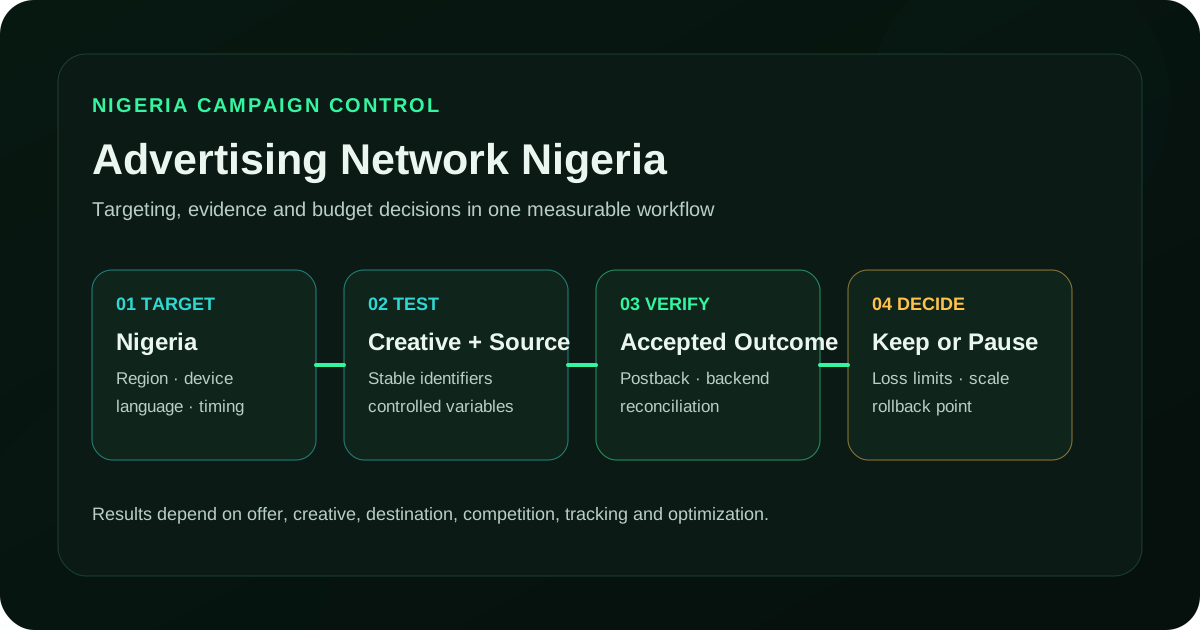
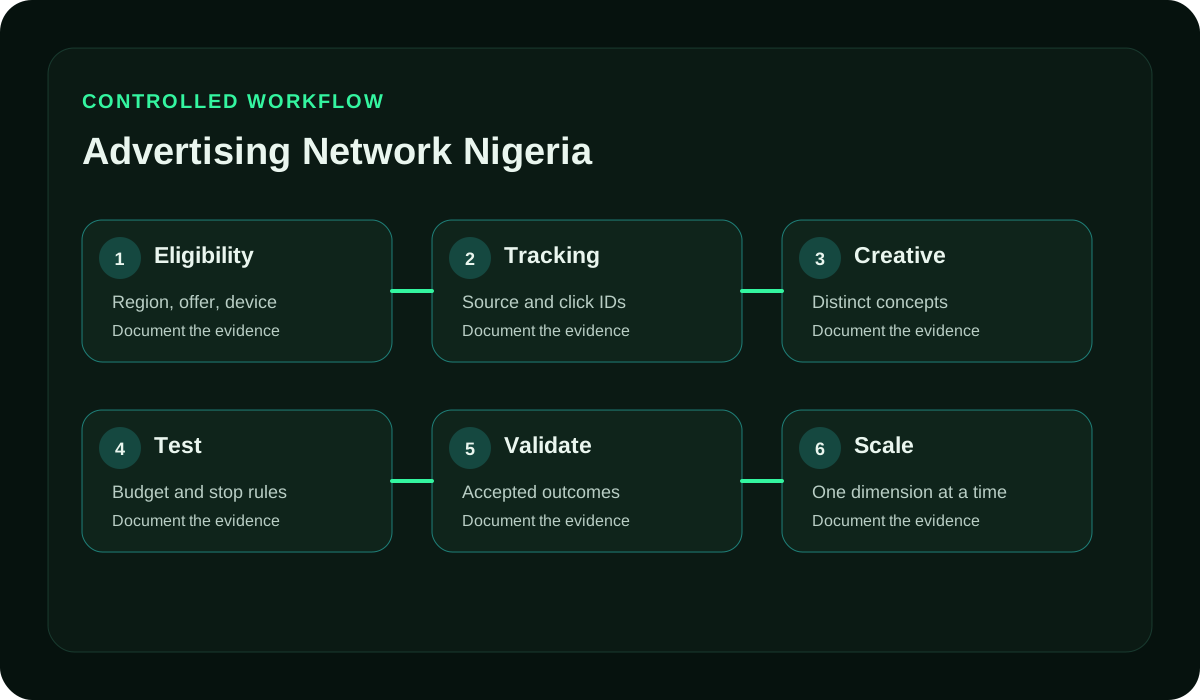
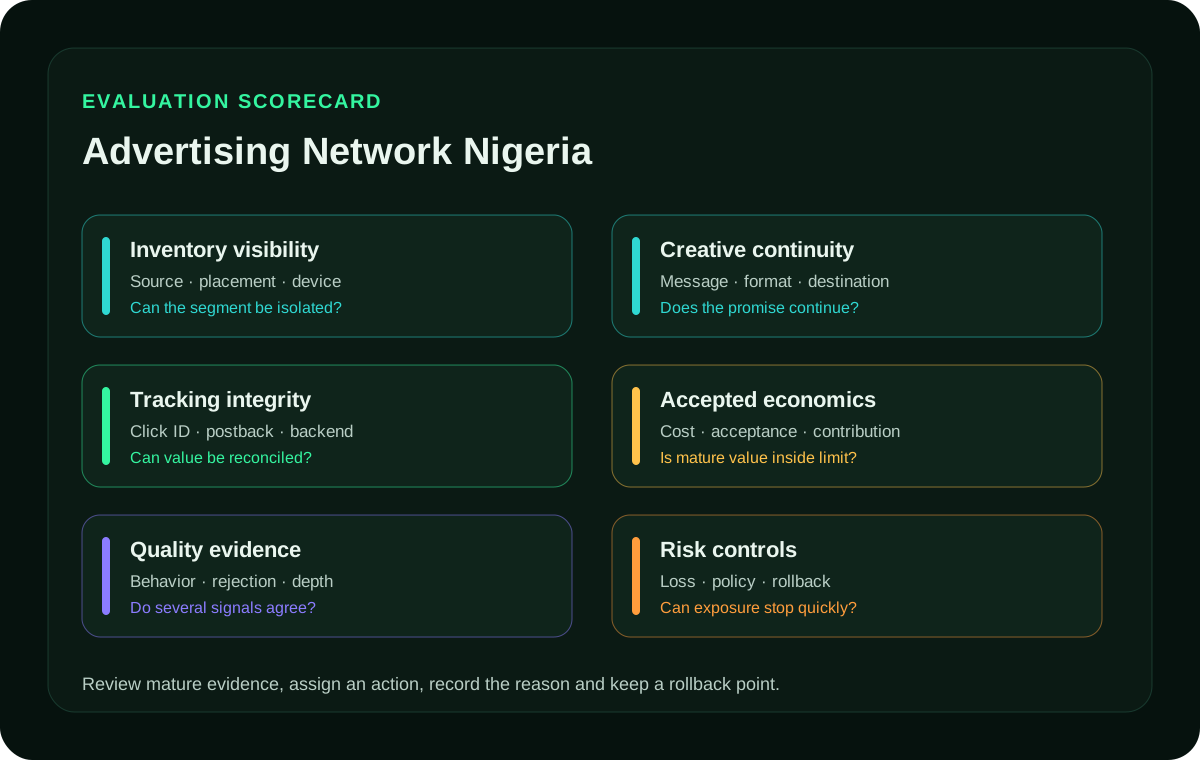
Evaluate advertising network nigeria by Nigeria inventory access, ad-format coverage, source reporting, targeting, budget controls, tracking, support and accepted campaign economics.
A network plan needs a mobile route the business can actually support
Define the cities or service zones where the offer can be completed, the destination, payment or fulfilment, and the team that responds. National targeting does not establish delivery or appointment coverage. Exclude unsupported demand and state relevant limits before a customer spends mobile data or submits details.
Differentiate local fulfilment, nationwide digital service and cross-border offers. Their seller, payment, support and maturity can differ. Give each a separate accepted customer state. A raw lead total cannot show whether the business could contact or serve the person.
English copy still needs a Nigerian operating review
Review product terms, examples, price context, address fields, page weight, errors, confirmation and support for the intended route. English fluency does not prove local suitability. The mobile journey should remain usable on expected devices and connections. Archive each Nigerian message with the exact mobile destination release and service-cell owner that approved it.
Customer questions about service area, seller identity, payment or next steps expose missing context. Return those patterns to content owners. Compare accepted progression by device, location and publisher; do not reward vague wording merely because it produces more responses.
| Test record | Evidence | Failure diagnosed | Owner |
|---|---|---|---|
| Service cell | Eligible city, offer, payment and fulfilment | Demand is outside real operation | Nigeria commercial team |
| Mobile journey | Load, render, fields and completion | Technical friction before qualification | Web owner |
| Supply path | Nigerian site or application, declared selling route, unit position, handset class and capture time | Provenance or interaction is unclear | Network quality contact |
| Accepted outcome | Nigeria response interval, controlled disqualifiers and recorded commercial continuation | Proxy volume lacks usable value | Measurement owner |
Customer validity should be joined to traceable Nigerian cohorts
Request mobile web and app samples from the intended formats. Preserve environment, placement, seller relationship, device and timestamp. Sudden source concentration, improbable timing, repeated invalid details or accidental interaction warrant investigation. A country-wide invalidity claim is not a substitute for cohort evidence.
Define the network escalation process and advertiser checks. The partner traces seller and placement; the advertiser tests form, serviceability and response. Pause the narrow source during review. This avoids removing useful supply for a destination defect or leaving suspicious delivery active because the aggregate looks acceptable.
A verified authority source still cannot approve a particular Nigeria data flow
Use the Nigerian official source only within its ledger status and bounded role. Nigeria's governance reviewer assesses the live purposes, vendors, identifiers, movements, permissions, storage periods and customer request routes. Record the implementation rather than copying a generic compliance phrase.
Return minimal customer states to media. Service zone, supply cohort, accepted result, maturity and a controlled rejection code may suffice. Keep identity, payment and conversation details within authorised systems. Review audience uploads and matching separately.
| Stage | Acceptance evidence | Useful action | Not yet proven |
|---|---|---|---|
| Usable visit | Intended mobile destination completed | Assess page and supply cohort | Customer eligibility |
| Eligible request | Location and product match | Route to responsible team | Reachability |
| Accepted contact | Customer can take the defined next step | Compare qualified acquisition | Fulfilment |
| Completed result | Authorised order or service state | Review mature value | Generalisability beyond test |
Test explainable Nigerian routes rather than maximum form volume
Choose serviceable cities, a mobile destination, format and supply group. Give the Nigeria cell a loss boundary and customer-review period that its assigned team can maintain. Preserve source and page evidence. The test describes those conditions and cannot establish a universal Nigeria CPM or future guarantee.
Add geography, device or supply through a new cohort. Keep earlier evidence and annotate outages, stock or staffing changes. If the team cannot respond, pause demand. A new Nigerian selling relationship reopens the affected city or application cohort for source tracing.
A Nigerian network partner should make a questionable route visible
Compare city controls, seller transparency, mobile reporting, placement exclusions, invalid-traffic response, exports and escalation. Score a Nigeria source or location control only after its account or binding term exposes it. Ask candidates to trace a real sample rather than repeat a traffic-quality claim.
Assign cities, formats or supply groups, exclusions and replacement conditions. Multiple partners can remain with distinct roles. Narrow or end an assignment when provenance cannot be explained or mature customer quality fails.
Judge Nigerian network roles by mobile completion, represented supply and serviceability
A Nigerian account demonstration should compare one included city cell and one deliberate exclusion with aggregate delivery. Preserve the account view and service map. Platform geography supports media configuration, while the operation decides whether the customer's location and need are serviceable.
The Nigeria mobile check follows the assigned handset route through validation and receipt state under documented access conditions. Record the exact failure stage. A quick first render cannot compensate for broken validation, and a publisher exclusion cannot repair a slow external payment or location service.
A labelled synthetic customer journey can verify assignment and response without entering performance totals. Check that the local offer and customer context reach an equipped team. Remove the record after the process evidence is captured.
App and mobile-web samples should preserve user task, unit position, seller, device and capture time. An inventory category cannot reveal accidental-interaction risk. The network should trace a sample and demonstrate the available exclusion.
City-level fulfilment or staffing events belong beside mature outcomes. When the response queue exceeds capacity, pause that cell. Continued acquisition would turn delayed service into apparent source weakness and create an avoidable customer experience problem.
Attach Nigeria's funding, export, refund and support conditions to the account and contract review date. The Nigerian account's funding exposure, refund path, export lifetime and escalation permissions shape operational risk. Keep them separate from auction observations, which cannot establish a standard Nigerian CPM or mandatory deposit.
A customer-quality return can use city cell, device, source cohort, accepted status and maturity. Detailed identity, payment information and conversation remain in authorised systems. This gives media diagnostic evidence without unnecessary data expansion.
Give the Nigeria support team a sampled city-source anomaly and record whether it returns a reproducible seller and control decision. Record what evidence the partner returns and whether it can isolate the route. A sales assurance about quality is not a substitute for an investigation that another reviewer can reproduce.
Multiple networks need disjoint city, format or publisher roles. Where overlap cannot be reliably measured, reduce it through assignments and disclose the limit. Do not present added platform estimates as unique national reach.
A destination or offer change creates a new Nigerian content cohort. Preserve effective time and affected routes. This helps the reviewer distinguish improvement caused by clearer service wording from improvement caused by a different seller group.
Renewal should sample a high-volume mobile route and verify one excluded geography. Confirm export identifiers remain available through customer maturity. If not, narrow the assignment rather than add personal tracking to compensate.
The closing memo separates suspected invalid activity, unsuitable context, broken mobile flow and unserviceable demand. Each can block scale, but each requires a different owner and reopen test. A single fraud or quality percentage would obscure the actual work.
Untested cities, languages and app categories remain outside the approved role. The network brand may stay accepted for a narrow assignment without receiving a general endorsement of Nigerian inventory.
An ecommerce route should retain payment acceptance, fulfilment and relevant reversals, while a lead route keeps contact and qualification states. Do not merge both into one network conversion merely because the platform uses the same event label.
Source export retention must cover the Nigerian response or fulfilment window. If publisher identifiers expire, retain an authorised aggregate or narrow the assignment. Adding customer identity to media is not the remedy.
A location exclusion should be checked after migration or a major account edit. Compare the service map, settings and aggregate delivery without manufacturing live conversions. The evidence decides whether the city cell can reopen.
A payment, stock or staffing change begins a new operating cohort. Record effective time and affected destination. This separates a business constraint from a change in publisher quality.
The approved role names cities, devices, formats or sellers and the person responsible for review. Unknown Nigerian inventory remains closed until its own evidence is complete.
A network incident file should capture source cohort, device and observed pattern, then route only necessary evidence to the partner. Customer identity and detailed service notes stay in the advertiser's authorised systems.
The closing memo states whether a poor route was invalid, misleading, technically broken or commercially unsupported. Those outcomes can all stop delivery without being treated as the same diagnosis.
A customer-capacity limit should be attached to each Nigerian city or service cell. When the queue exceeds the response window, pause only that route. This protects customers and prevents delayed operations from being mistaken for weak inventory.
Publisher sampling should recur after unusual device or customer patterns. Inspect a current source rather than rely on the original approval. A network that changes seller composition creates a new provenance question even when the format name stays the same.
The renewal record should identify current export retention and escalation access. If the account no longer supports the evidence that justified approval, keep the assignment small until an equivalent review path exists.
A campaign exit should update destinations, stop delivery, assign pending enquiries and retain only necessary governed evidence. Turning off the Nigeria target does not finish customer journeys already accepted by the business.
A language or offer owner should revalidate the complete Nigerian route after commercial change. Preserve effective versions so later customer differences can be assigned to content, service or supply rather than guessed from a dashboard total.
Answers for a Nigeria source-cell decision
Why use Nigerian city cells?
Service, delivery and response can differ, so city or zone records connect media with an offer the business can fulfil.
Is English copy automatically locally suitable?
No. Review terminology, terms, fields, page performance, confirmation and customer response for the actual route.
What should a mobile placement sample include?
Retain the Nigerian app or page task, declared seller, unit position, handset class, city scope, capture time and completed destination stage.
How should suspicious delivery be investigated?
Join source identifiers with interaction and aggregate customer evidence, then separate network, page and service causes.
What does the Nigerian authority record leave for programme-specific qualified review?
No. They support bounded review; qualified owners must assess the implementation.
What outcome should return to media?
Media receives the Nigerian city cell, source group and dated customer disposition when those fields answer allocation.
Can a pilot publish Nigeria's typical CPM?
No. Auction observations are specific to the account, supply, device and period.
Which Nigeria source-cell failures close delivery before another allocation?
Pause for unsupported service, broken mobile journey, unexplained supply or repeated customer-quality failure.
Can several networks share Nigeria?
Several partners may run only when each owns a named Nigerian city or inventory job and collisions can be identified or prevented.
What can FroggyAds substantiate?
The FroggyAds account export can substantiate configuration and attributed delivery for Nigeria's tested cells. The advertiser owns serviceability, governance and fulfilled outcomes.
Nigeria sources retain narrow roles so current authority is not overstated
The ledger states whether the Nigeria authority material was directly accessible; that research status reaches no conclusion about this partner or data flow. The ads.txt guide helps the Nigeria reviewer interpret the sampled seller declaration. Google's help page documents Google's separate geographic control. FroggyAds provides first-party configuration and attributed-delivery evidence for the Nigerian service cells. Mobile usability, local service, customer acceptance and commercial value remain advertiser evidence.
- Google Ads location targeting guidance LIVE_VERIFIED
- IAB Tech Lab ads.txt implementation guide LIVE_VERIFIED
- Nigeria Data Protection Commission Act 2023 NOT_VERIFIED
- FroggyAds official platform overview LIVE_VERIFIED