
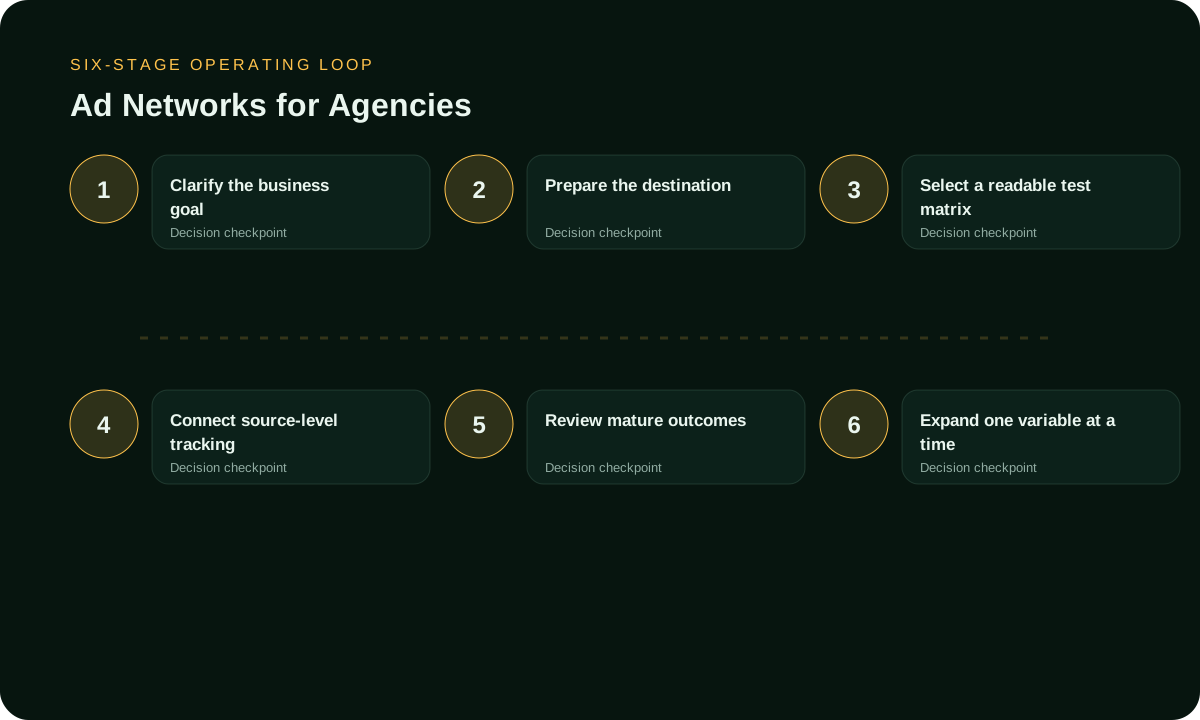
1. Authorise
Confirm the client, offer, objective, market, commercial terms, account ownership and decision rights.
Agency media-buying guide
Use this guide to evaluate traffic supply, set client-specific campaign controls and report outcomes that an advertiser can verify. We show agencies how to turn a FroggyAds test into an accountable workflow from brief and approval through source review, billing and the next budget decision.
Explore FroggyAds, use our learning center, review the agency campaign framework, or create your free account when the first client brief is ready.
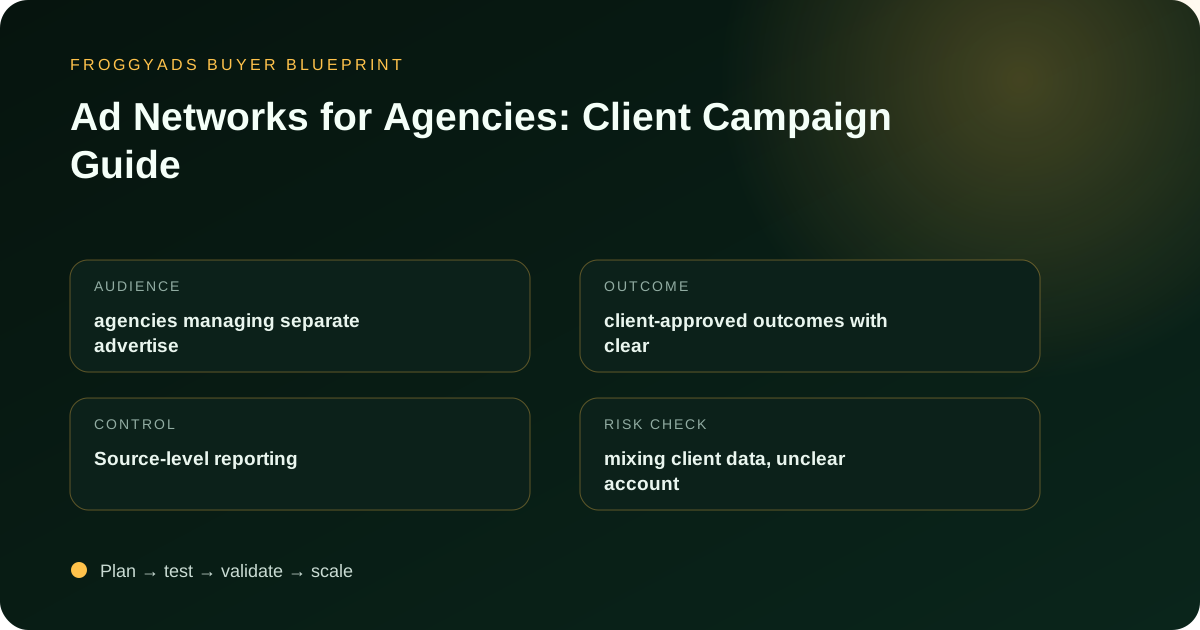
An agency needs more than available impressions. It needs a buying route that can be mapped to a client-approved objective, operated inside a defined budget, reviewed with source evidence and reconciled with the advertiser's accepted outcomes. The agency should be able to explain who owned the account, which version ran, why spend changed and what the newest mature cohort contributed.
| Agency responsibility | Evidence to keep |
|---|---|
| Client fit | Approved audience, offer, format, market, destination and business event. |
| Media control | Campaign settings, source identifiers, spend limits, changes and pause authority. |
| Client reporting | Reconciled spend, fees, accepted outcomes, limitations and next decision. |
Apply the advertising and disclosure rules relevant to the client, offer and market. The FTC guidance on online advertising and marketing is a primary reference for US advertising principles; it does not replace legal review for another jurisdiction or category.
Start with a real campaign decision. Name the client, approved offer, target market, audience, format, destination and final event the client accepts. Then ask whether the network can support the traffic test with the budget, targeting and reporting controls needed for that exact job. A long feature list is less useful than completing one end-to-end route with evidence the account team can reproduce.
Separate platform capability from agency process. FroggyAds gives advertisers and media buyers a self-serve environment for campaign setup and optimization. The agency remains responsible for client authority, creative approval, commercial terms, tracking design, destination quality and the meaning of an accepted result. Writing that boundary into the brief prevents a media tool from becoming the implied owner of every marketing outcome.
Require a clean exit from the pilot. The agency should know how to pause delivery, export the available records, revoke credentials and return the account history to the client under the service agreement. A network relationship is safer when the agency can reduce scope without losing the evidence needed to explain previous spend.
Write the objective in client language: accepted order, qualified enquiry, approved registration, trial activation or another outcome the advertiser can verify. Define rejection, duplicate, reversal and maturity rules. An agency cannot optimize responsibly when the conversion label changes after traffic begins.
Record the financial authority beside the objective. State who funds media, who can change bids or budgets, the maximum learning exposure, which agency fees sit outside media spend and when the client receives a reconciliation. The account team should never infer permission for a budget increase from an encouraging dashboard.
Connect the contract to the actual campaign and creative identifiers. Include the destination release, market and device eligibility, approved claims, disclosure requirements and the named owner of every client-side event. The record becomes the reference when a result is questioned or a new team member takes over.
Agree on a decision vocabulary: launch, keep, narrow, pause, repair, roll back or expand. These verbs turn reporting into action. They also stop an agency presentation from celebrating activity without stating whether the client should invest the next unit of budget.
Each stage has an owner, a client-facing output and a stop condition. Run the loop separately for every advertiser, even when the agency reuses research or technical checks.
Confirm the client, offer, objective, market, commercial terms, account ownership and decision rights.
Approve creative and destination versions, test the route and document the accepted event.
Build one bounded FroggyAds campaign cell with named targeting, format, budget and source rules.
Reconcile delivery with the tracker and client system; keep rejected and unresolved outcomes visible.
Compare mature economics, source context and operational quality with the written boundary.
Explain the change, evidence, limitation, client decision and rollback in language the advertiser can audit.
Make the first client cell accountable
Choose one offer, audience, market and accepted event. Set an exposure limit and preserve source and campaign identifiers so the first delivery teaches the agency something the client can use.
Create My Free Account
Do not blend unlike experiences into a single agency promise. Choose the format from the offer, audience context and destination, then judge it against the same client-approved outcome.
| Format | Useful agency question | Control to retain | Decision evidence |
|---|---|---|---|
| Native | Can a context-led angle qualify interest before the visit? | Placement context, message continuity and source identifier. | Accepted value after the content-led journey. |
| Push | Can a compact promise bring the intended prospect to the right next step? | Creative version, audience, frequency and device route. | Mature accepted outcome by source and concept. |
| Display | Does visual hierarchy communicate the client proposition at rendered size? | Placement, size, viewability context and destination release. | Qualified journey and incremental client result. |
| Pop | Can the destination establish relevance quickly for a broad opening experience? | Page readiness, source, device, frequency and loss ceiling. | Accepted cost after qualification and reversals. |
Begin with the markets, devices, languages and customer situations the client's offer can actually serve. Eligibility belongs in the brief: stock or service availability, regulatory boundaries, sales coverage, payment support, language and fulfilment capacity. Buying broader traffic cannot repair an offer that the visitor cannot use.
Keep the first structure readable. Separate markets or device journeys when the creative, destination or acceptance rule changes. Avoid stacking so many filters that the agency receives too little delivery to interpret. At the same time, do not combine distinct client questions merely to create volume. The correct starting cell is narrow enough to diagnose and large enough to observe.
Use source identifiers to discover patterns, then narrow from mature evidence. Document every major exclusion with its date, reason, cohort and retest condition. A source may appear weak because the client changed the landing page or reviewed recent outcomes before they matured. Good agency governance makes an exclusion reversible when the evidence changes.
Review frequency and creative age where repeated exposure is relevant. Falling accepted value can come from fatigue, audience saturation, a changed source mix or client-side handling. Compare comparable cohorts before deciding that the network lacks suitable reach.
Select the format from the client journey
Keep the client outcome stable, give each format a defined opening role and use the source and destination evidence to decide which execution earns another allocation.
Create My Free Account
Bind every asset to an approved proposition, audience, format, destination and validity period. The ad should state a benefit the landing page can support and a next step the visitor can complete. If price, eligibility, availability or evidence changes, version the creative and obtain the approval required by the agency agreement.
Build concepts that answer different audience questions rather than decorative variants. Label the hypothesis and change one major message element when element-level learning matters. If the agency compares complete concepts, describe the result as a concept decision instead of claiming that a single headline or image caused the outcome.
Test the complete route on the devices and markets being purchased. Confirm redirects, consent behaviour, form or checkout, confirmation, campaign identifier, source identifier and the advertiser-side event. A creative cannot be evaluated when the route loses the evidence that links the visitor to the accepted result.
Keep each client's brand materials, claims and tracking separate. Shared agency production systems need permission boundaries and a clear archive. The speed gained from reuse disappears if the wrong logo, offer condition or measurement tag enters another advertiser's campaign.
Diagnostics show where the journey changes. The client's mature acceptance record determines whether the newest spend creates business value.
| Measure | Agency use | Misleading shortcut | Client decision |
|---|---|---|---|
| Delivered and qualified visits | Check the route, source context and message continuity. | Calling every click qualified demand. | Repair, narrow or continue the test. |
| Accepted outcome rate | Compare mature approved results under one rule. | Using recent platform conversions as final value. | Keep or revise the campaign cell. |
| Media cost per accepted outcome | Relate reconciled spend to usable client value. | Ignoring fees, rejection, reversal or fulfilment. | Protect the commercial boundary. |
| Marginal source economics | See whether the newest allocation remains productive. | Scaling from the lifetime blended average. | Expand, cap, exclude or roll back. |
Put the agency controls into practice
Verify approval, route, identifiers, accepted event, spend ceiling and pause authority. Then run one FroggyAds campaign cell and let mature source-linked evidence decide the next client recommendation.
Create My Free Account
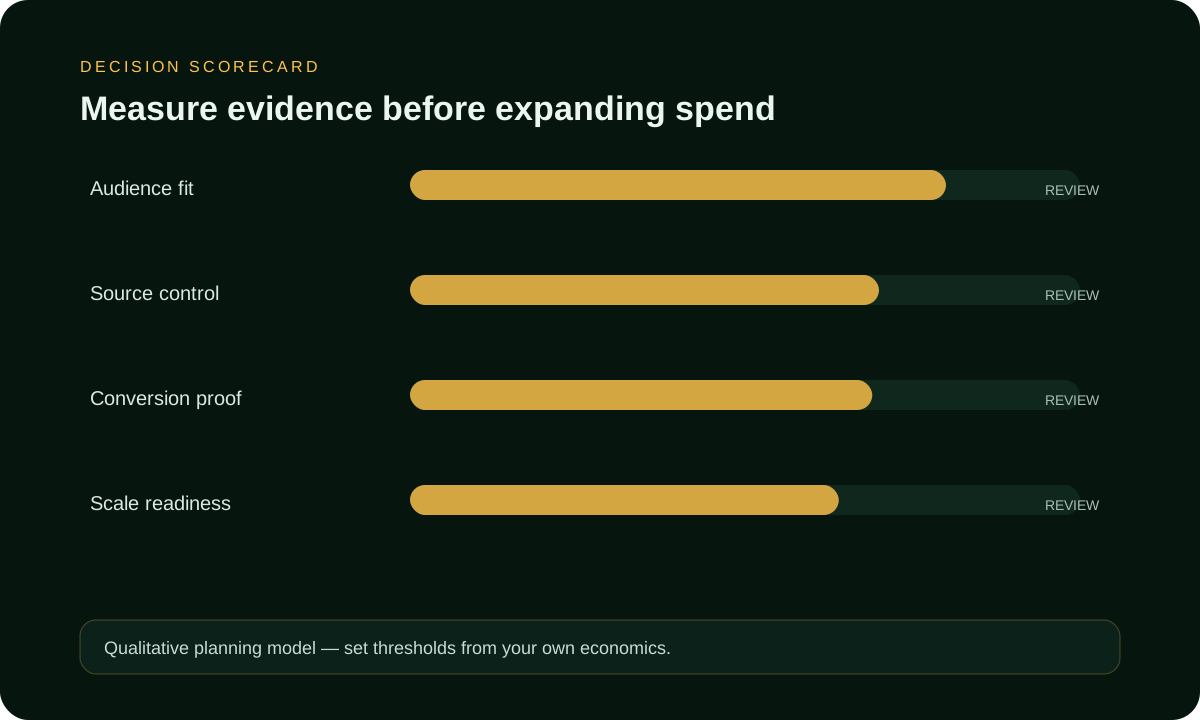
A practical scorecard prevents a low media price or polished interface from hiding a control gap. Weight the requirements before a demonstration or campaign.
Can the route support the approved market, audience, offer, format and destination without an eligibility conflict?
Can the agency set bounded campaigns, preserve identifiers, review sources, pause delivery and export the available evidence?
Can media spend, agency compensation and other material costs be reconciled to the accepted outcome under the client agreement?
Are authority, access, approval, change history, reporting definitions, account handover and exit responsibilities documented?
During days 1–5, agree on authority and evidence. Confirm account and media ownership, offer approval, target audience, format, destination, accepted event, reporting definitions, exposure limit and stop path. Capture the current client baseline so the agency can compare the new route with an existing decision rather than with no context.
During days 6–12, configure one campaign cell and test the complete path. Apply naming, budgets, targeting and source rules; upload only the approved creative; complete a controlled action; and verify the result across FroggyAds reporting, the agency tracker and the advertiser's acceptance system. Resolve currency, time-zone or identifier differences before live scale.
During days 13–21, run capped delivery and review exceptions. Look at source mix, qualified visits, rejected outcomes, unresolved events, invoices and client-side handling. Keep recent events separate until they mature. If the route breaks or reaches the loss boundary, pause and repair it rather than widening the audience to create more activity.
During days 22–30, write the client decision. State the spend, fees, mature accepted results, limitations, newest source economics and recommended action. Preserve the last stable campaign settings. If another test is justified, increase one material boundary and assign a new ceiling and review date.
Do not share a blended network average across clients. Each advertiser has a different offer, acceptance rule, margin, market and operational capacity. A broad benchmark can inform a question, but it cannot approve a budget or replace account-specific evidence.
Do not mix media ownership with unclear authority. Record whether the client or agency owns the account, funds, creative files, data, tracking configuration and history. Include the handover terms before the first deposit or campaign.
Do not report platform conversions as final client value without reconciliation. Preserve rejected, duplicate, reversed and unresolved outcomes. Explain attribution and maturity so the client knows why totals differ across systems.
Do not change bids, sources, creative and destination together, then credit the most visible change. Use one material campaign question per cycle or label the result as a bundled intervention.
Do not hide agency fees inside media performance. Report the commercial model agreed with the client and separate the components needed to calculate complete acquisition cost.
Do not allow approval evidence to expire silently. Offers, prices, claims, stock, regulations and brand guidance change. Give important creative and destination approvals an owner and review date.
Do not scale from an old lifetime average. Inspect the newest mature spend band, client capacity and source mix. Growth is useful only while the added exposure continues to produce acceptable value.
Use these answers to complete the client brief, campaign boundary and reporting agreement before live traffic begins.
It fits when the available traffic, formats and campaign controls match one client's approved objective and the agency can connect delivery to that client's accepted outcome. Evaluate the fit for each engagement. A supply route that works for one offer, market or customer journey should not be adopted automatically for every account.
Start with one authorised client, one offer, a limited campaign cell and a written review date. Define the audience, format, destination, accepted event, source evidence and maximum learning exposure before launch. Keep the client approval and the media decision in the same operating record.
Use distinct naming, access, campaign records, destinations, tracking identifiers, exports and approval trails for every client. Limit each team member to the work they need. Never copy an audience, creative, conversion rule or result into another account merely because the businesses appear similar.
Separate media spend from agency fees and list material data, creative, tracking, landing-page, fraud-review, tax and third-party costs under the agreed commercial model. Reconcile billed delivery and explain adjustments. The client should be able to understand the complete cost of the accepted result.
Show the source and format mix, spend, qualified visits, accepted and rejected outcomes, maturity, reversals and known limitations. Use the same definitions agreed before launch. Delivery metrics help diagnose the route, while the client-approved business event decides whether the campaign deserves more budget.
Record the exact asset, claim, destination, market, format and expiry that the client approved. A later text, image or offer change needs a new version and the approval appropriate to the service agreement. Keep the delivered creative identifier in the campaign and outcome record.
Compare the latest mature cohort with the last stable one. Check source mix, bid, audience, creative, destination, tracking and client-side handling before reallocating funds. Propose one bounded repair, state the evidence behind it and preserve the rollback configuration.
Hold launch when source visibility is inadequate for the client decision, billing cannot be reconciled, account ownership is unclear, tracking cannot be tested, approved exclusions fail, exports are unusable or the agency lacks a reliable pause path. Resolve the control gap before spending client funds.
No. FroggyAds provides self-serve traffic buying and campaign controls. Results also depend on the audience, offer, creative, destination, tracking, qualification and fulfilment. Agencies should sell a disciplined acquisition process and report measured outcomes without guaranteeing revenue or profit.
Expand after mature accepted outcomes remain within the client's economic boundary, the source mix is understood, billing reconciles and the agency can support the additional volume. Increase one material boundary at a time and review the newest increment rather than relying on the lifetime average.
Compare an advertising platform for advertisers, review a traffic source for small businesses, visit the FroggyAds advertiser overview, or use our traffic source guidance to connect the client brief with the next media decision.
Bring one approved offer, a verified destination, source-linked measurement and a written stop-or-scale rule. Create your free FroggyAds account, then use our resources as your team prepares the first campaign cell.
Complete these contracts before the account team recommends live spend. They turn an agency promise into evidence that delivery, finance and the advertiser can review together.
Name the legal advertiser, account owner, funding party, media buyer, creative approver, tracking owner and the people authorised to change spend. Include the process for urgent pauses and the client handover.
Define one accepted event, its commercial value, rejection and reversal rules, maturity window and maximum learning exposure. Keep the definition stable for the pilot and version any later change.
Record the markets, devices, languages, customer conditions, exclusions and evidence behind the targeting. State which criteria are campaign controls and which remain client-side eligibility checks.
Connect every asset to the approved proposition, proof, conditions, destination, format, market, expiry and identifier. Keep approval evidence with the exact version delivered.
Map campaign, source and creative identifiers from delivery through the agency tracker to the client acceptance record. Document time zone, currency, consent, retention and deletion responsibilities.
Separate bid, daily pace, total media exposure, agency fees, third-party costs and client payment terms. Define who can approve each increase and the automatic or manual pause threshold.
Agree on delivery, qualified-visit, accepted-outcome, rejection, reversal and cost definitions. Include the schedule, data owner, limitations and the difference between platform reporting and final advertiser value.
State what evidence supports keep, cap, exclude or retest. Use a consistent maturity window, preserve the reason for each action and name the conditions for a responsible retest.
Define the next incremental change, required capacity, latest acceptable economics and rollback trigger. Preserve the last stable configuration before expansion so the agency can reverse one step cleanly.
FroggyAds supplies the self-serve traffic-buying environment for this controlled media work. Your agency owns the client agreement and the acceptance evidence. When the contracts are ready, create your free FroggyAds account and launch the smallest campaign that can answer the client's decision.
This URL helps agencies decide whether an ad network can support a controlled client acquisition workflow. For the adjacent question of buying traffic specifically for agency demand, use traffic for agencies. Keep the tasks separate so each client recommendation has a clear evidence boundary.
| Condition | Agency action | Evidence to present |
|---|---|---|
| Control gap | Hold launch and repair authority, route, tracking, billing or pause behaviour. | Verified requirement, named owner and completed retest. |
| Bounded pilot ready | Launch one client cell with stable definitions and a maximum learning exposure. | Approved brief, campaign version and maturity date. |
| Accepted result | Compare the newest mature increment and change one scale boundary. | Reconciled spend, source mix, accepted value and rollback. |
Hypothetical example: an agency records USD 480 of reconciled media spend, USD 120 of separately disclosed agency and production cost, and 12 mature accepted enquiries. Media cost is USD 40 per accepted enquiry; the illustrated complete listed cost is USD 50. These figures exclude any unlisted client-side costs and make no revenue or profit claim. Replace every input with the client agreement and verified records.
We give agencies and media buyers direct campaign, targeting, format, budget and source controls for a bounded traffic test. Use those controls with your client approvals and accepted-outcome system to make each recommendation explainable. Create your free FroggyAds account when the first contract is complete.
Define one authorised client objective first, an approved route, a bounded media budget and an accepted result the advertiser can verify. Use FroggyAds to run the controlled traffic test, keep source and campaign evidence visible, and recommend more spend only when the newest mature client economics support it.