Argentina supplier comparisonHow to compare networks for an Argentine business
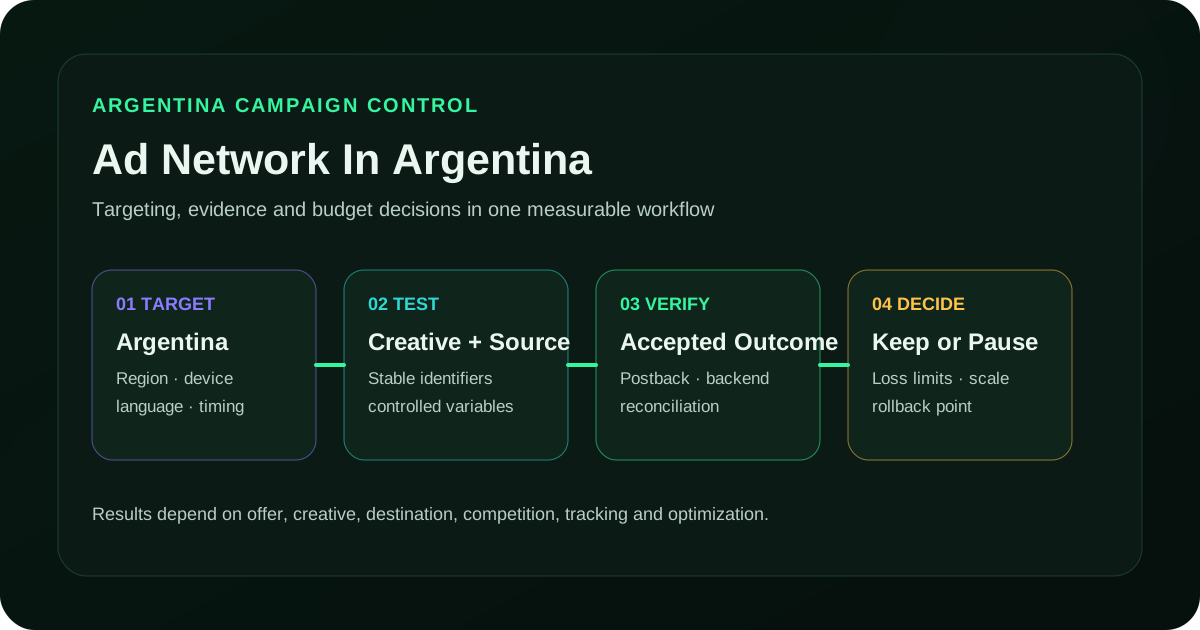
Ask about the usable inventory: Describe the Argentine customer, format and destination you intend to use. Ask which reporting fields and source controls apply to that combination. Global integration counts are context, not a reservation of local placements. A supplier's answer should help you configure the first campaign without guessing which parts of the brief are supported.
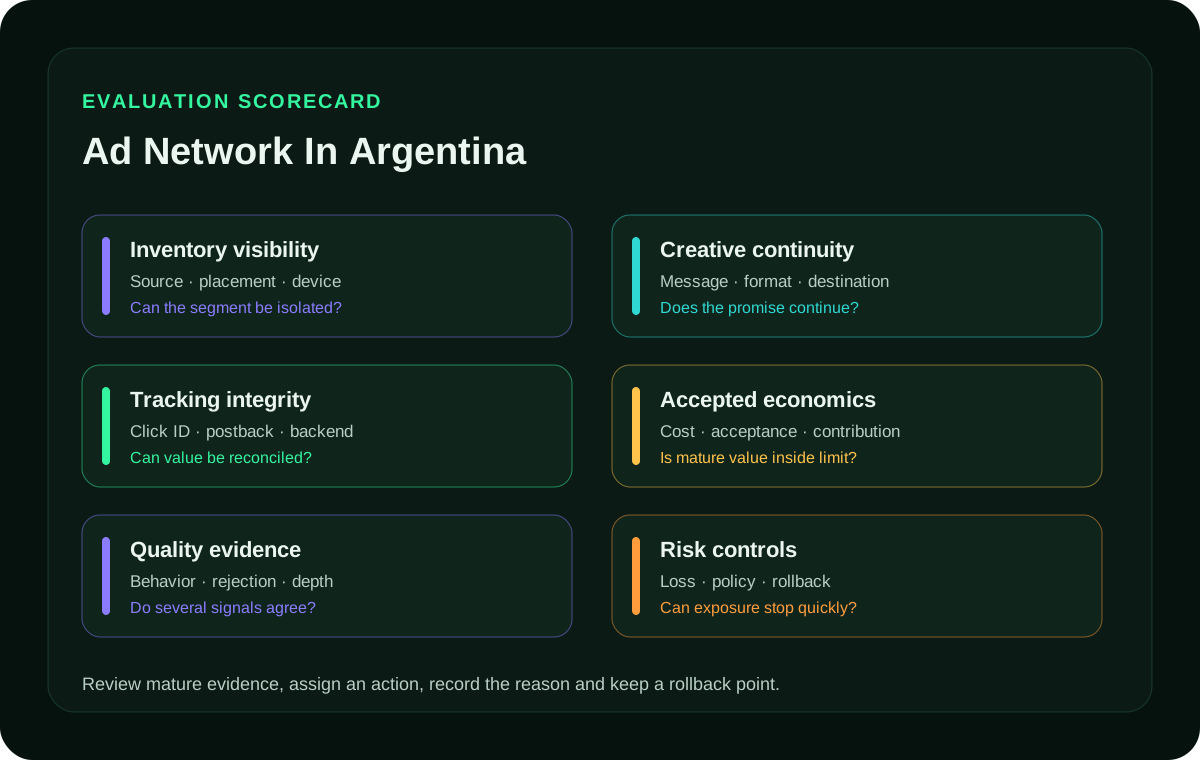
Read a network comparison as a supplier-selection exercise, not a ranking contest. Your best choice is the platform whose available controls fit the offer you can operate. FroggyAds is a strong choice for advertisers who want to manage the campaign directly and inspect source performance while retaining ownership of their customer experience, business records and spending decisions.
Separate store readiness from network readiness: Confirm that your team can fulfil the advertised product, answer enquiries and reconcile payments. Then inspect the campaign settings. An excellent media setup cannot correct an unavailable product or a checkout that rejects valid customers. Resolving those issues before launch makes a subsequent paid test more useful and gives suitable traffic a fair chance to convert.
Use a current offer snapshot: Save the creative and customer-facing conditions used at launch, including the price currency and eligible delivery area. When the offer changes, give the new version a clear date. This small discipline prevents a comparison between networks from becoming a comparison between two different commercial promises.
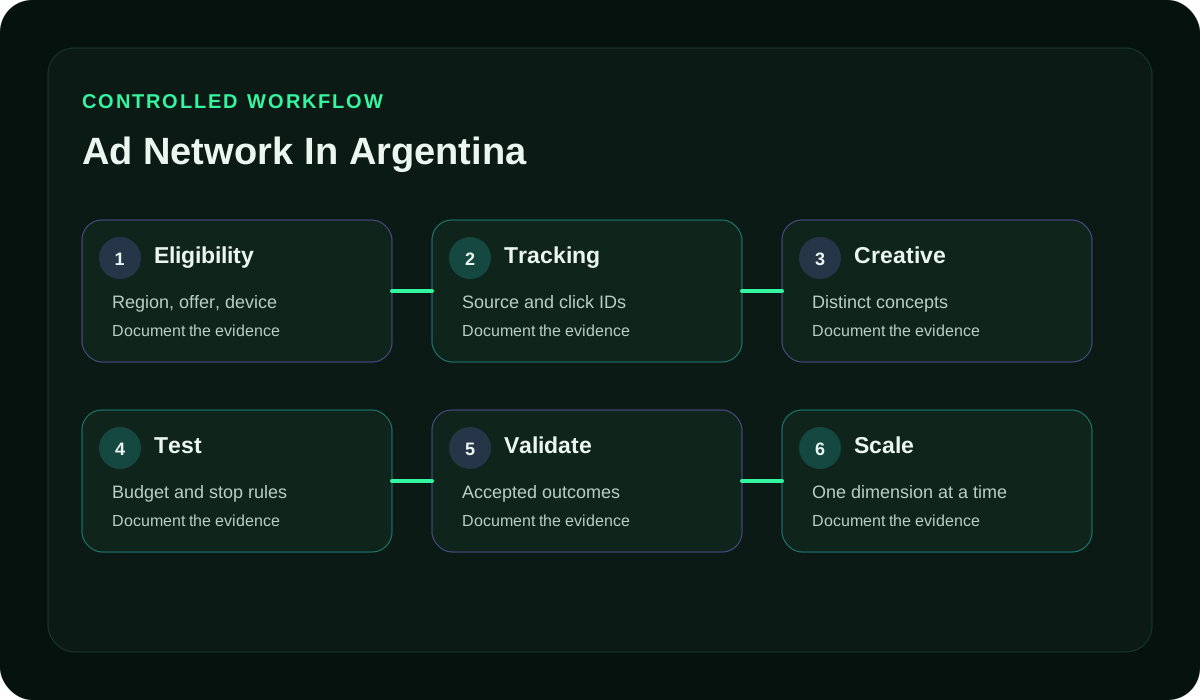
Ask what you can change after launch: Review which supported controls let you respond to a poor source, unsuitable device mix or spending concern. Test your reporting workflow with a small campaign first. The advantage of self-serve buying is practical control over the next decision, provided your operator understands the settings and your own downstream evidence remains reliable.
Check the Argentine customer journey yourself: Use the same destination and offer that the advertisement will open. Confirm the address restrictions before submitting a test order and inspect the resulting customer message. If your business uses outside fulfilment or payment providers, agree who investigates each failure rather than passing every low-conversion concern back to the traffic supplier.
Compare equivalent reporting periods: An order accepted three days after acquisition belongs to a different maturity stage from a click received this morning. Set a consistent review window based on your actual process. Keep unsettled outcomes separate until they can be assessed, especially when comparing two sources with different delivery schedules or customer response times.
Review the Spanish promise with the seller: The person who answers customer questions can often identify an ambiguity that a literal translation misses. Ask what visitors are likely to misunderstand about availability, instalments, delivery or support. Use that knowledge to improve the message, then test the revised promise against the original with the other commercial conditions held steady.
Keep shipping economics in the business decision: Two regions can produce the same media acquisition cost but different fulfilment costs. Retain the relevant delivery and return costs in your business assessment. You do not need to force every expense into the advertising platform to make a sound decision; you need a reliable way to connect accepted orders with the costs your business actually incurs.
Do not confuse payment initiation with demand: A visitor may choose a payment option and then abandon it, retry it or complete it later. Inspect these states before concluding that a creative attracts poor customers. If the merchant flow is the constraint, fix that route and record its new version before drawing another source-quality conclusion.
Check support before expanding: Before expanding, confirm that your support team can handle the additional enquiries. A service campaign can generate requests outside the hours your team answers them. State when customers can expect a response and check whether that follow-up happens. Increase media only while qualified prospects can receive the service your advertisement promises.
Choose the next planning task: Once the first Argentine source test is understood, decide whether you need a new traffic purchase or a wider channel plan. Retain the tested offer and accepted-order evidence for that decision. One successful source does not establish that another channel, promotion or delivery region is ready for the same investment.
| Supplier question | Useful answer | Your next step |
|---|
| Can the available supply serve this offer? | A current format and targeting combination that matches your Argentine service area. | Prepare one destination and creative set for that combination. |
| Can I investigate a weak result? | The actual reporting fields and controls available for the chosen inventory. | Verify how your order record connects to campaign and source evidence. |
| Can I repeat a useful result? | A manageable test with a stable offer, accepted event and review period. | Expand only after checking fulfilment capacity and the new source mix. |
Worked example: why the cheaper source may be the wrong expansion
Hypothetical example: Source A spends USD 120 and produces eight paid orders, of which six meet the delivery and acceptance rules. Source B spends USD 90 and produces seven paid orders, but only three are accepted. Media cost per accepted order is USD 20 for A and USD 30 for B. With a hypothetical USD 25 limit, A meets the limit and B does not. These invented figures exclude fulfilment and other costs; they illustrate why raw order totals and lower spend are insufficient.
Choose FroggyAds for a controllable first test
Choose FroggyAds when you want a practical way to buy and refine Argentina traffic around your own commercial evidence. We provide the self-serve campaign environment; your accepted orders show where the next investment belongs. Create your free FroggyAds account
Further reading: The paid-advertising guide at shopify.com gives general planning context. The display-targeting explanation at support.google.com describes Google's own product and helps distinguish audience and contextual concepts; it does not document FroggyAds settings. Our recommendations here concern an Argentine offer's service area, price continuity and accepted-order evidence, rather than borrowing another platform's feature or performance claims.